"Crimea. Golden Island in the Black Sea" Chronicle of the Struggle for the "Scythian Gold" of Ukraine
Stages of Ukraine's struggle for the "Scythian gold".
Ljudmyla Strokova, Director General of the National Museum of Ukrainian Folk Decorative Art. "Krymska Svitlytsa" newspaper, 2019, Issue No. 29-32
The Court of Appeal of Amsterdam in the case of the so-called "Scythian gold" promised to announce the decision back on June 11. But a few days before this date, the court announced a new one — July 16.
And so on July 16, 2019, the court made only an interim decision, requiring the parties to submit additional arguments within two months. At the same time, the decisive positions of the court of first instance, which in December 2016 decided to return all items of the collection to Ukraine, were also rejected. However, this decision did not enter into force — the Crimean museums (the Central Museum of Taurida in Simferopol, the Kerch Historical and Cultural Preserve, the Bakhchysarai Historical and Cultural Preserve, and the National Preserve "Chersonesos Taurica" in Sevastopol) appealed it. The exhibits are still kept in the Amsterdam museum waiting for the final court decision, which, as the Court of Appeal stated, can be made within six to nine months.
We decided to recall all the stages of Ukraine's struggle for the "Scythian gold" and turned to an expert — the Director General of the National Museum of Ukrainian Folk Decorative Art Ljudmyla Strokova, whose extensive and professional article on this issue we offer to our readers.
"Crimea. Golden Island in the Black Sea" — an exhibition project with this name was organized in 2013 with the participation of five Ukrainian museums: the Museum of Historical Treasures of Ukraine (a branch of the National Museum of the History of Ukraine, Kyiv), the Central Museum of Taurida (Simferopol), the Bakhchysarai Historical and Cultural Preserve, the Kerch Historical and Archaeological Preserve, and the National Preserve "Chersonesos Taurica."
The exhibition was displayed in two European museums. First in the Federal Republic of Germany (LVR-LandesMuseum Bonn, from July 3, 2013, to January 19, 2014), and from February 6 to May 28, 2014 — in the Kingdom of the Netherlands (Allard Pierson Museum, the archaeological museum of the University of Amsterdam). In accordance with the Regulation on the Museum Fund of Ukraine, approved by the Resolution of the Cabinet of Ministers of Ukraine dated July 20, 2000, No. 1147, the Ministry of Culture of Ukraine approved the transfer of museum objects from the collections of these museums for display at the exhibition "Crimea. Golden Island in the Black Sea" with a temporary transfer period from June 13, 2013, to June 12, 2014. The exhibition was dedicated to the ancient history of Crimea — from the period of Greek colonization (6th century BC) to the early Middle Ages (6th-7th centuries AD). The exhibition presented 19 exhibits from the Kyiv Museum of Historical Treasures and 565 exhibits from Crimean museums.
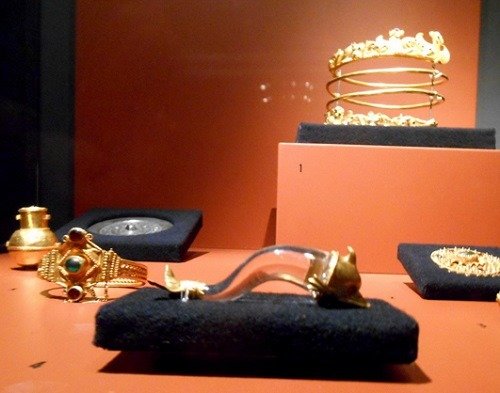
Part of the exposition "Crimea – Gold and Secrets of the Black Sea"
Due to the fact that the exhibition received a wide public response in Germany, the Allard Pierson Museum turned to Ukrainian museums and the Ministry of Culture of Ukraine with a proposal and request to extend the display period of the exhibition in the Netherlands to August 31, 2014. The Ministry of Culture did not object to the extension of the display period of items from Ukrainian museums and preserves at the exhibition "Crimea. Golden Island in the Black Sea," but noted that the final decision would be made after the submission of a package of relevant documents from each museum institution, as it informed the directorate of the Allard Pierson Museum. Ukrainian museums prepared additional agreements to contracts to extend the exhibition; the agreements were signed by the directors of all participating Ukrainian museums on the day of the exhibition opening in Amsterdam on February 6, 2014.
However, on March 16, 2014, the violent annexation of Crimea by Russia took place, and Crimean museum institutions ceased relations with the Ministry of Culture of Ukraine and Ukrainian institutions. Consequently, these museums did not carry out the procedure of prolongation of additional agreements (this was done only by the Museum of Historical Treasures of Ukraine), and therefore neither the Ministry of Culture of Ukraine nor the customs authorities of Ukraine granted permits to Crimean museums to extend (until August 31, 2014) the display period of museum objects in the Netherlands.
According to the Law of Ukraine "On Museums and Museum Affairs," the Museum Fund of Ukraine, which includes the collections of all Crimean museums, is a national asset and an integral part of the cultural heritage of Ukraine protected by law. Museum objects, museum collections, and museum assemblies of the state part of the Museum Fund of Ukraine are assigned to museums on the right of operational management. In view of the occupation of the Autonomous Republic of Crimea (and the city of Sevastopol), the Cabinet of Ministers of Ukraine adopted Resolution No. 113 of 23.03.2014 "On amending the Regulation on the Museum Fund of Ukraine."
In particular, it provides: in the event of force majeure circumstances or the threat of destruction, loss, damage, or ruin of museum objects of the state part of the Museum Fund of Ukraine, the decision on their transfer for permanent or temporary storage, change of the temporary transfer period, or return of such objects transferred for temporary storage outside Ukraine for display at exhibitions, restoration, or scientific examination is made by the Ministry of Culture of Ukraine.
The Ministry of Culture recognized the threat of losing museum objects of the state part of the Museum Fund of Ukraine displayed at the exhibition in the Netherlands. Already on March 31, 2014, the Ministry turned to the Allard Pierson Museum with a request to consider the possibility of early return to Ukraine of museum objects of the state part of the Museum Fund of Ukraine from the collections of the Museum of Historical Treasures and 4 Crimean museum institutions. In addition, the Ministry of Culture informed the Allard Pierson Museum that until the settlement of the situation in the Autonomous Republic of Crimea, the exhibits would be transferred for storage to the National Museum of the History of Ukraine.
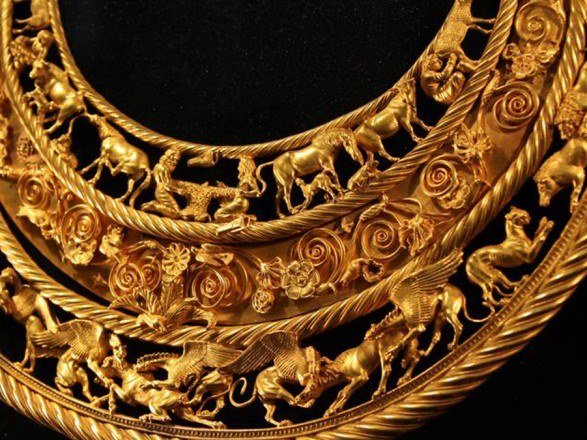
Before the Allard Pierson Museum, the treasures were exhibited in the LVR-LandesMuseum Bonn. Photo - https://novynarnia.com
The Ministry of Culture of Ukraine issued Order No. 292 of May 13, 2014, in which the National Museum of the History of Ukraine was designated as the main keeper of all museum objects of the state part of the Museum Fund of Ukraine in the amount of 565 museum objects (2,011 storage units) displayed at the Allard Pierson Museum. Crimean museum institutions were informed of this in a special letter of the Ministry of Culture of Ukraine (dated 21.05.2014).
It should be noted that when approving the exhibition project "Crimea. Golden Island in the Black Sea," the Ministry of Foreign Affairs of the Netherlands provided Ukrainian museums with special guarantee letters on the preservation and timely return of museum objects to Ukraine. Therefore, the Ministry of Foreign Affairs of Ukraine sent a note to the Ministry of Foreign Affairs of the Netherlands explaining the legal grounds for returning the exhibits of the exhibition from Crimean museums precisely to the National Museum of the History of Ukraine (Kyiv), and not to Crimea occupied by Russia.
On May 9, 2014, the University of Amsterdam sent an official letter to the Ministry of Culture of Ukraine, in which it was noted that on the basis of the Diplomatic Note, the explanatory note to it, and the legal opinion, it recognizes that the exhibits from Crimean museums belong to the state part of the Museum Fund of Ukraine and are the state property of Ukraine. In addition, the letter noted that the Allard Pierson Museum would transfer the exhibits for storage to the National Museum of the History of Ukraine and propose this museum to sign a new agreement with the Allard Pierson Museum on the basis of additional agreements previously concluded with Crimean museums on extending the display of items from Crimean museums at the exhibition until August 31, 2014. Thus, the Allard Pierson Museum undertook to return the exhibits to Ukraine — to the National Museum of the History of Ukraine — after the end of the exhibition.
The National Museum of the History of Ukraine prepared a draft of an additional agreement with the Allard Pierson Museum to extend the display of archaeological objects from Crimean museums at the exhibition in Amsterdam until August 31, 2014, with a temporary transfer period until September 20, 2014. With the aim of conducting bilateral meetings and negotiations to coordinate and sign this agreement, the Ministry of Culture of Ukraine initiated the assignment of a Ukrainian delegation to Amsterdam, consisting of the First Deputy Minister of Culture of Ukraine and the Director General of the National Museum of the History of Ukraine.
Unfortunately, despite a series of negotiations with both representatives of the Allard Pierson Museum and government circles of the Netherlands with the active participation of the Ministry of Foreign Affairs of Ukraine, the issue could not be resolved. The Allard Pierson Museum refused to sign a new agreement with the National Museum of the History of Ukraine and extend the exhibition until August 31, 2014, since those additional agreements with Crimean museums signed on the day of the exhibition opening in Amsterdam on February 6, 2014, were sufficient for the Allard Pierson Museum.
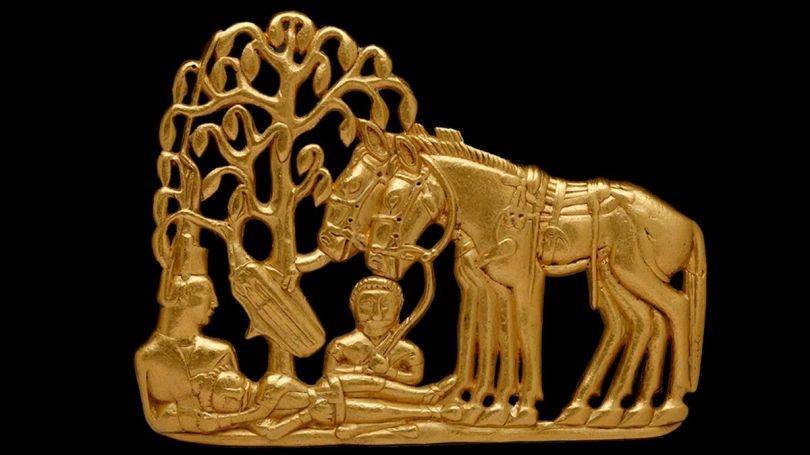
Meanwhile, the permit for temporary export from Ukraine of 565 exhibits, most of which are products of precious metals (with an insurance value of 1,438,625 euros) provided for the exhibition by four criminal museum institutions, expired. Consequently, since June 13, 2014, in accordance with Art. 23 of the Law of Ukraine "On Export, Import and Return of Cultural Values," these museum objects became considered as illegally exported from the territory of Ukraine.
In connection with the position of the Allard Pierson Museum regarding the Crimean part of the exhibition, the Ministry of Foreign Affairs of Ukraine on June 20, 2014, sent a note to the Ministry of Foreign Affairs of the Netherlands noting that, starting from June 13, 2014, the part of the exhibition with the exhibits of Crimean museums is in the Netherlands illegally and is subject to immediate return to Ukraine. The Ministry of Foreign Affairs of Ukraine also requested not to allow the export of museum objects of the exhibition from the territory of the Netherlands to Crimea without the permission of the Ukrainian side.
With the aim of taking measures to settle disputes over the return of cultural values to the territory of Ukraine, the Ministry of Justice of Ukraine, as the body responsible for protecting the rights and interests of Ukraine abroad, created an interdepartmental working group, which included representatives of the Ministry of Justice, the Ministry of Culture, the Ministry of Foreign Affairs, the Ministry of Internal Affairs, the National Museum of the History of Ukraine, and the Museum of Historical Treasures of Ukraine, etc.
On August 20, 2014, the Allard Pierson Museum issued an official statement on Ukrainian exhibits from Crimean museums presented at the exhibition "Crimea. Golden Island in the Black Sea" (in the Dutch version "Crimea: Gold and Secrets of the Black Sea"), stating that the museum would refrain from returning the exhibits to either side until a competent court or arbitration decision is received or until an agreement is reached between Kyiv and Crimea on this issue. In this way, the museum tried to avoid, on one hand, possible contract claims from individual Crimean museums, and, on the other hand, property claims from the state of Ukraine.
19 exhibits from the collection of the Kyiv Museum of Historical Treasures of Ukraine, in accordance with the additional agreement on extending the exhibition until August 31, 2014, concluded by the Allard Pierson Museum with the National Museum of the History of Ukraine, were returned to the territory of Ukraine on September 4, 2014.
At the end of November 2014, with the participation of an observer from Ukraine and representatives of the museums of Crimea, the exhibition was finally dismantled, and the exhibits were moved to a separate storage facility, where they are to be kept until the end of the court case.
On November 19, 2014, representatives of Crimean museums filed a lawsuit in the District Court of Amsterdam (Kingdom of the Netherlands) against the Allard Pierson Museum for the return of the exhibition exhibits to the respective Crimean museums, i.e., to the territory of occupied Crimea.
For its part, Ukraine filed a petition in the District Court of Amsterdam for the admission of the state to the trial as a Plaintiff in the case of returning part of the exhibition exhibits. On April 8, 2015, the Ministry of Justice of Ukraine received a copy of the decision rendered by the District Court of Amsterdam, according to which the state of Ukraine, represented by the Ministry of Justice of Ukraine, was admitted to participate in the trial.
Legal position of Ukraine: The museum exhibits are exclusively the state property of Ukraine and part of the Museum Fund of Ukraine. They are illegally held by the Allard Pierson Museum on the territory of the Netherlands and are subject to return to the territory of Ukraine, namely to Kyiv (to the National Museum of the History of Ukraine), and not to the part of the territory of Ukraine temporarily occupied by Russia (Crimea). In fact, Ukraine's demands are based on "two pillars," namely:
– provisions of the UNESCO Convention on the Means of Prohibiting and Preventing the Illicit Import, Export and Transfer of Ownership of Cultural Property of 1970 (including the provisions of the Implementation Act on the basis of which this Convention was adopted in the Kingdom of the Netherlands); – provisions of Ukrainian legislation securing the state's right of ownership to the disputed museum objects.
The position of the Crimean museums is that (1) they are the legal and authorized owners of the collections and in accordance with contracts and additional agreements that they unilaterally concluded with the Allard Pierson Museum, the exhibition exhibits must be returned precisely to Crimea; (2) all archaeological objects were found and kept on the territory of Crimea for many years; in addition, the museums consider it unacceptable to split the collections.
A panel of three judges of the District Court of Amsterdam considered this case at a court hearing on October 5, 2016.
Representation and defense of the interests of Ukraine in the case on the suit of the state of Ukraine against the Allard Pierson Museum is carried out by the law firm Bergh Stoop & Sanders N.V. (Kingdom of the Netherlands).
On December 14, 2016, the District Court of Amsterdam announced the decision in the case on the suit of the state of Ukraine against the Allard Pierson Museum, recognizing that the museum collection of the exhibition "Crimea. Golden Island in the Black Sea" is subject to return to the territory of Ukraine, namely to Kyiv (National Museum of the History of Ukraine). The court recognized that the items of the disputed museum collection are cultural values that are illegally on the territory of the Kingdom of the Netherlands.
The court emphasized that the museum artifacts belong to the state of Ukraine, which has the right to demand the return of the museum collection on the basis of the provisions of the UNESCO Convention on the Means of Prohibiting and Preventing the Illicit Import, Export and Transfer of Ownership of Cultural Property of 1970, including the provisions of the Implementation Act on the basis of which this Convention was adopted in the Kingdom of the Netherlands.
According to these documents, the contracting states, and hence the Netherlands, recognize the inalienable right of each state party to classify and declare certain cultural values as inalienable, which by virtue of this are not exported, and must also facilitate the return of property previously exported. The court emphasized that it does not have the power to recognize the real right to the museum collection, and therefore, after the cultural values are returned to the territory of Ukraine, the issue of ownership of the museum exhibits must be decided by the courts of Ukraine under the material law of Ukraine.
On January 16, 2017, representatives of Crimean museums filed an appeal against this decision of the District Court of Amsterdam.
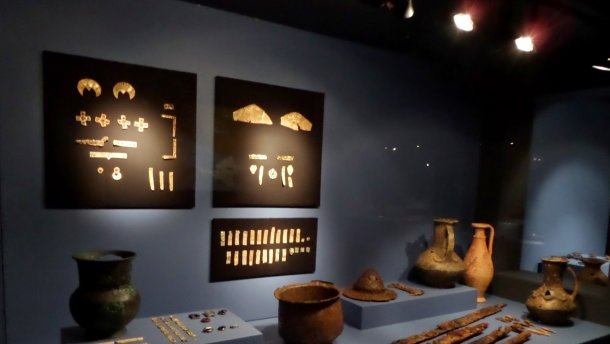
On March 11, 2019, hearings were held in the Court of Appeal of Amsterdam. The court announced that the decision would be rendered on June 11, 2019, at 11 a.m. local time without public hearings (later the court changed the date of the decision to July 16, 2019). As has already become known, on July 16, the court made only an interim decision, requiring the parties to submit additional arguments within two months. At the same time, the decisive positions of the court of first instance, which in December 2016 decided to return all items of the collection to Ukraine, were also rejected.
So, the final decision, the Court of Appeal stated, can be made within six to nine months. Thus, the resolution of the fate of the so-called "Scythian gold" will drag on for another year and a half to two years. All this time, the exhibits from 4 museums of Crimea will continue to be kept in a separate storage facility of the Allard Pierson Archaeological Museum. That is, these exhibits will remain "hostages" in a state that recognizes Crimea as Ukrainian, but for 5 years cannot dare to decide the issue — "where to return the archaeological values from Ukrainian museums — to Kyiv or to occupied Crimea."
Postscript. This case has no analogues in European jurisprudence. And that is why decisions on this issue are very complex and unpredictable, because they, these decisions, can have further "unwanted" consequences in disputed issues about the ownership of the cultural heritage of certain countries kept in the world's museums. Therefore, based on this situation, it is probably necessary to revise international law in the field of protection of cultural values and make appropriate, clearer corrections. This also applies to the legislation of Ukraine in the museum sphere. The exhibition "Crimea. Golden Island in the Black Sea", in the Dutch interpretation — "Crimea. Gold and Secrets of the Black Sea," was a great success in both Germany and the Netherlands. Almost 100 thousand visitors visited the exhibition. I think the events of 2014 in Ukraine significantly contributed to this. All materials from Crimean museum institutions come from archaeological excavations on the territory of the Crimean Peninsula. It should be noted that the bulk of them were obtained during archaeological research of the 2000s, carried out under permits granted by the state of Ukraine to conduct such research.
Among the materials: finds from ancient cities and settlements — Chersonesos, Panticapaeum, Tyritake, Artezian; late Scythian burial grounds of the 3rd century BC – 3rd century AD — Levadky, Ust-Alma; Gothic burial grounds of the 5th-7th centuries AD — Suvlu-Kaya, Dzhurg-Oba, Neyzats, near the village of Luchyste. The exhibition presented Crimea as a unique European region, which for millennia was not an isolated territory, but a place of exchange, ties, and communications between East and West, between Greek civilization, the Roman Empire, the nomadic steppe, and China, between the settled, urban population and the inhabitants of the steppes.
The cultural richness of the peninsula was represented not only by numerous decorative items of gold and silver, but also by a wide spectrum of Greek architecture, sculpture, ceramics, and finds from the barrows of nomads. The highlight of the exhibition was Chinese lacquered boxes of the 1st century AD from rich burials of Southwestern Crimea (Ust-Alma burial ground) — sensational archaeological finds, at one time restored in Japan by the world-famous master and restorer of lacquered products Mr. Shosai Kitamura, whose title in his native language sounds like "national treasure of Japan."
It was with these finds and the history of their restoration that the exhibition project "Crimea. Golden Island in the Black Sea" began. With the assistance of the Ukrainian Cultural Foundation