The Gem of Sunny Valley
In the luxurious diversity of Crimean landscapes, there is a strange place, the views of which cannot be confused with any other, at least in Crimea. This is Sunny Valley.
Maksym Dubovyaz. "Krymska Svitlytsia" newspaper, 2018, Issue No. 50
In the luxurious diversity of Crimean landscapes, there is a wondrous place whose views cannot be confused with any other, at least in Crimea. This is Sunny Valley.
The Turkic name of the area – Qoz – translates as "eye": they say that even when everything over the sea, coast, and mountains is covered with thick clouds, a clear eye seems to look through those clouds in the sky. Indeed, this is the sunniest place on the peninsula, and the climate here, according to reference books, is that of a "true semi-desert."
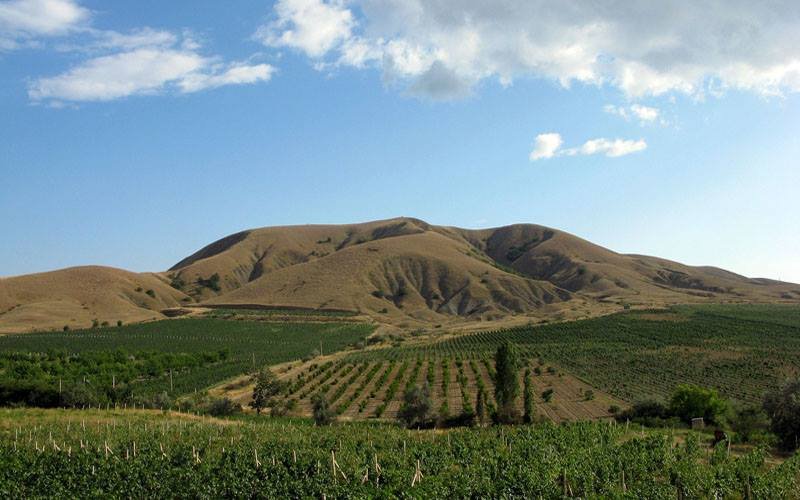
Before the last Great War, local landscapes were painted from summer to summer by students studying painting in the distant, gloomy capital cities of the former Empire; here they soaked up the sun and impressions for the entire grey year in academic lecture halls... However, Sunny Valley was not called that back then; the name was not even "Qoz", but... "Kozy". Not very romantic, which is probably why the wine created here on the eve of that War was named not after this locality, as the famous Golitsyn taught following classical winemakers, but more broadly and neutrally: "Crimean Ruby" ("Krymske rubinove").
Indeed, the pomegranate tone of this exquisite dessert wine made from indigenous grape varieties tends to gleam like a real ruby. And the Qoz valley is, of course, Crimea, but by no means along the entire grape-growing belt of the peninsula can one find those local varieties that give this wine its unique, unmistakable taste: Ekim Kara, Dzhevat Kara, Kefessia... A matching name had to be found for such a unique wine.
And the name did appear – already in the early 60s, when old winemaking was revived once again in what was by then Sunny Valley. True, the old valley villages already had new names, including the telling "Lagernoye", the featureless "Bogatovka", and the fitting "Sunny Valley". The village gave the latter name to the local white dessert wine, and the restored "Crimean Ruby" became... "Ekim Kara". From the very beginning, this not entirely clear name was written in small letters under the "main" one: "Black Doctor" ("Chornyi Doktor").
Connoisseurs say that this translation is imperfect, that indeed "ekim" is "doctor" in the sense of "physician", and that "kara" means "black" – which is probably one of those words known even to people far from the Turkic-speaking area. But there are subtleties: linguists say that it shouldn't be translated literally, and a more accurate interpretation of "Ekim Kara" is "doctor's black" or "black from the doctor."
And here, local historians speak up again. An explorer of the Valley – from Scythian times to the very recent past – Oleksandr Wolf asserts that the local "ekim" is not a legend but a fully historical figure. During the famous cholera epidemic in the century before last, a doctor named Graperon was delegated here. The doctor – and in this context, he can safely be called "Doctor" – took a liking to the sunny Qoz valley. The wine from his vineyards probably helped Graperon's patients well in their fight against various ailments, and they passed on the grateful memory of the Doctor from mouth to mouth.
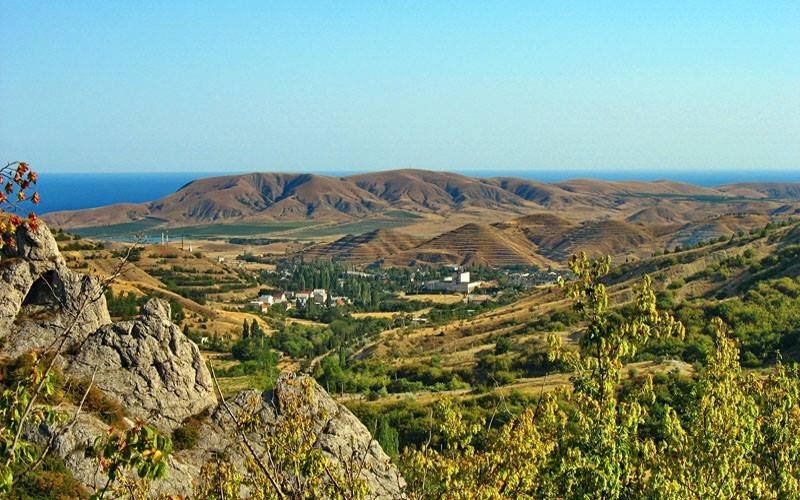
Subsequently, a local legend took shape, the names of whose heroes – Doctor and Colonel with the epithet "Black" – are immortalized in the names of Sunny Valley wines. Without sentimental details, the plot is that the Doctor cured the Colonel, who was wounded by a wild boar during a hunt, with his miraculous wine, but... having taken too much "medicine", the hunter mistook his friend for a boar, and so the Doctor died, while the inconsolable Colonel blamed himself for this for the rest of his life...
Behind these beautiful names is not only the tradition of local viticulture, which has preserved unique indigenous varieties. And not only the painstaking work of researchers and agronomists. Behind them is also the wealth of Crimea, its climate, beaches, mountains, vineyards, and... people – both living and legendary.