The Fate of Veli Ibraimov
The execution of the Chairman of the Central Executive Committee of the Crimean ASSR Veli Ibraimov.
Tetiana Bykova, Candidate of Historical Sciences, Researcher at the Institute of History of Ukraine, National Academy of Sciences of Ukraine. "Krymska Svitlytsia" newspaper, 2018, Issue No. 19
In 2018, it was 90 years since an event that, without exaggeration, became a milestone in the history of the entire Crimea. On May 9, 1928, Veli Ibraimov, Chairman of the Central Executive Committee of the Crimean ASSR, was executed by firing squad. This event became the catalyst that changed almost everything in the subsequent history of the peninsula. The figure of Veli Ibraimov naturally attracts a lot of attention, as he was an extraordinary personality. Veli Ibraimov was born in 1888 into a poor peasant family.
Because of this, he was unable to obtain a systematic education: at the age of 12, Veli left school and went to work as a loader and printing press worker. While working for the newspapers "Vetan khadimi" ("Servant of the Fatherland") and "Terjiman" ("Translator"), Veli Ibraimov met prominent representatives of the Crimean Tatar intelligentsia – I. Gasprinsky, A. Mediyev, N. Chelebidzhikhan, A.-S. Aivazov, A. Ozenbashly, and D. Seidamet. Thanks to these acquaintances, Ibraimov entered public life. Initially, he was an activist in the "Akmesdzhit" cultural and educational community, and in 1916, he was elected Chairman of the Crimean Tatar Workers' Union.
The February events of 1917 stirred all sections of society and inspired Crimean Tatars to fight for their rights. Veli Ibraimov became one of the most passionate participants in the national liberation movement of the Crimean Tatars. In March, he was elected a delegate to the All-Crimean Muslim Committee, and in November of the same year, a member of the First Kurultai.
However, holding left-wing views, Veli Ibraimov left the Kurultai in the autumn of 1918 and drew closer to the Bolsheviks, joining the RCP(b) in the same year. Nevertheless, throughout the Civil War, Veli Ibraimov did not break ties with his former comrades from the Kurultai.
After the Bolsheviks seized Crimea in November 1920, Veli Ibraimov became the Deputy Chairman of the Crimean Revolutionary Committee (Krymrevkom). In the summer of 1921, he was appointed Chairman of the Special Emergency "Troika" for the Fight against Banditry. In this position, Veli Ibraimov put a lot of effort into calming the "white-green" movement, which was widespread across the peninsula and caused by the incompetent policies implemented by the Krymrevkom. This emergency body of power ignored local conditions and tried to solve all existing problems solely through strict orders, executions, and confiscations.
Instead, such "solutions" to the problems led to growing discontent. Soon, a wave of peasant uprisings swept across the peninsula. They were most active in the regions of Sevastopol, Yalta, Balaklava, Alushta, Bakhchisarai, and Simferopol.
Military methods of fighting the uprisings did not yield the desired results for the authorities, and therefore, the members of the Plenipotentiary Commission that came from Moscow to rectify the situation decided to declare a general amnesty. Veli Ibraimov immediately began visiting Crimean villages to explain the new laws to their residents, the majority of whom were Crimean Tatars. Speaking the same language, Veli Ibraimov easily found common ground with the peasants. Soon, this led to the gradual fading of the "white-green" movement. In addition, Veli Ibraimov made significant efforts to obtain from the leadership of the Crimean Regional Committee of the RCP(b) and the Krymrevkom the proclamation of the Crimean ASSR on the territory of Crimea in November 1921.
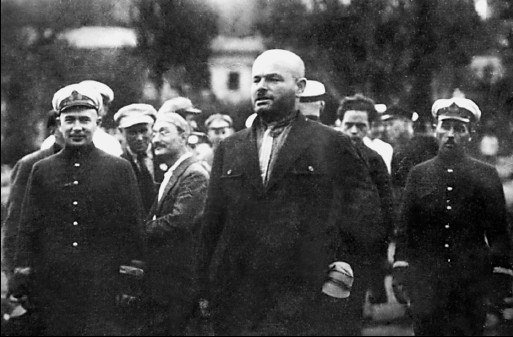
Veli Ibraimov — http://kartamirakrym.blogspot.com
In 1921-1923, a terrible famine raged in Crimea. This was facilitated by both natural and artificial factors. After the turbulent events of the 1917-1920 revolution and Civil War, the devastated and exhausted Crimean Peninsula found itself under the rule of the Bolsheviks, who immediately began implementing economic methods characteristic of the era of War Communism.
The first step of the Soviet government in Crimea's agriculture was the nationalization of all land. After November 1920, 1,134 estates were nationalized, on the basis of which more than a thousand state farms were created with a land fund of 1 million desiatinas. This virtually deprived the majority of tenants of land, since in Crimea at that time, about 40% of the peasants were landless.
At the same time, the surplus appropriation system (prodrazverstka) was introduced. Launched in the autumn of 1920, it lasted in Crimea virtually until June 1921. Unlike the prodrazverstka carried out here in earlier times, it now covered all agricultural products without exception. The punitive detachments that headed to the Crimean villages had the task of collecting no less than 9 million poods of grain (while the actual harvest of 1921 was 2 million poods).
Veli Ibraimov, who was then the People's Commissar of the Workers' and Peasants' Inspectorate of the Crimean ASSR, from the very beginning of the spread of famine, repeatedly appealed to the Moscow leadership with requests to stop the prodrazverstka in the villages of the peninsula and to recognize the Crimean Republic as starving. However, it was in vain — the export of grain outside of Crimea only increased. This led to catastrophic consequences: according to researchers' estimates, at least 100,000 residents of the peninsula died of hunger in Crimea, of whom about 80,000 were Crimean Tatars.
The central government's disregard for the interests of the Crimean Tatars soon led to a large-scale conflict within the government of the Crimean ASSR. On December 15, 1923, a group of local Tatar workers addressed a collective letter to Moscow, demanding the appointment of "someone from the local Tatar workers" to leading positions in the Crimean Republic. Since the conflict in the government of the Crimean ASSR had reached an unprecedented scale by the end of 1923, Moscow decided to satisfy the demands of the Crimean workers. In 1924, both key positions in the Soviet government were headed by representatives of the "indigenous" nation. Veli Ibraimov became the Chairman of the Crimean Central Executive Committee (Crimean CEC), and Osman Deren-Ayerly became the Chairman of the Council of People's Commissars.
However, the main positions of the secretary of the Crimean regional party organization and the head of the GPU, who held real power in the republic, were not held by Tatars.
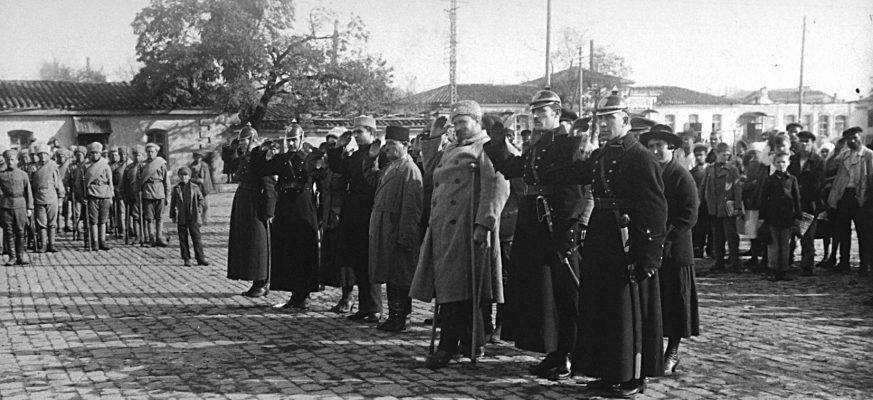
Veli Ibraimov at a parade, 1923 — http://goloskrimanew.ru
During the 1920s, the Soviet government carried out the so-called policy of indigenization (korenizatsiya) on the territory of the Crimean Republic: at this time, representatives of the indigenous nationality were predominantly promoted to leadership positions. In Crimea, the policy of indigenization took the form of Tatarization. However, the policy of Tatarization of the administrative apparatus was largely declarative. The goal set by the Crimean Regional Committee of the RCP(b) regarding the indigenization of the administrative apparatus to almost 50% was never achieved. However, the period from 1924 to 1928 can be considered the "golden age" for the development of the scientific and cultural spheres of Crimean Tatar life.
After V. Ibraimov and O. Deren-Ayerly took charge of the Crimean CEC and the Crimean Council of People's Commissars, the positions of the Crimean Tatars and their influence on the policies implemented in the Crimean Republic were significantly strengthened. It was they who now had the opportunity to implement measures aimed at protecting the interests of their people more resolutely.
The first matter that the new Crimean government began to implement was land policy. V. Ibraimov, O. Deren-Ayerly, and their numerous supporters (including those in the lower Soviet apparatus), during the consideration of land issues, began to actively demand benefits and advantages for the Crimean Tatars. This was to be aided by the policy of resettlement and relocation, aimed at placing the residents of the peninsula in areas more favorable for work and life. It was believed that one of the most important means of developing Crimean agriculture was the rational distribution of the population. However, certain circumstances disrupted the plans of the Crimean leadership, preventing them from being fully implemented.
The most influential obstacle was the campaign to resettle Jews to Crimea implemented by the Moscow center, aimed at establishing a large number of Jewish villages on the peninsula, which in the future were to turn into a Jewish Republic. The Crimean project also had an international aspect. It was supported and promoted by the People's Commissar for Foreign Affairs, G. Chicherin, who saw in this an opportunity to oppose Great Britain, depriving it of the prestige of being the sole protector and patron of the Jews. Therefore, the Moscow center "recommended" that the Crimean leadership consider the issue of resettling Jews to the peninsula.
These plans of the Moscow center were unexpected for the Crimean leaders. However, they initially agreed to accept Jewish immigrants. Thus, in May 1924, a statement by the head of the People's Commissariat for Agriculture of the Crimean ASSR, Umer Ibraimov (brother of Veli Ibraimov), compiled on the initiative of Veli Ibraimov and O. Deren-Ayerly, was sent to Moscow. This document spoke of the possibility of allocating 50,000 desiatinas for the reception of Jewish settlers in Crimea.
At the same time, the government proceeded from the following calculation: with the provision of 10 desiatinas per family, the Crimean Republic would have the opportunity to accept 5,000 Jewish families. However, while supporting the Moscow initiative, the Crimean leaders noted that the resettlement of Jews to Crimea was possible only after the land had been allocated to the Crimean Tatar peasantry.
However, the central leadership did not think it necessary to reckon with the interests of the landless Crimean Tatar peasantry at all. And so, starting from the second half of 1924, orders to allocate more and more land areas for the needs of the Jews began to be regularly sent to the Crimean government.
Such plans of Moscow could not but provoke protest from the leadership of Crimea. Starting from the end of 1924, Veli Ibraimov regularly demanded that the resettlement of Jews to Crimea be stopped until the landless Tatar peasantry received land. However, the central government considered all of his arguments unfounded. V. Ibraimov's struggle against resettlement soon caused a huge conflict between him and the Moscow leadership. His inflexibility on the issue of Jewish colonization ultimately sealed his fate.
Veli Ibraimov understood that he was doomed and that J. Stalin would soon deal with him. The memories of his son, Timur, have been preserved, stating that in 1927, the Chairman of the Crimean CEC said to Komsomol worker Bekir Umerov: "They played with us, Bekir. They played. Now they will kill us." And he was right. During the last year of his life, V. Ibraimov survived four attempts on his life (the last attempt was made on July 12, 1927, by Ibrahim Arif Cholak).
General Ablyakim Gafarov recalled V. Ibraimov telling him that Stalin openly suggested to the Chairman of the Crimean CEC "to shoot himself if he wished his children to continue living in honor." But Ibraimov did not agree to this "offer." The "case" of Ibraimov was taken up by the Central Control Commission of the CPSU(b). On its recommendation, on January 6, 1928, a commission was set up under the chairmanship of the People's Commissar of Justice, N. Yanson. It included the Chairman of the Supreme Tribunal, Y. Peters, and the Prosecutor of the RSFSR, N. Krylenko. In mid-January, V. Ibraimov was summoned to Moscow, arrested, and accused of criminal offenses. And precisely during those days, the All-Russian Central Executive Committee and the Council of People's Commissars of the RSFSR adopted the resolution "On Land Reform in Crimea."
On January 28-29, an extraordinary session of the Crimean CEC was held, at which V. Ibraimov was dismissed from all posts (even elected ones, which was against the law). M. Kubayev was appointed in his place, and O. Bekirov and A. Sofu were additionally introduced to the Crimean CEC. It was these individuals who soon began to do their best to implement the measures of enslaving the peasantry that V. Ibraimov had refused to do.
The OGPU informed Stalin that Ibraimov's arrest provoked lively interpretations among all strata of the population of Crimea. Among the Tatars, conversations about the beginning of the "Russian offensive on the Tatars" prevailed. There were cases of antisemitic demonstrations. Great discontent was observed among the Tatars who were studying (Crimean Workers' Faculty, Tatar Pedagogical Technical School), the Tatar intelligentsia, and merchants.
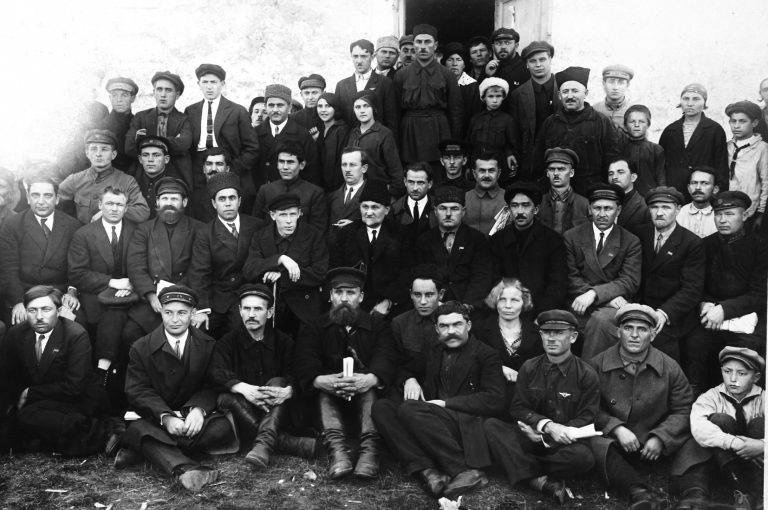
Chairman of the Crimean CEC Veli Ibraimov (seventh in the second row from the bottom) — from open sources
On April 23-28, 1928, a trial took place in Simferopol that became a milestone in the history of Crimea. At a visiting session of the Supreme Court of the RSFSR chaired by A. Solts, the case of 16 people accused of anti-Soviet counter-revolutionary activity was considered. During the trial, Veli Ibraimov was accused of murdering the Red partisan Cholak, attempting to murder the poor peasant Seidametov, and financial abuse. The accusations were completed by charges of Tatar bourgeois nationalism. One can agree with the conclusion of the historian V. Broshevan, who noted that such accusations could not be considered as real motives for which the then-leader of Crimea was sentenced to death.
In June 1990, by decision of the Presidium of the Supreme Court of the RSFSR, Veli Ibraimov was rehabilitated. This opened up opportunities to review the events of 1928. There are several versions of the reasons for the political and physical destruction of the Chairman of the Crimean CEC. Researcher R. Kurtiyev claims that Veli Ibraimov became a victim of communist-chauvinists because he fought with all his might against the resettlement of Jewish colonists to the Crimean Peninsula. P. Garchev held the same version. Another version was put forward by V. Vozgrin.
Without denying the Jewish factor, he argued that the reason for the repressions was the activity of the Chairman of the Crimean CEC in deepening the NEP in conditions when the center had already begun an offensive on the private sector. The Crimean researcher Zh. Mona formulated the problem even more specifically: "The peculiarity of social changes in the Crimean countryside was a sharper highlight of two extreme poles than the national average. The policy of the cohort of figures of the CEC and the Council of People's Commissars of the Crimean ASSR in the areas of land use, lending, cooperation, hiring labor, and renting land significantly contributed to the sharp differentiation of the Crimean countryside."
On the whole, the country's top leadership had every reason to blame Veli Ibraimov and his entourage for departing from the "general line of the party." After all, the Chairman of the Crimean CEC Veli Ibraimov, together with the Chairman of the Crimean Council of People's Commissars O. Deren-Ayerly, protecting the interests of the Crimean Tatar population, constantly emphasized fundamental differences on political issues with the leadership of the Crimean Regional Committee of the Party.
The trial against V. Ibraimov was political in nature, although the accusations were based on dubious episodes, moreover of a purely criminal nature. The execution of Veli Ibraimov became the starting point for the deployment of repressions in Crimea.