Who Revitalized Crimea in the First Post-War Years?
Petro Volvach, Full Member of the Shevchenko Scientific Society (NTSh), Member of the National Writers' Union of Ukraine (NSPU), Honored Worker of Science and Technology of the AR of Crimea, Crimean resident with 60 years of experience. "Krymska Svitlytsia" newspaper, 2017, Issue No. 1
Petro Volvach, Full Member of the Shevchenko Scientific Society (NTSh), Member of the National Writers' Union of Ukraine (NSPU), Honored Worker of Science and Technology of the AR of Crimea, Crimean resident with 60 years of experience. "Krymska Svitlytsia" newspaper, 2017, Issue No. 1
"I do not think that the 'Crimean issue' will ever arise seriously. Crimea, as they say, is completely 'tied' to Ukraine, and its annexation to Russia – even purely hypothetically – would simply deal a death blow to the Russian economy." (Y. Gaidar, "Pravda Ukrainy", 1995)
The All-Ukrainian referendum of December 1, 1991, held shortly after the proclamation of Independence, with the question: "Do you support the Act of Proclamation of Independence of Ukraine?", passed in Crimea quite peacefully and without any confrontations on an ethno-political level. 67.7% of voters took part in the voting, and 54.2% of Crimeans gave a positive answer. In Sevastopol, this figure was even higher — 57%. The results of the referendum in the Black Sea Fleet proved quite sensational. Of the 97% of military personnel who participated in the voting, 72% voted for the Independence of Ukraine, and 48% supported Leonid Kravchuk for the post of President of Ukraine.
Thus, the results obtained from the First All-Ukrainian referendum convincingly demonstrate that, despite the targeted, frenzied, multi-year Russification of the local population, the peninsula remained Ukraine-centric.
Separatist sentiments among the population in Crimea began to be stirred up by aggressive imperial-chauvinist forces in the Russian parliament and the first pro-Russian parties and extremist public Russian organizations prepared by them. It was then that the question arose of reviewing the 1954 Resolution of the Supreme Soviet of the USSR on the transfer of the Crimean Oblast from the RSFSR to Ukraine. The President of the Russian Federation, Boris Yeltsin, ostensibly distanced himself from the extremist statements in parliament, but the presidential administration skillfully used this fact as a means of exerting pressure on Ukraine during the unfavorable distribution of the Black Sea Fleet.
It was at this time that separatist slogans began to ring out more and more frequently in the previously quiet, provincial Crimea, influenced by local chauvinist mini-parties and puppet organizations well-funded by Moscow.
One of the most popular of these was the myth of the economic independence of the peninsula, that the Crimeans were being "robbed by the Kyiv uncle", about the coming threatening "Ukrainization" and the dominance of Ukrainians in Crimea. Among this marginalized part of Crimean society, the expression "ponayekhali" (roughly, "you came in droves" or "newcomers") became quite common. That is, when it came to Ukrainians or anything Ukrainian, aggressively minded Russians used this term as the most convincing and devastating argument. It was most often used by market stallholders with clearly non-Slavic facial features and older men with a military bearing and a Moscow accent. The vast majority of the Crimean population, burdened by daily chores and a difficult life, remained calm, demonstrating national and ethnic tolerance.
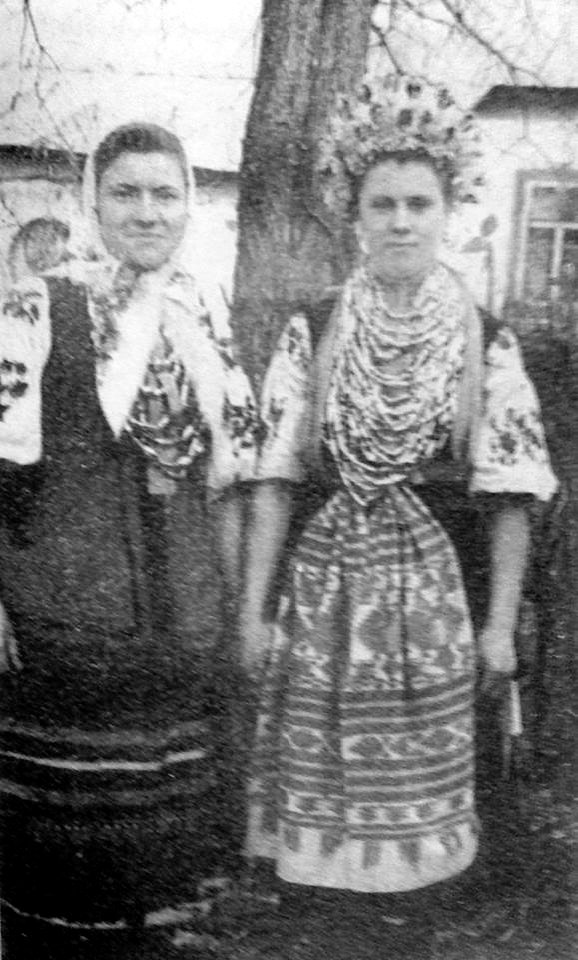
That offensive word "ponayekhali" forced me, a Crimean who has done some useful things for this region over 60 years of living on the peninsula, to seek an answer to a question painful for me: "Did Ukrainians really 'come in droves' to Crimea after 1954 and forcibly seize 'traditionally Russian land'?". Only the Crimean archives could provide an objective answer to this. It is they and the surviving local newspapers that preserve unique materials on the large-scale, compulsory resettlement of the Ukrainian people from 1944 to 1985.
The economic motives, the scale of the long-term forced state campaign, and its subsequent consequences for Crimea have been repeatedly discussed and covered in the press. Those wishing to familiarize themselves with this problem are referred to our publications in "Krymska Svitlytsia", the monograph "Ukrainian Spring of Crimea", Simferopol, Dolya, 2008, and the very valuable book by Professor Volodymyr Serhiychuk "Ukrainian Crimea", Kyiv, Ukrainian Publishing Union, 2001 and 2016.
In my firm conviction, which is based on reliable documentary materials, it was the transfer of Crimea from Russia to Ukraine in 1954 that saved the peninsula from an economic and humanitarian catastrophe. Thanks to almost one million Ukrainians forcibly moved from mainland Ukraine and the huge material resources of our republic, the post-war revitalization of Crimea took place.
It is also true that into the already revived, organized, and rebuilt Crimea, as the most attractive and comfortable region to live in, in the 1970s and 1980s, hundreds of thousands of "patriots of the Russian land" "came in droves" from all Russian regions, mainly from the backwoods. In large cities, especially in Sevastopol, this contingent consisted of retirees, former KGB agents, and guards of the Stalin-Khrushchev GULAGs. Therefore, the hypertrophied separatism of the "city of Russian glory" during the tragic February days of 2014 was not an unforeseen surprise.
While we have already seen the validity of the favorite separatist expression "ponayekhali" after 1954, another unresolved question arises: "Who rebuilt Crimea, which had been twice devastated and depopulated by the criminal Stalinist-Beria genocidal deportation?". After all, no more than 500,000 people remained on the peninsula, mostly the elderly and children. "True Russian patriots" also claim on this account that the first burden in overcoming economic difficulties and destruction was borne by settlers from Russia. Indeed, in the Kremlin, they initially wanted to settle Crimea with Russians after the eviction of the Crimean Tatars and other peoples.
The first attempt had already been made to populate the most attractive, most orderly areas of the Southern Coast mainly with Russian population. But due to significant natural differences and a different ideology of farming on these lands, they, in most cases, did not take root and ran back home like cockroaches. In the new place, settlers from the North Caucasus (Krasnodar Krai and Stavropol Territory) settled firmly. Most of them were Ukrainians. It was then that the idea arose among the Kremlin masterminds to resettle Ukrainians to Crimea for its revitalization.
When I worked in the Crimean archives, studying the processes of Ukrainian resettlement to Crimea during 1954-1985, I only came across rare materials about the resettlement of the Ukrainian population when the peninsula was still part of the Russian Federation. I intended to search the Kyiv archives as well, but no such opportunity arose. While already in exile, a thick Ukrainian printed work, a collection of documents and materials "Crimea under conditions of socio-political transformations", Kyiv, Clio Publishing LLC, 2016, fell into my hands. It was prepared by a team of Kyiv scientists under the leadership of O. H. Bazhan.
It was this work that saved my time. In the provided documentary materials, I found the answer to my question. To a large extent, they confirmed my previous assumptions.
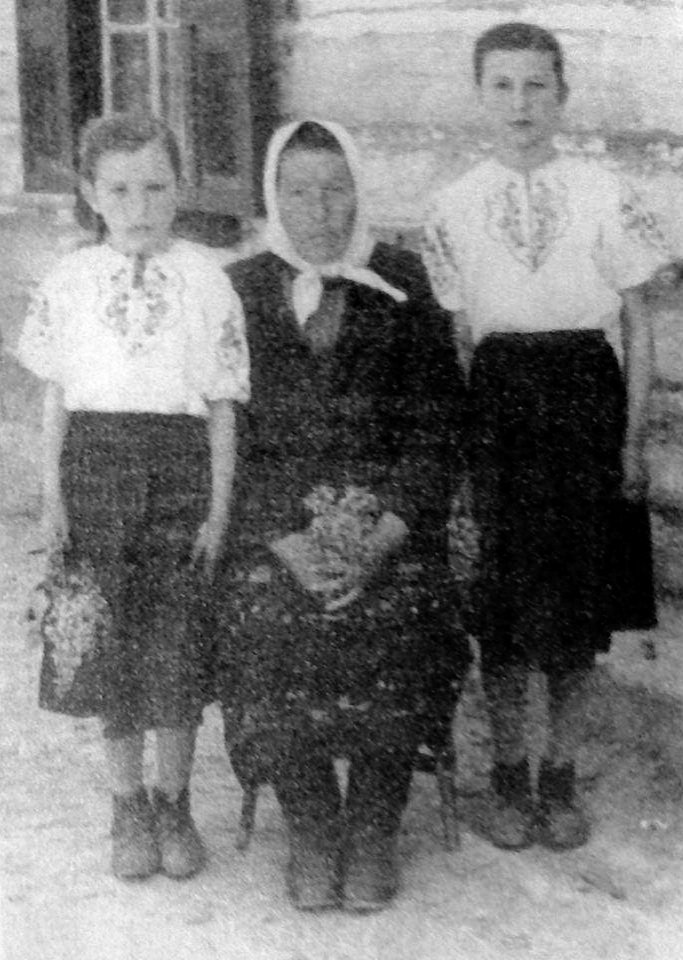
Thus, after the devastating Second World War for the Ukrainian land (which rolled over our land twice), after the multi-million losses of the Ukrainian population from the Holodomor and in the still fresh war, the criminal Kremlin authorities, violating even the Soviet Constitution, with the tacit consent of Little Russian lackeys, began a mass deportation of the Ukrainian population into a legally different state. This is yet another proof that both the Union and Republican Constitutions were merely a show and a fig leaf for foreign audiences for the totalitarian Soviet regime.
Just a year after the liberation of the peninsula from the German fascist occupation and three months after the deportation of the Crimean Tatars, the Council of People's Commissars of the Ukrainian SSR and the Central Committee of the CP(b)U, implementing the instructions of the Kremlin, adopted the resolution 'On the Resettlement of Collective Farmers to the Kuibyshev District of the Crimean ASSR.' To prevent accusations of distorting facts and lack of objectivity in the factual material, let us quote the preamble of the Resolution: 'In execution of the resolution of the State Defense Committee of August 12, 1944, No. 6372 s "On the Resettlement of Collective Farmers to the Districts of Crimea," to oblige the executive committees of regional Soviets and regional committees of the CP(b)U of Vinnytsia, Zhytomyr, Kyiv, Kamianets-Podilskyi (now Khmelnytskyi), Sumy, Chernihiv, and Poltava regions to resettle by October 1, 1944, to the Kuibyshev (now Bakhchisarai) district 3,000 households (9,000 people).'
Below is the regional list of households and the number of settlers. The largest number of households under resettlement belonged to Vinnytsia, Kamianets-Podilskyi, and Zhytomyr regions (600, 500 households). From 1,500 to 1,800 people in these regions were subject to planned resettlement. Along with the collective farmers, 41 collective farm chairs, 32 village council heads, 40 teachers, 3 doctors, 20 combine harvester operators, 60 tractor drivers, 4 mechanics, 8 agronomists, and 4 zootechnicians were also relocated.
Another clause of the criminal resolution required 'to select conscientious and hardworking collective farmers, primarily those familiar with horticulture, viticulture, and tobacco cultivation, capable of developing the fertile lands of Crimea in the shortest possible time,' with at least two able-bodied members in each family scheduled for resettlement. We deliberately do not touch upon the material and legal rights and obligations of the settlers. That should be a separate topic. Let us note that the resolution also provided for such a significant thing: 'The land of the former (Tatar, Bulgarian, and other evicted collective farmers who had crops and plantations) is transferred to the newly organized collective farms, which are populated by collective farmer-settlers and secured on the specified land for the collective farmers for lifetime use.'
Highly interesting is also the immoral decision of the Kremlin marauders to make a significant profit from the sale of the property of the deported (special settlers). They obliged local authorities to sell to the settlers from Ukraine not only agricultural inventory but also household items that previously belonged to the special settlers. After reading this criminally immoral document, the persistence of the negative attitude of a certain part of Crimean society towards the return of Crimean Tatars and other deported peoples to Crimea becomes understandable.
The communist-chauvinist authorities in Crimea imposed this syndrome for decades. To some extent, an answer to these moral flaws is provided by certain clauses of the said resolution: - families of collective farmers relocating to Crimea are allocated houses that have outbuildings and household plots; - residential buildings and outbuildings transferred to the collective farmer-settlers cannot be sold or rented by them. The specified buildings become their personal property after 5 years of continuous work in the collective farm.
Other no less interesting aspects of the resettlement of the Ukrainian population to Crimea before 1954 will, I hope, be covered in other publications.