Vira Roik: The Crimean Poltavka
Biography of the talented daughter of Crimea — the embroiderer Vira Roik.
Maryna Marchenko. "Krymska Svitlytsia" newspaper, 2018, Issue No. 44
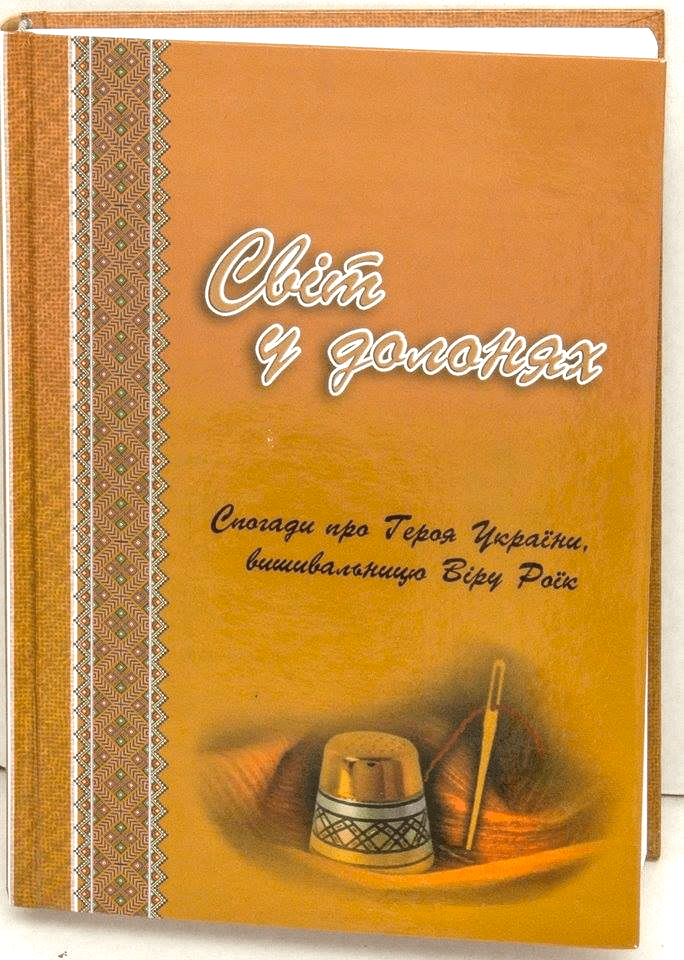
The National Museum of Ukrainian Folk Decorative Art hosted the presentation of the book "Svit u doloniakh. Spohady pro Heroia Ukrainy, vyshyvalnytsiu Viru Roik" (The World in Palms. Memories of the Hero of Ukraine, Embroiderer Vira Roik). It tells the story of a great Ukrainian woman, a talented master, and an incredible personality who popularized Ukrainian embroidery in Crimea for over half a century. Today, this publication is more important than ever, as it gathers convincing evidence that Crimea is connected to Ukraine by a spiritual "umbilical cord" that can never be broken by anyone.
The book was published thanks to the efforts of Vadym Roik, the son of the famous artist. In it, like pearls, poetic lines, photographs, and memories are gathered from everyone who admired the skill of the Ukrainian embroiderer, learned from her, and felt the magnetism of her personality.
One of the admirers of Vira Roik's work — Academician Dmytro Stepovyk — called her the Crimean Poltavka. After all, she was born in 1911 in the town of Lubny in the Poltava region, and since 1952 she lived in Crimea, where she brought her main treasure — a boundless love for the art of Ukrainian embroidery.
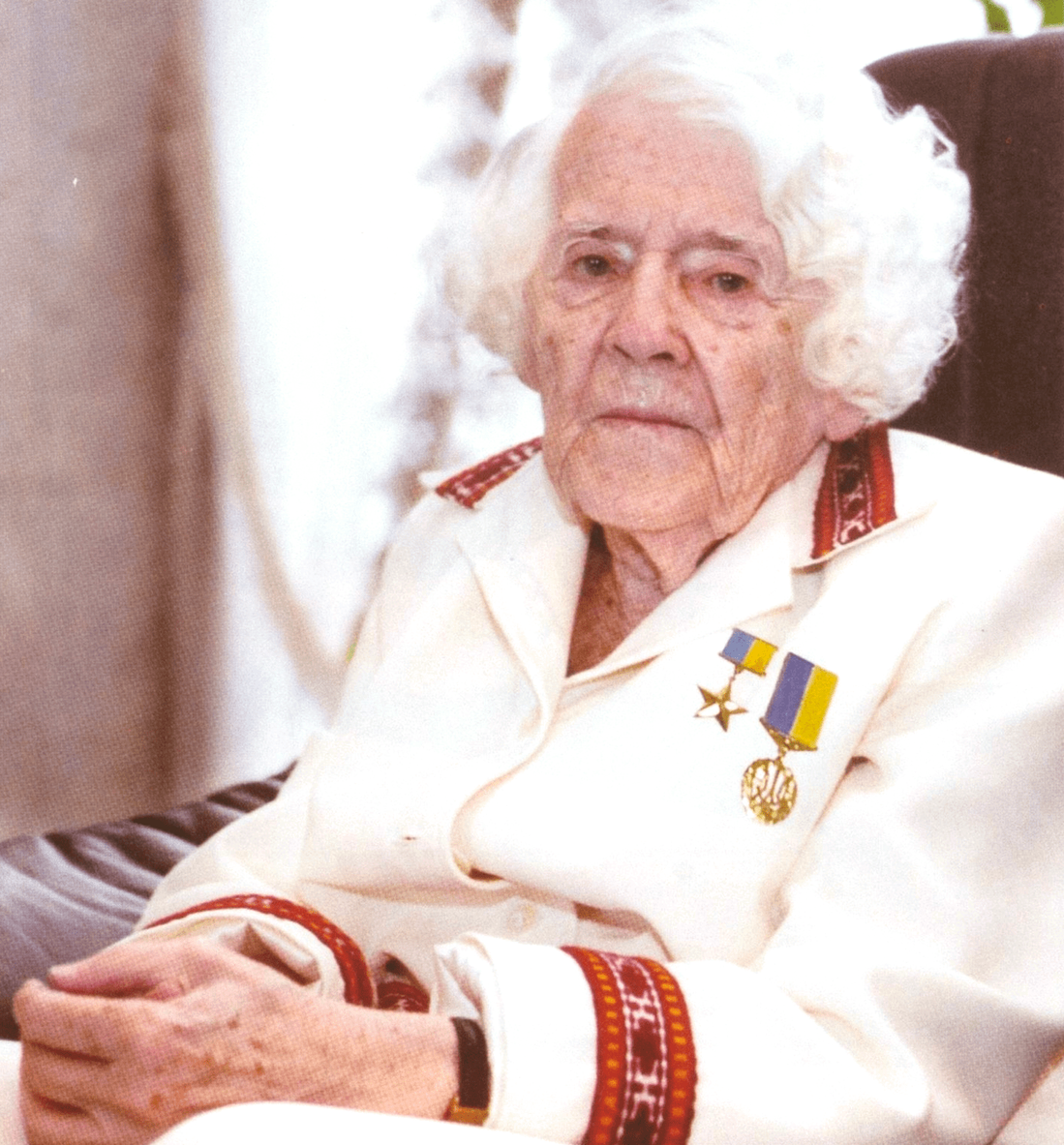
Vira Roik
The Magic Thimble Since childhood, Vira dreamed of ballet, attended a choreography studio, and was fond of music and drawing. But illness crossed out her plans forever. "Poor girl, she will never get out of bed," she accidentally overheard the doctors' verdict. But Vira Roik was not one to accept this challenge of fate and give up, for she belonged to a glorious Cossack family. She not only got out of bed but, having become fascinated by embroidery, began to create beauty with her own hands and decorate her life — which lasted 99 years. Vira's grandmother, Oksana, taught her to embroider and gave her a small golden thimble.
Obviously, the thimble was magical, because from that time on, embroidery became the meaning of her life. After gymnasium, the girl worked in the Lubny artel of embroiderers. Thanks to her skill, already in 1936 she received an award at the All-Union Exhibition of Folk Art in Moscow. Since then, the works of the Ukrainian master have been exhibited in many museums in Ukraine and abroad, impressing with a variety of patterns and virtuosity of execution, which is noted by specialists today. And even a severe concussion suffered by Vira Roik during the Second World War and a damaged right hand did not prevent her from continuing her favorite work.
In a few years, she learned to embroider skillfully with her left hand and continued to create beauty around her, starting from her own home. In it, even the newspaper holder and the small stool on which the master usually sat were decorated with embroidery with extraordinary taste. She believed that everything around should be elegant.
That is why Mrs. Vira ordered her clothes from Lviv masters, preferring the vyshyvanka. "Vira Serhiivna refused fittings in the hotel and said she must see the workshop where they would sew her clothes," recalls Myroslava Tarakhan — her student, who now works as a researcher at the National Museum of Literature of Ukraine. She is proud to have known the outstanding craftswoman closely, as did her mother — the well-known museum worker Zinaida Tarakhan-Bereza, who kept a separate notebook labeled "Vira Serhiivna's Advice."
The All-Ukrainian Mother She advised, helped, taught, and sympathized, worrying about the small and universal problems of individuals and entire institutions, especially museums, which she loved very much. "I was struck by this small, fragile gray-haired woman who had the charisma of a person of extraordinary kindness and sincerity," says Adriana Vyalets, former director of the National Museum of Ukrainian Folk Decorative Art, where Vira Serhiivna's exhibitions were held repeatedly. "In addition to all her talents and virtues, she had a special gift of all-encompassing motherly love, which she gave to many people. Dmytro Vlasovych Stepovyk called Vira Roik the 'All-Ukrainian Mother'."
"And, indeed, there was so much warmth, tolerance, and love in her, which the Ukrainian woman-mother is so rich in," she noted. "Vira Serhiivna gave this love to her numerous pupils, establishing a school of Ukrainian embroidery in Simferopol. Both adults and children came there to learn to embroider using traditional Ukrainian techniques, becoming familiar with the ornaments of different regions of Ukraine — Kyiv region, Poltava region, Podillia, and Prykarpattia."
"Her greatest merit lies in the fact that it was in Crimea that she spread traditional Ukrainian culture, where it was in short supply," says Liudmyla Bilous, deputy director of the National Museum of Ukrainian Folk Decorative Art.
Museum in Gurzuf
A special place in the life of this extraordinary woman was occupied by her son — Vadym Roik. He cared for his mother and helped her during her lifetime, and now manages her creative heritage, keeping a bright memory of her. Thanks to his efforts, in addition to the Vira Roik Museum of Ukrainian Embroidery in Simferopol, which began its operation back in 2012, a museum of the same name is preparing to open in the town of Gurzuf.
In them, one can see not only the works of the famous embroiderer, her personal belongings, and embroidery samples she collected throughout her life, but also a unique collection of 400 thimbles made of various materials. Vira Serhiivna embroidered until the last days of her life and was upset that doctors did not allow her to engage in her favorite work all day. She had great creative plans and was preparing to open an exhibition in Kyiv. The earthly life of the outstanding Ukrainian woman has ended, but her numerous works that she left behind still preserve their magnetism today and influence the people who interact with her creations.