\"God is High, the Tsar is Far, and Vorontsov is Dead\"
The history of the Vorontsov Palace.
Valerii Verkhovskyi. "Krymska Svitlytsia" newspaper, 2019, Issue No. 51-52
The Russian Empire grew not only through Siberian possessions and the Northern Ocean. A piece of the Mediterranean, so exotic for people from northern lands, the Crimean Peninsula, annexed at the end of the 18th century, attracted the then-elite of Peter and Moscow. On this land, so unlike the bleak Central Russian landscapes, they sought to create a new Russia...
The nobility began to build on the most beautiful spots of Southern Crimea, sparing no expense. The Governor-General of Novorossiya, Mikhail Vorontsov, was among the first. The construction of Count Vorontsov's palace, in addition to the forced labor of subjugated people (serfs and soldiers of a sapper battalion), cost nine million rubles and lasted two decades — from 1828 to 1848.
Several architects changed during this period: initially, they were Franz Boffo (who had previously designed the palace for Vorontsov in Odesa) and Thomas Harrison, but later they were replaced by Edward Blore: a historian, architect, and restorer who worked for the royal house of Great Britain.
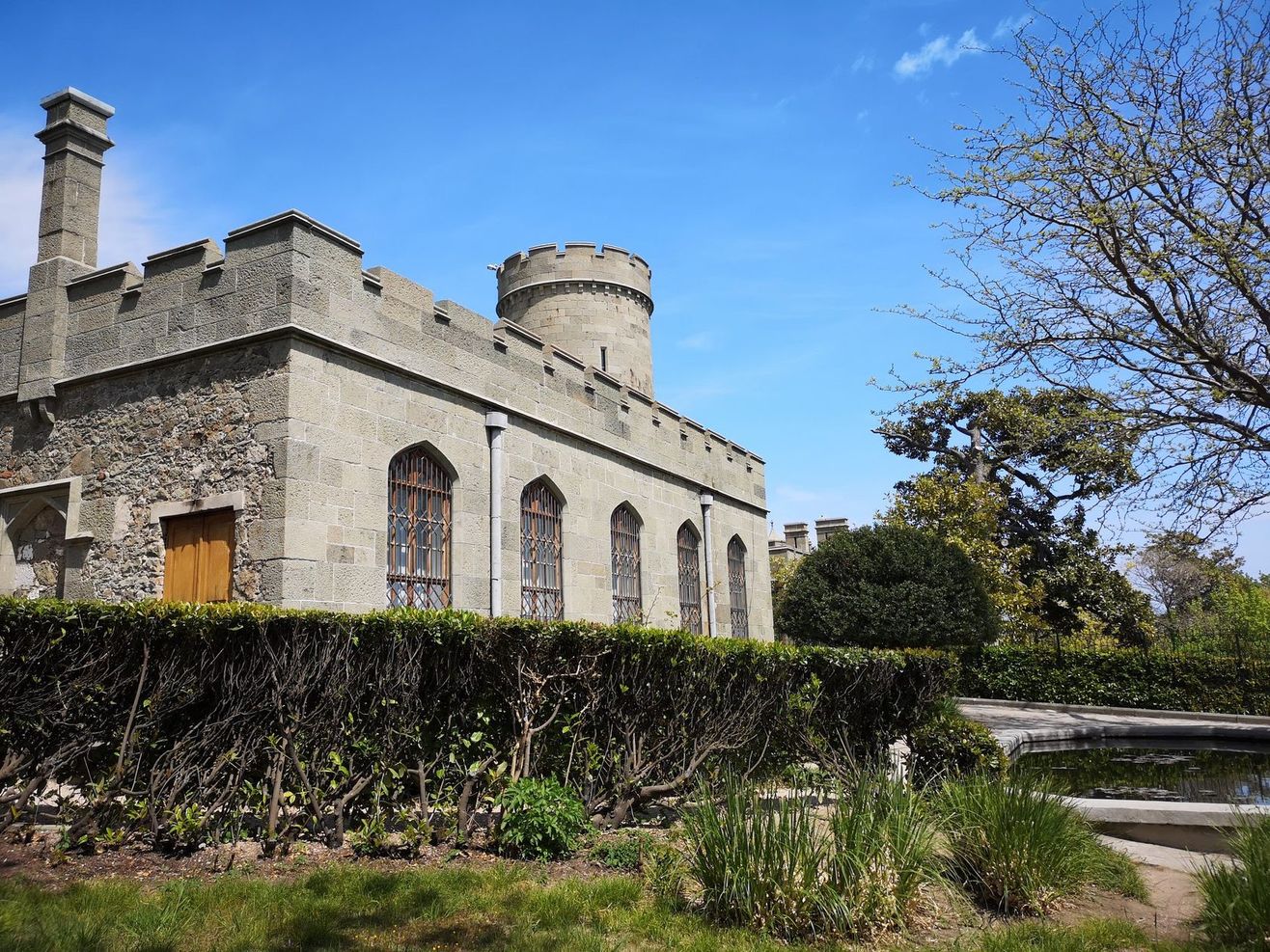
Vorontsov's Anglophilia influenced the final choice of architectural design. Blore, an advocate of the Tudor style, decided to combine this style with the Moorish one, which was supposed to look beautiful against the background of Crimean landscapes, and he carried this out remarkably successfully. Interestingly, Blore was never at the construction site and designed the palace based solely on ground plans, yet the building harmonizes surprisingly well with the natural landscape.
The most interesting architectural solution is hidden underground: few know that this is the only building in Ukraine whose foundation slabs are filled with lead — in this way, builders in those days prevented destruction during an earthquake, since the danger of seismic activity in those times, as in Crimea today, was and remains high.
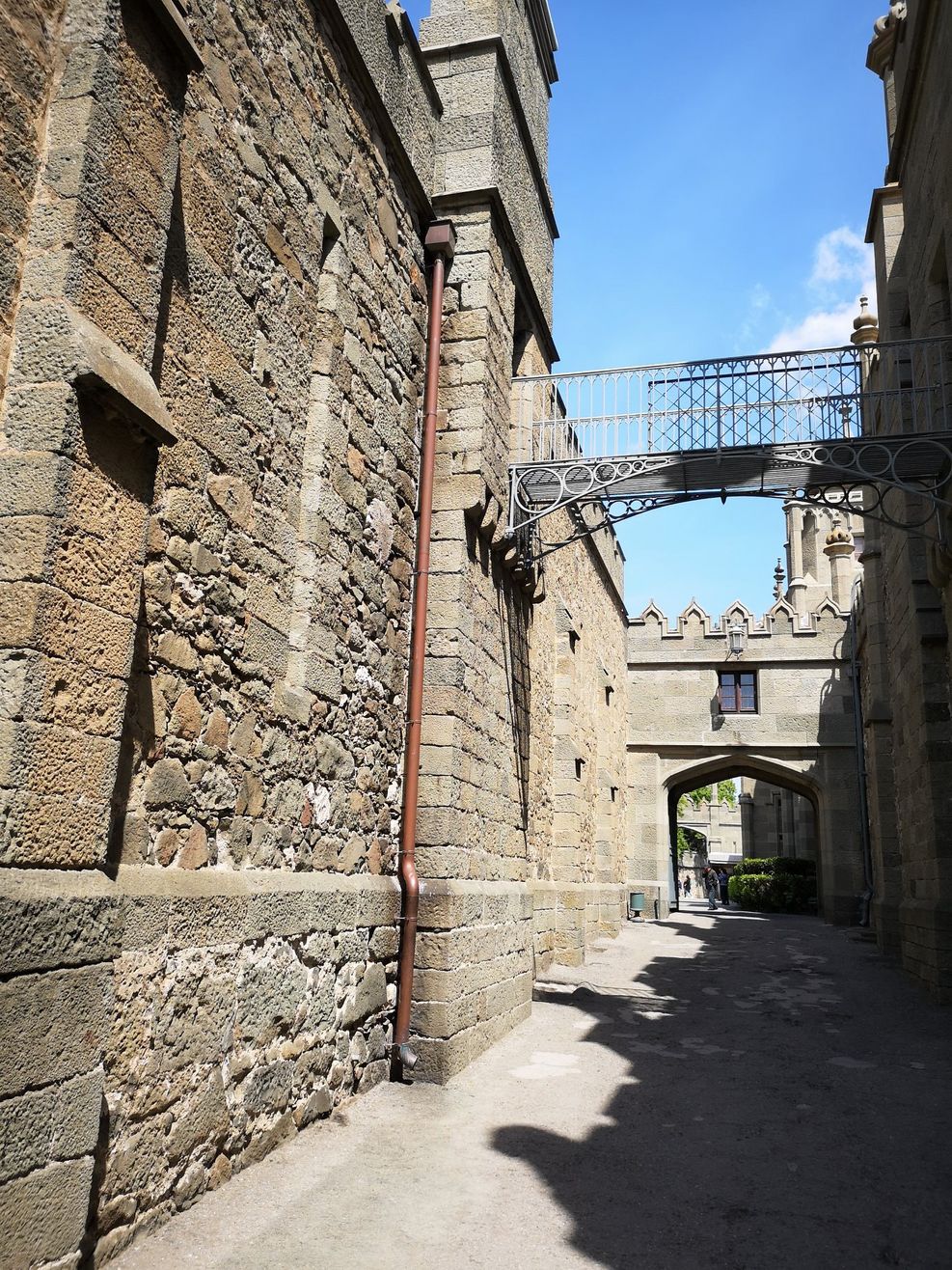
The main entrance of the palace is located on the western side, and it is indeed western in the full sense: round towers, high battlemented walls, narrow windows like embrasures — you enter an early medieval castle of a Western European feudal lord, built on the principle of 'my home is my castle'.
In contrast, the southern entrance is made in the Arabic spirit: a horseshoe arch decorated with plaster carvings. On it, written six times in Arabic, is: 'There is no victor but Allah'. A logical question arises as to what caused the appearance of this phrase on the palace, since the Count was not a Muslim. Apparently, Vorontsov sought to recreate the Moorish Alhambra Palace in Granada in the south of Spain, the residence of the Muslim rulers of Spain where such an inscription exists, thereby combining West and East.
Count Vorontsov collected paintings by European artists. The collection of works by Western European masters gathered in the palace was dominated by works of artists from England, Flanders, Holland, Italy, and France. Here are works by P. Snayers, C. Netscher, Carlo Maratti, William Hogarth, and George Dawe. In the grand lobby, several ceremonial portraits of Vorontsov relatives by various masters (artist Richard Brompton and others) are presented.
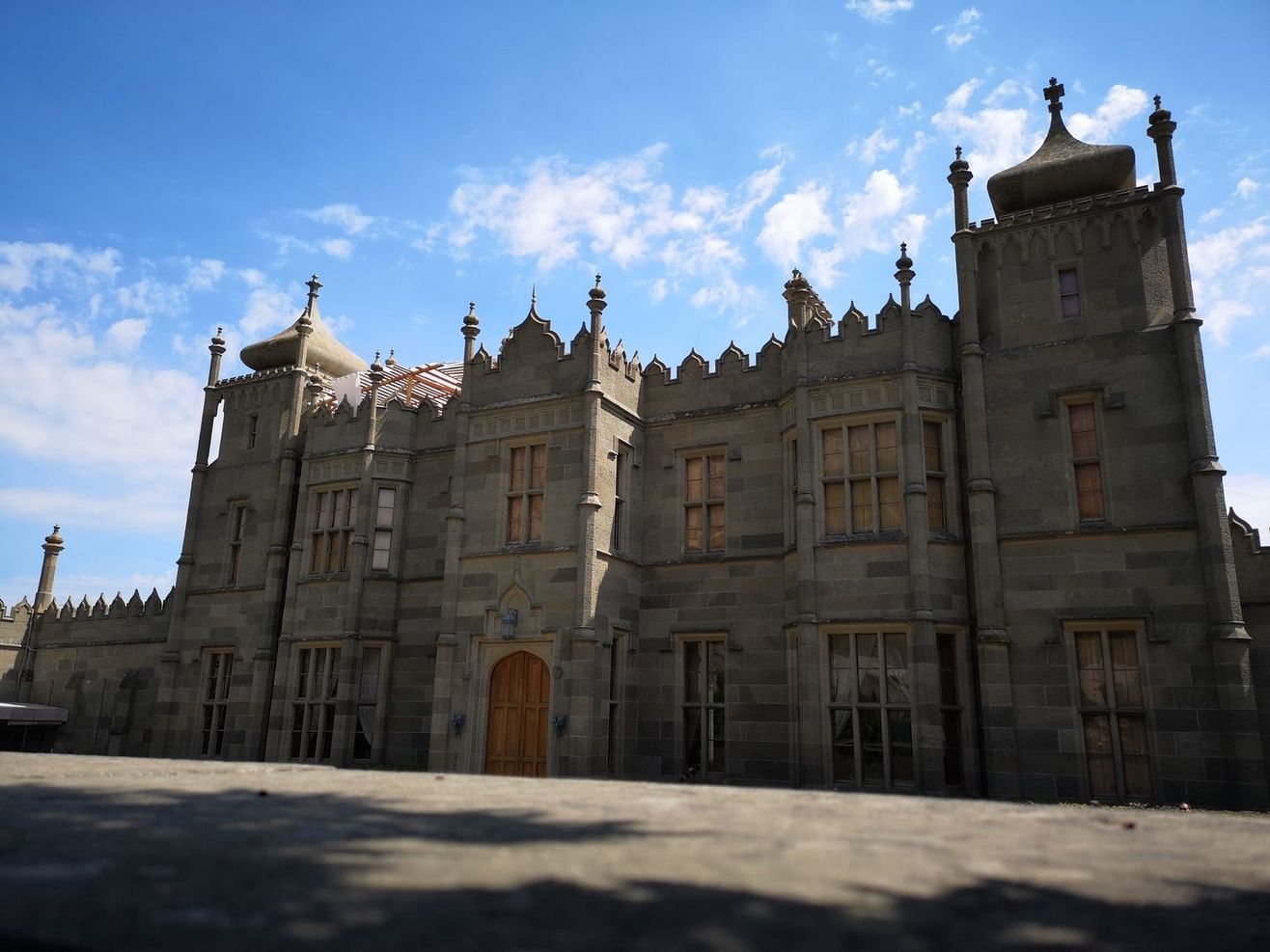
Photo by D. Mokrentsov
The library was the last to be built, in the 1840s. Vorontsov's library numbered 25,000 volumes, of which only ten thousand have survived to this day. Vorontsov had similar collections in his other estates, but only the library in the Alupka Palace was preserved; the library of the Odesa Palace was transferred to the university, the Tiflis one disappeared to who knows where, and the St. Petersburg one was sold off by Vorontsov's son, Semyon Mikhailovich.
Over the years, the owners of this palace changed. It was inherited from one branch of the Vorontsov family to another, but after the arrival of Soviet power in Crimea, it was nationalized, and in 1921 a museum was opened here.
During the Axis occupation of Crimea in the Second World War, the palace, fortunately, did not suffer any damage from bombings or shelling. The German occupying authorities treated the cultural heritage with a certain respect, issuing a protection document for the museum. They even organized excursions for officers and soldiers of the Reich. Retreating in 1944, the invaders took 537 exhibits to Germany, not all of which could be returned. For preserving this architectural gem, the museum's curator Stepan Shchekoldin was highly rewarded by the Soviet 'liberators' — he received ten years in the GULAG as a collaborator of the German fascist invaders.
In 1945, the UK delegation was accommodated in the palace. It was here on February 8, 1945, that the number of participating countries in the founding conference of the United Nations, as well as the time and place of the first meeting of UN member states, was finally determined. After the end of the Yalta Conference, for ten years the Vorontsov Palace was used as a government dacha for high officials of the then-all-powerful NKVD. Only since 1956 did the palace become a museum again, and it remains so to this day. Its main collection alone numbered 27,000 exhibits.
The palace-museum repeatedly became a location for filming. The specificity of its interiors and architecture, integrated into the Crimean landscape, created ideal conditions for creativity.
The Vorontsov Palace-Museum Has Already Survived One Occupation. Is History Repeating Itself?
What is being done now, during the Russian occupation? The combination of imperial ambitions, oil dollars, and unpunished corruption with the lack of control over the authorities and the disregard for the values of a democratic society is a bad combination for cultural heritage.
Especially when the occupiers are unaware that the sky in Crimea is not always cloudless. Back in November of last year, the repair of the palace roof began. The roof with an area of 2.5 thousand square meters was to be replaced for 60 million rubles from the federal budget. The roofing was dismantled, temporarily replaced with a so-called 'technical roof,' where the word 'temporarily' proved to be key. All that was needed was a last drop to complete the chain of misfortunes.
The last 'drop' was a heavy rain that fell on June 7 of this year: powerful downpours accompanied by strong winds hit the South Coast of Crimea. Yalta's streets turned into turbulent river torrents. The wind tore the temporary roof off the Vorontsov Palace, flooding the museum so that inside 'the water was ankle-deep'.
Not only the walls and interiors of the palace-museum suffered, but also the exhibits. Nothing was reported about the condition of the paintings from the Vorontsov collection and the books gathered in the library. For a while, the main exhibition — the staterooms of the main building of the palace — was closed to visitors.
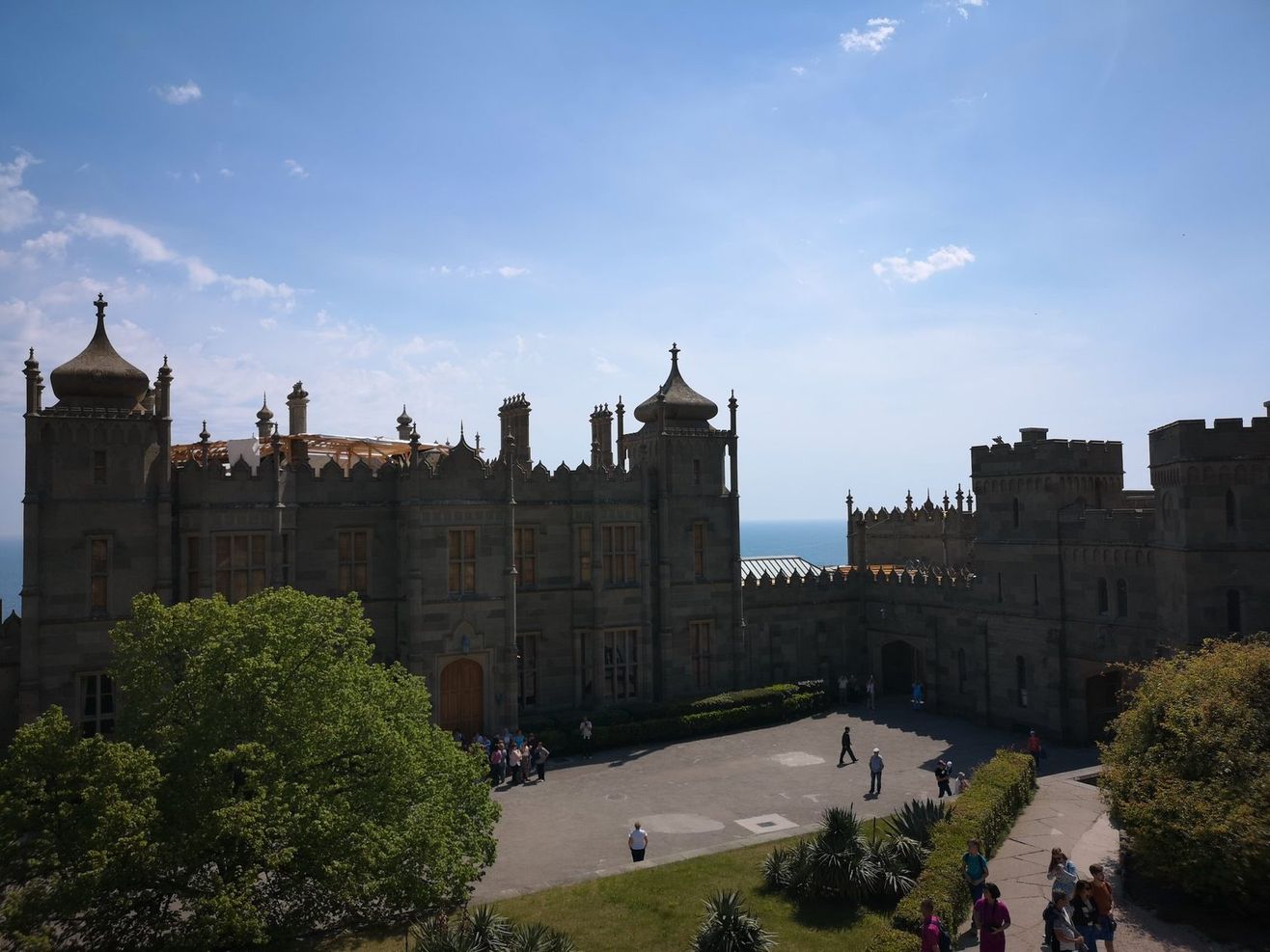
The press service of the so-called Ministry of Culture of the RK had to take the rap for the federal minister: 'On the morning of June 7, due to hurricane-force winds and heavy rain, part of the coverage of the temporary (technological roof) was shifted from its design position, which led to leaking and wetting of the walls of the first and second floors of the main building,' the official statement reads. 'The museum-reserve took measures to turn off the power supply of the main building and transfer part of the museum collections and exhibits to other premises. No direct loss of museum objects was detected. The rain was short-lived, and the hurricane did not cause significant damage to the architectural monument,' the ministry spokespeople assure.'
'There is no harm, we did not find any direct loss of museum items. There was wetting of the walls of the first and second floors of the main building, but nothing was damaged. The Blue Living Room was damp, and one element of the molding fell off. It has already been restored and will soon be returned to its place. Everything is fine with Vorontsov's study and the rest of the exposition elements,' said Arina Novoselskaya, minister of culture in the collaborationist government of Crimea.
The repair works on the roof of the palace-museum were carried out by the firm LLC 'Meandr', which in 2018 took on the absorption of 367 million rubles for the reconstruction of the building. Note that this very firm is simultaneously engaged in the reconstruction and restoration of a dozen architectural objects on the 'well-acquired' peninsula. The zeal is easily explained by the generosity with which the Ministry of Culture of the Russian Federation distributes taxpayers' money for the needs of rebuilding cultural heritage monuments. All the more so because there is a suspiciously deep understanding between the mentioned 'Meandr' and the Federal Minister of Culture, Vladimir Medinsky. This company receives all the lucrative contracts from the federal ministry of culture, especially in St. Petersburg and now also in Crimea and Sevastopol.
On the official website of LLC 'Meandr', they authoritatively assure: 'The roof is only the first stage of the work. The next one is the reconstruction of external engineering networks. Already 300 million rubles will be spent on this. They are also restoring the terrace railings. The park will also be tidied up.' The park is no less unique a monument than the palace buildings. Will they cut down century-old trees to tidy it up?
And the final chord is completely striking in its confidence in tomorrow: 'Works within the federal target program will continue in the Vorontsov Palace until 2020'.
'God is high, the Tsar is far, and Vorontsov is dead,' — they said in the century before last. In Crimea, however, after the June downpour that flooded the Alupka palace-museum, the saying spread: 'If Vorontsov saw what was happening, he would have died a second time'.
However, let's hope that the occupation will be as short-lived as the rain, and will not cause 'significant damage' — then it will be possible to save at least something from modern barbarians.
Supported by the Ukrainian Cultural Foundation