Crimea in Works of Foreign Literature: In the Fire of Ukraine
Of all Western nations, Poland, the immediate and closest neighbor to Ukrainians, knows the most about Crimea.
Valerii Verkhovskyi. "Krymska Svitlytsia" newspaper, 2018, Issue No. 40
Of all Western nations, Poland, the immediate and closest neighbor to Ukrainians, knows the most about Crimea. History has woven the destinies of the two nations so tightly and strangely that it has generated many plots for literary works — both Ukrainian and Polish. Moreover, this time we will examine a poetic rather than a prose work; and although the author was born in Ukraine, he wrote in Polish, and therefore belonged to Polish literature, creating in forced exile.
«Yes, I am a Pole and a Podolian!» Juliusz Słowacki, "Beniowski"
Juliusz Słowacki wrote in Polish; he is an outstanding Polish poet, and that is undeniable. But just as Mickiewicz is inextricably linked with Belarusian Navahrudak, Słowacki belongs also to the land where he lived — Ukrainian Volhynia, his native Kremenets, and to the language in which he wrote.
Juliusz Słowacki was born in 1809; he was five years old when his father, a professor at the Kremenets Lyceum, died. After graduating from the University of Vilna, Słowacki became a government official in Warsaw, and a year later, in 1830, the Polish Uprising began. As a Polish patriot, he could not stand aside, and Słowacki went to London as part of the Polish embassy... But the uprising was suppressed, and the poet would never see his native land again.
And his subsequent fate — almost twenty years of life — passed in Europe; it was a time of loneliness and hardship, but also the peak of creative fire: from his magical pen, as if born by themselves, 16 poems emerged, including the unfinished "Beniowski", and dramas: "Krak", "Mindowg", "Mazeppa", and others. Death from tuberculosis cut short the poet's life when he was not yet forty years old...
I will remember Crimea and the eager knights, Again I will help them mount the saddle of war, — At my voice, rising from the coffin, — In the fire of Ukraine, they rush...
Creating an idealized image of a Polish nobleman, Słowacki allows himself bold departures from the historical character — Maurice August Beniowski turns out to be Mauricy Kazimierz Zbigniew Beniowski, Madagascar is not mentioned, and instead, a large part of the work is dedicated to the journey to Crimea.
The poem "Beniowski" was translated into Ukrainian by Ivan Hlynskyi. Since 1984, when its part "Crimean Adventures" was published by the Simferopol publishing house "Tavria", the book has not been republished. Unfortunately, during the author's lifetime, only the first five cantos of the poem were published, while the rest remained in unsystematized author's notes, incomplete and unfinished. This is worth remembering when reading the book; otherwise, the impression of Juliusz Słowacki's work will be irretrievably lost.
The Crimean episodes of the poem begin with a scene that is not in the book "Crimean Adventures", namely a scene from the fourth canto: when Beniowski receives a commission from a priest to deliver letters to the Crimean Khan. With this commission, our hero sets off for Crimea.
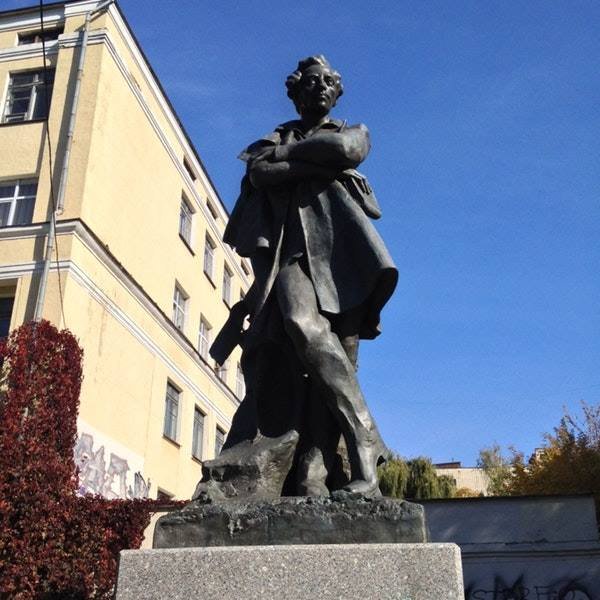
The poet writes chasing his thoughts, constantly making departures from the theme, providing detailed literary-critical remarks on the state of Polish and Russian poetry of that time. The hero of the poem has little in common with the prototype; in the poem, he is a noble, though poor, knight from Podolia.
On a black horse to Crimea, to the Khan, Night and day, envoy Beniowski rides...
In Crimea, our hero comes across a captive compatriot, a noble girl from Podolia named Aniela, who did not end up here of her own free will: she was kidnapped from her home by raiders, and it was done not by a Tatar, but by a Cossack (either Russian or pro-Russian). Later, he sold her to a priest (here, the line of the Moscow Patriarchate can also be discerned), and now a new buyer has already been found for the unfortunate girl...
However, for the 'poetic Beniowski' everything is not as simple as for the 'realistic' one, who calmly married a merchant's daughter, whom he later abandoned and never saw again.
A romantic poet differs from a realist colleague in that, having fallen in love, he dreams of all kinds of misfortunes for his 'object'; of course, only to later overcome all obstacles, defeat the forces of evil, and win love deservedly, as a reward; without those adventures, simply getting married and setting up a bourgeois nest is, obviously, uninteresting for a romantic.
The hero, in a desperate attempt to rescue his beloved, is even capable of bursting into the Khan's palace, but the forces are unequal. One could hardly expect help from the only Pole — Envoy Borejsza: that lover of a hookah with hashish slept, indifferent to the real world.
Unexpected rescue comes when it already seemed that all was lost. One of the Crimeans, who suddenly turns out to speak Polish fluently, rescues the nobleman. Judging by the context, this is the Khan's son, whose mother, like Aniela, is a Polish captive.
Beniowski, who barely managed to slip out of Bakhchisarai, is caught up in the steppe by two hundred dzhigits led by a man named El Jin; they swear to faithfully serve the brave nobleman. In addition, Beniowski receives from the Khan a tented wagon, so large that one could live in it. El Jin delivers this Khan's gift and assures that there is no gold in the wagon, but there is 'a lot of trouble': in the tent, the noble youth finds his beloved Aniela... And everyone suddenly heard — oh, Allah! —
A boy's "Ah!" and also a girl's "Ah!"