He Introduced All of Europe to Coffee, Having Learned It in Crimea
The story of Lviv native Yuriy Kulchytsky, the founder of the coffee tradition in Europe. And one would ask, what does Crimea have to do with it?
Ihor Halushchak. "Krymska Svitlytsia" newspaper, 2016, Issue No. 41
Several years ago in Lviv, a monument was erected to Yuriy Kulchytsky, a native of the village of Kulchytsi in the Lviv region, which today arouses special interest among numerous foreign tourists. After all, it was he who founded the coffee tradition in Vienna more than three centuries ago, which quite quickly spread everywhere, first in German-speaking countries and then across the entire European continent.
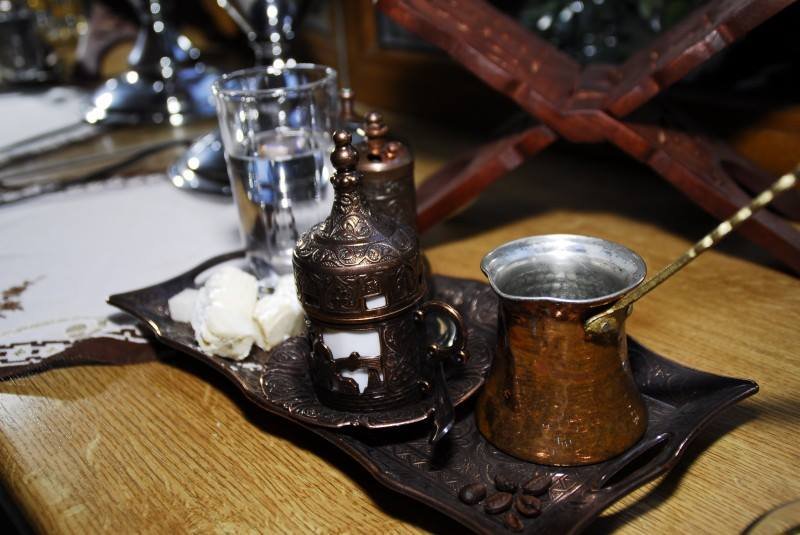
Meanwhile, Yuriy-Frants Kulchytsky (1640–1694) forever entered the history of Europe as a brave warrior and one of the saviors of Vienna during the Turkish invasion in the second half of the 17th century. Thanks to a brilliant reconnaissance and sabotage raid he carried out behind enemy lines, invaluable information was obtained about the real forces of the enemy and the plans for their offensive. Therefore, the united army of Europe got the opportunity to defeat the huge Turkish army with minimal losses near the Austrian capital in the famous Battle of Vienna on September 12, 1683, under the leadership of Polish King Jan III Sobieski.
By the way, it was the latter who convinced other European monarchs that if they did not attract units of Zaporozhian Cossacks to the military campaign, then Europe in the confrontation with the Ottoman Porte would face inevitable defeat.
Therefore, Yuriy Kulchytsky, along with Cossack colonels Palii, Apostol, Bulyha, Voron, and Iskra, accepted the offer to join this fight. However, he stood out among the others because he knew the opponent like no one else. For reconnaissance purposes, he could easily disguise himself as a Turkish officer or merchant!
The fact is that at one time he participated in numerous clashes with the Turks on the territory of the current South of Ukraine (the Wild Fields of that era). And so as not to fall asleep during night watches, he and his fellow Cossacks, besides smoking tobacco, adopted from the enemies another custom unknown in Europe at the time: brewing and drinking strong Eastern coffee. After all, then Zaporozhian Cossacks faced severe punishment for sleeping or drunkenness on watch — either execution or, in the best case, ignominious expulsion from the army if the Cossack had significant military merits prior.
Therefore, the picturesque scene in Nikolai Gogol's novella "Taras Bulba," when during the siege of Dubno the Cossacks drank too much and fell into a dead sleep, allowing Bulba's younger son, Andriy, to slip unnoticed into the local castle, does not, to put it mildly, correspond to historical truth!
But Kulchytsky was still unlucky. In one of the clashes with superior forces of enemy cavalry, he was captured by the Turks and spent several years in Bessarabia and Crimea of that time as a 'paroled' hostage, until Serbian merchants ransomed him from captivity. Thus they thanked Kulchytsky for translation services, as the clever Cossack had perfectly mastered the Turkish and Crimean Tatar languages during his several years of captivity. There, visiting the coffee houses of Bakhchisarai, Feodosia, Gurzuf, and Alushta, he thoroughly mastered the technology of preparing the drink, which was then unknown in Europe.
Consequently, for his merits, Kulchytsky, who decided to retire after the battle, at his own request received from the grateful Austrians a reward that was not very clear to them at the time: all the enemy coffee bean stocks captured (about 300 bags).
To be fair, initial attempts to open the first coffee houses in Europe were made before him by Armenian and Jewish merchants. But the point is that because of the almost tar-like thickness and bitter taste, which the Turks and Arabs of that time liked so much, the new brew did not initially enjoy much popularity among Europeans, and the Vatican even declared it 'the devil's soot'! But it was Kulchytsky who introduced the 'know-how' into its preparation that satisfied even the church: he began adding cream and sugar to freshly brewed coffee!
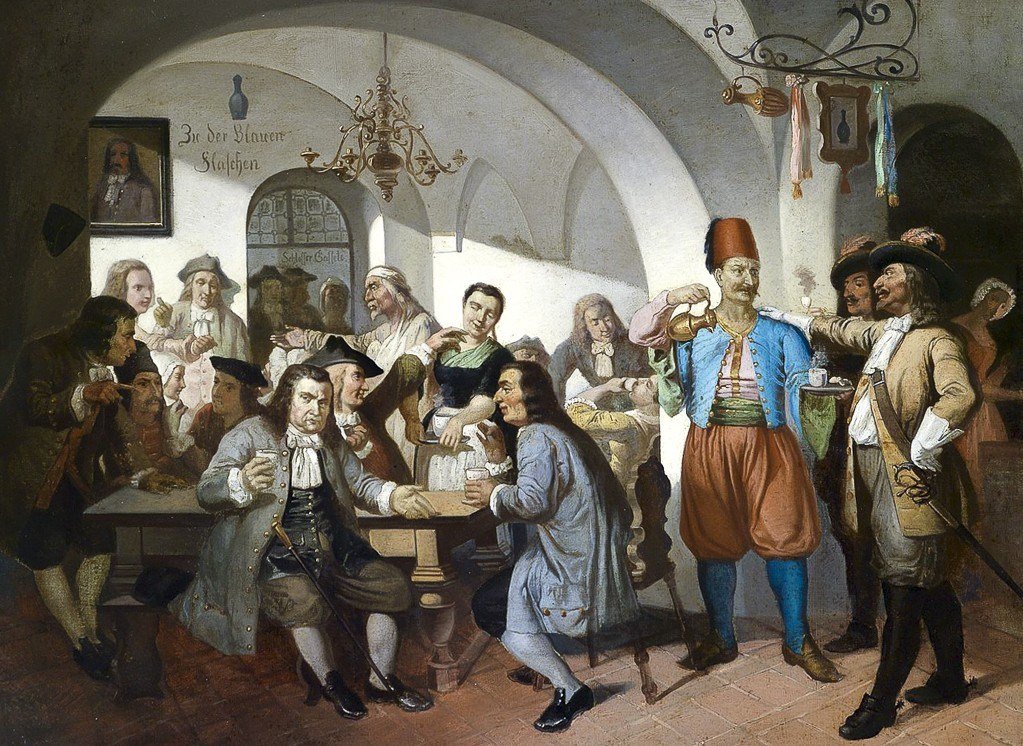
At first, dressed in Crimean Tatar attire, he personally distributed the new coffee on a silver platter through the streets of the Austrian capital, and later opened his first coffee house called 'Under the Blue Bottle'. The Cossack was also well-served in starting his own business by his good mastery of the German language. The new drink became so popular among the Viennese that after some time, similar establishments began operating in many parts of the city, and Kulchytsky headed a separate guild of coffee sellers. The Austrians still remember and respect the Ukrainian, because it is to him that they owe the world-famous Viennese coffee.
Back in 1862, one of the Viennese streets was named in honor of Yuriy-Frants Kulchytsky — Kolschitzky-Gasse, and in 1885, his bronze sculpture was installed on one of the corner houses of this street. It depicts a Cossack dressed in Turkish attire holding a tray with small cups of coffee. Also in Vienna, a popular cafe with the telling name 'Grand Cafe Zwirina zum Kolschitzky' still exists today.
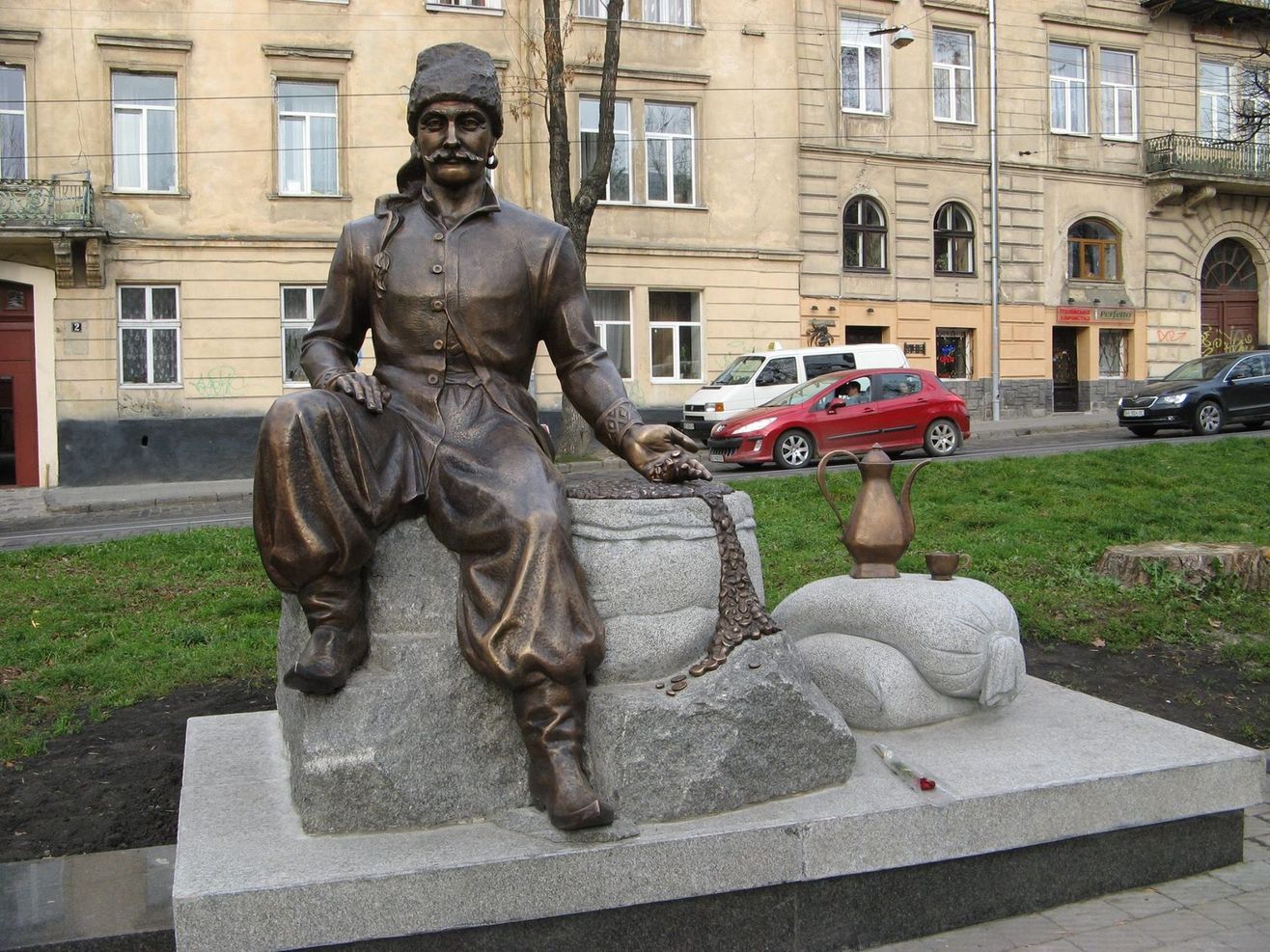
Unfortunately, such a respected figure in Western Europe as Yuriy Kulchytsky remains not very well known in Greater Ukraine. But not in Galicia! After all, it is to Kulchytsky that the city of Leo (Lviv) owes its current real coffee boom. The coffee tradition here started with the fact that, developing his own network, a few years after Vienna, he opened a similar establishment in Lviv as well. Here he is truly remembered and respected. The Lviv monument by sculptor Roman Kikta is made of bronze, and the pedestal is of granite.
And to fully reveal the image of Yuriy Kulchytsky, there is also a heraldic stele depicting the coat of arms of the Kulchytsky family. The allegory of weapons indicates that he was a glorious knight. The sack from which coffee beans pour out and turn into gold coins symbolizes that Yuriy Kulchytsky was also a good entrepreneur. The classic coffee pot and the steaming cup testify that it was he who taught the culture of coffee consumption to all of Europe. And finally, the Cossack earring in his ear, that is, a 'kulchyk' (earring), symbolizes that he is, in fact, Kulchytsky.