Crimea in Works of Foreign Literature: The Price of Stubbornness
The adventures of Jules Verne's novel characters in the Black Sea.
Valerii Verkhovskyi. "Krymska Svitlytsia" newspaper, 2018, Issue No. 4
"Crimea! This ancient Tauric Chersonese! A quadrangle or, rather, an irregular lozenge, which seems stolen from the most charming coast of Italy".
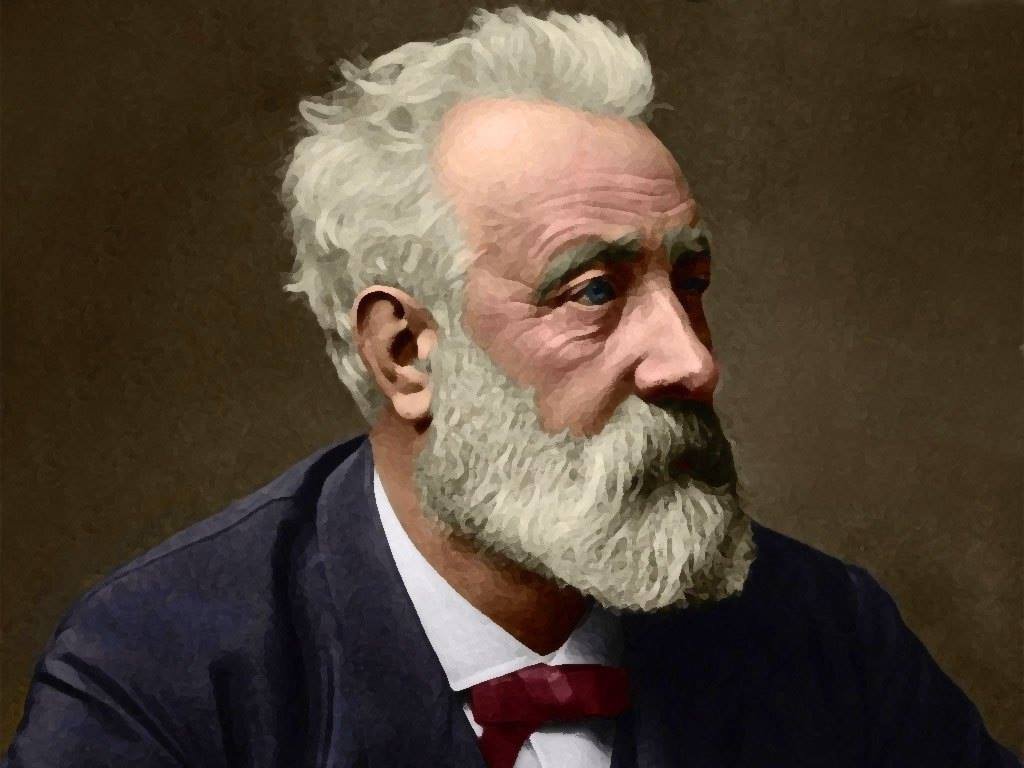
Jules Verne (1828–1905) is a writer known to everyone since childhood, and perhaps only someone who dislikes reading at all has not read his books. In his books, teenagers found everything that interests them most at their age: travel, exoticism, new knowledge, adventures...
He left no 'white spots' on the globe. The writer sent his heroes to all continents of the planet and even to the Moon; including — around the Black Sea through Crimea.
Let's list the route of the characters of the novel "Kéraban the Inflexible" (the Ukrainian part only): Kiliya — Mayaky — Odesa — Kobleve — Mykolaiv — Kherson — Oleshky — Velyki Kopani — Kalanchak — Perekop — Dzhankoi — Arabat — Kerch — Yenikale.
Kéraban is a Turk, a tobacco merchant, known for his stubbornness. Once he was outraged by an innovation of the Istanbul authorities in the form of a tax of 10 coins for crossing the Bosphorus from one shore to another within Istanbul.
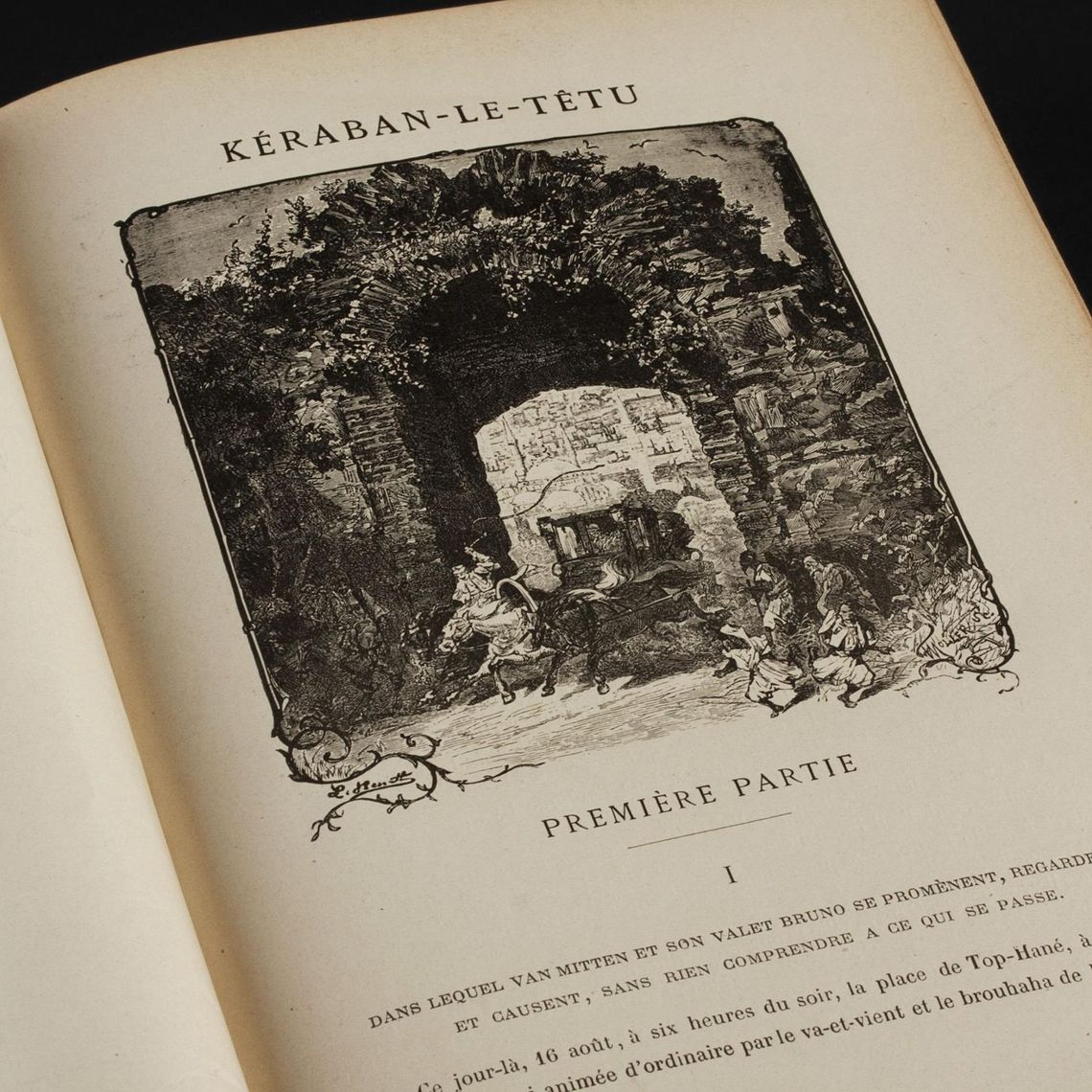
Refusing to pay a sum equal to half a cup of coffee, Kéraban decided to travel by horse-drawn carriage overland — all the way around the Black Sea, in order to dine in Üsküdar. Together with his business partner, the Dutchman Van Mitten, and his servant Bruno, Mr. Kéraban sets off through Bulgaria and Romania to Odesa: "This city is an oasis in the surrounding steppe."
In the oasis lives his friend, the banker Selim, with his daughter Amasia, who is soon to marry Ahmet, Kéraban's nephew; thus, Kéraban and Selim are to become relatives. Ahmet himself was also in Odesa, close to his beloved. Therefore, Kéraban also takes Ahmet and the servant Nizib with him, and all five, without delay, set off further — through Kobleve (perhaps the very first mention of this famous village in fiction) to Mykolaiv. Meanwhile, as soon as Ahmet leaves Odesa, the treacherous Captain Yarhud kidnaps his princess to forcibly marry her to the wealthy Turk Safar.
And so, having passed Mykolaiv and Kherson, the travelers' carriage approaches Crimea.
"The next day at noon, the rather tired travelers, having passed Velyki Kopani and Kalanchak, reached the town of Perekop..."
Since Kéraban was in a hurry, it was necessary to travel by the shortest route (approximately as the Dzhankoi–Kerch railway is laid today), and therefore the travelers, unfortunately for the readers, did not see the luxuries of mountainous Crimea and the South Coast. "The landscape here was less wooded and more desert-like. In some places, tall dromedaries grazed freely, turning this region into a kind of branch of the Arabian Desert. The wooden carts, without a single metal detail, that passed by creaked with axles rubbed with tar. All this looked very primitive, yet in rural dwellings and on isolated homesteads, sincere and all-encompassing Tatar hospitality was still encountered."
For the night, our heroes stop in the town of Arabat. In the local inn, Kéraban and his companions dined on pilaf, "in which there was more rice than chicken," yogurt, and flatbreads, "known here by the name of katlamas." Kéraban formulated his impressions of the quality of the dishes as follows:
"— Mithridates acted clumsily. — Why? — the Dutchman inquired. — If he really wanted to poison himself, he should have dined at the Arabat tavern."
In the morning, our company finds themselves face-to-face with an unexpected problem. A certain respectable Turk, Mr. Safar (the same one who ordered Amasia's kidnapping, though our heroes do not suspect this yet), had taken all suitable horses for his important needs, and now Kéraban and his companions had no one left to harness to the carriage. In despair, Kéraban begged the innkeeper: "Find me two horses, even one... At least half a horse!".
But all was in vain — not a single horse was to be found in the whole of Arabat. "Сто карбованців заплачу тому, хто надасть мені упряжку!" (Wait, "Сто карбованців" -> "I will pay a hundred rubles", let's translate that: 'I will pay a hundred rubles to anyone who provides me with a harness!') — Kéraban declares, but no money will save them here. Finally, in the absence of horses, Kéraban is ready to agree to mules or even donkeys. In the end, the inventive travelers find an original way out and can quietly continue their journey: they harness to the carriage a pair of dromedary camels, which were found in sufficient numbers in this area.
Kerch welcomed the travelers with another unexpected but amusing incident: "— But I do not see the bridge by which to cross this river, — Kéraban continued. — Indeed, uncle, it is no longer there, — Ahmet replied, putting a cupped hand to his eyes and peering at the invisible bridge over the alleged river. — However, there must be a bridge, — Van Mitten said. — In my guidebook its presence is mentioned."
It turns out that a bridge over the Kerch Strait was dreamed of even back then! Next — the Taman shore, where the travelers were lucky enough to observe the eruption of a mud volcano, admire the beauty of the Caucasus, and, having traveled through the whole of Asia Minor, reach Üsküdar, having survived many other interesting, informative, and sometimes dangerous adventures. But in the end, good triumphs and evil is punished: the beautiful Amasia is freed, a honeymoon awaits the newlyweds, and Kéraban proved that he is capable of getting his way no matter what. All heroes remain alive, and all villains receive their deserved punishment — good always triumphs because it is wiser than evil. A happy ending is inevitable.
And for this, we love Jules Verne. Sincere faith in the bright side of human nature, confidence in the benefits of progress and the power of knowledge fully justify some naivety of the works and simplified psychologism. This light does not leave one even in adulthood.