Composer of the Music of Colors
Restoration of the creative forces and self-belief of the Ukrainian artist Ivan Khvorostetsky on Crimean land.
Restoration of the creative forces and self-belief of the Ukrainian artist Ivan Khvorostetsky on Crimean land
The collection of the Ternopil Regional Museum of Local Lore contains artifacts detailing the life and creative path of the famous Ukrainian artist Ivan Fedorovych Khvorostetsky, whose multifaceted artistic palette also touched upon the infinite beauty of Crimean landscapes and opened a new direction in his art.
Ivan Khvorostetsky was born in 1888 in Volhynia, in the beautiful village of Yurydyky near Pochaiv (now Ternopil Oblast). The future artist's first teacher was his uncle, a Pochaiv icon painter. Khvorostetsky's talent was noticed, and he was offered projects to paint churches in Volhynia, and later cathedrals in Kyiv and Bila Tserkva. In 1908, he entered the Kyiv Art School, where he studied diligently for seven years. Further studies were interrupted by war and revolution: he had to leave the St. Petersburg Academy of Arts.
Ten years later, already at a mature age, he entered the Kyiv Art Institute, graduating in 1928. He worked at the same institute, taught painting at the architectural faculty of the Kyiv Civil Engineering Institute and other educational institutions in the capital. I. Khvorostetsky achieved great success in 1928 at the international exhibition in Venice. His painting "Prali" (The Washerwomen) was recognized as the best work. Regrettably, almost all of his pre-war works were burned. Only four pieces survived from that period (now kept in the National Art Museum of Ukraine in Kyiv).
After the Second World War, he returned to his native Pochaiv land. Gathering his courage, he worked extensively and with inspiration. Landscape painting held a prominent place in the artist's work. Ivan Khvorostetsky was a deeply national artist. He chose Ukraine, and in particular his native Ternopil region, as the main subject of his insightful landscapes.
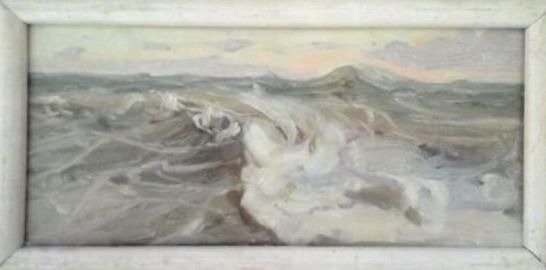
Ivan Khvorostetsky. "Waves", 1951, oil on cardboard
TOKM Zh-157
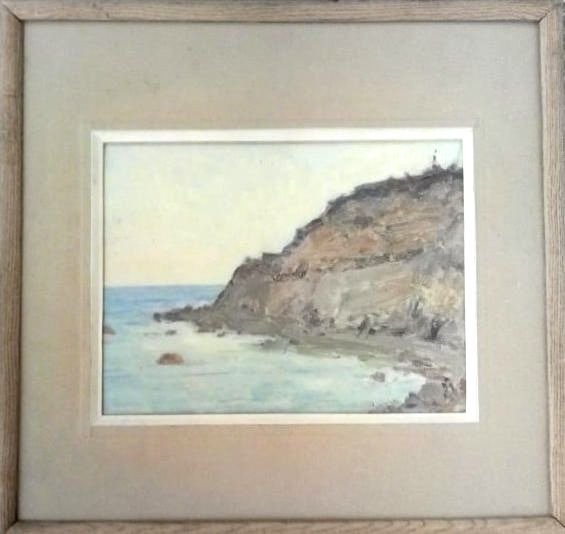
Ivan Khvorostetsky. "Seashore", 1952, oil on cardboard
TOKM Zh-154
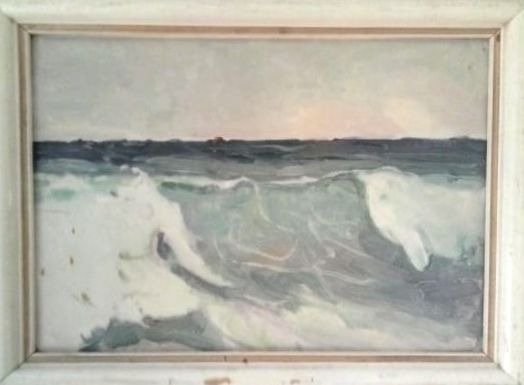
Ivan Khvorostetsky. "Waves", 1952, oil on cardboard
TOKM Zh-413
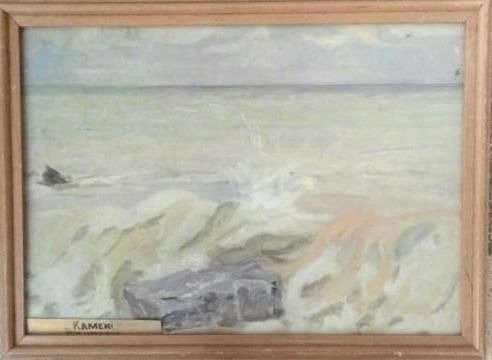
Ivan Khvorostetsky. "The Sea", 1952, oil on cardboard
TOKM-417
In the post-war years, I. Khvorostetsky continued his creative exploration in landscape painting, making several trips to the Crimean Peninsula. In the early 1950s, together with a group of marine artists, I. Khvorostetsky visited Crimea three times, particularly Gurzuf. It was then that he found almost everything he so desperately needed after the difficult war years. Here in Crimea, living among fellow artists, the painter felt the beneficial power of companionship with special intensity. He fully realized that his mastery, which had seemed lost forever, was returning to him, and along with it, self-belief.
The trips proved to be extremely productive. Most surprisingly, although Ivan Fedorovych had painted landscapes all his life using calm, singing rhythms, here the flat, distant horizons captivated him – he felt and accurately conveyed the palette of Crimean nature.
Ivan Khvorostetsky's works are kept in museums in Kyiv, Ternopil, Kremenets, and Mykolaiv. The collection of the Ternopil Regional Museum of Local Lore features 86 original canvases. All his works impress with the artist's ability to see the unique in the everyday. Among them are 18 paintings where the nature of Crimea comes alive, and the breath of the sea surrounded by mountains can be felt.
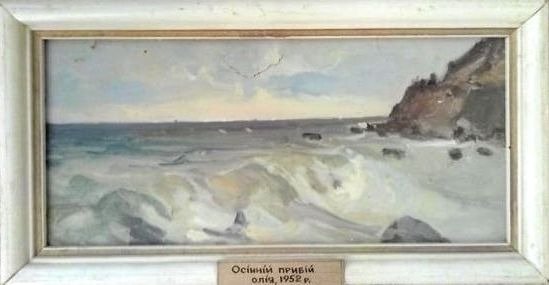
Ivan Khvorostetsky. "Autumn Surf", 1952, oil on cardboard
TOKM Zh-153
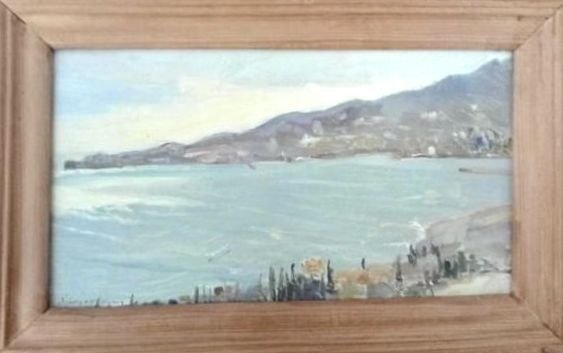
Ivan Khvorostetsky. "Gurzuf", 1953, oil on cardboard
TOKM Zh-101
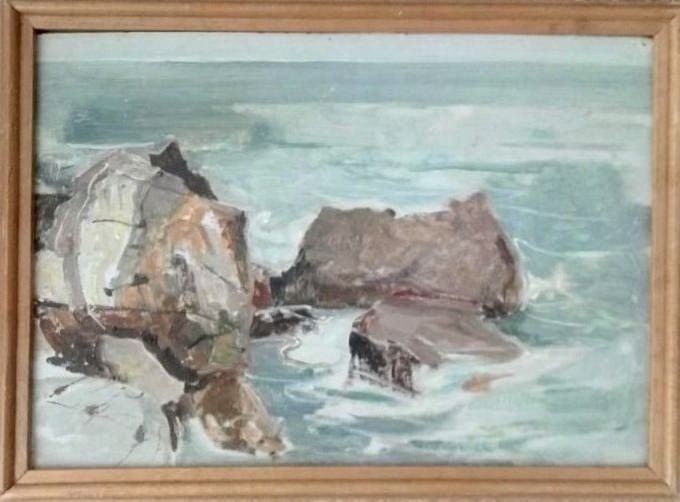
Ivan Khvorostetsky. "Stones", 1953, oil on cardboard
TOKM Zh-407
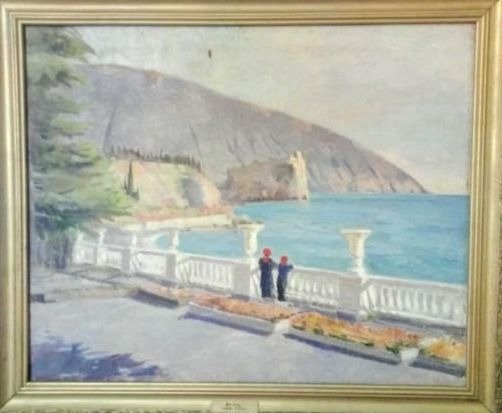
Ivan Khvorostetsky. "Artek", 1954, oil on canvas
TOKM Zh-409
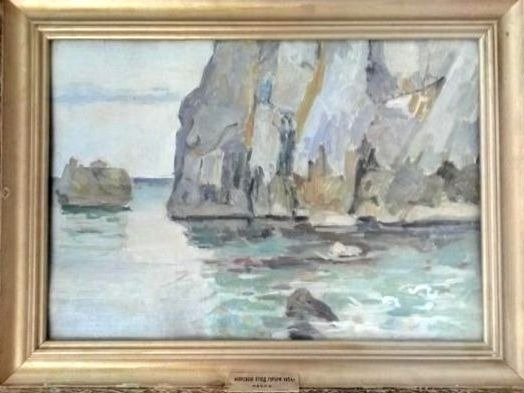
Ivan Khvorostetsky. "Sea Study", 1954, oil on cardboard
TOKM Zh-161
The huge boulders of rocks and the endless sea in I. Khvorostetsky's landscapes lend a sense of fragility and transience to human presence. The author enhanced and expanded his color palette, yet the coloring of the works remains soft and restrained. On small cardboards with oil paints, the artist recreated the sea, rocks, and the terra firma: "Waves" (1951), "Sea" (1952), "Seashore" (1952), "Stones" (1953), and others.
Even in the simplest studies, there is no studio aloofness. The author remains true to himself. The artist senses the enduring value of any earthly "smallness"; his studies – a single stone or a wave crashing against a rocky shore – resemble classical watercolors in the strength and clarity of this feeling. Ivan Khvorostetsky, as a true connoisseur of nature, asserts that nothing around us is repeated, and eternal movement is its primary law. That is why the color schemes in his studies are always different.
In his small works, the unity of the world is affirmed. The artist avoids depicting boundless marine expanses. Mountains, sea, sky – everything is on a human scale, proportional to man. Therein lies the source of harmony in the artist's world. While living in Gurzuf, the artist investigated states of nature that are complex for a painter: he achieved an infinite richness of tone (the grey sky and the grey sea are painted differently: one can see clouds swirling and hanging over the water, and turbulent waves rising – "Autumn Surf", 1952).
Noteworthy are the picturesque landscapes of Crimea painted in oils on canvas and cardboard of somewhat larger dimensions, in which the painter transitions from a landscape study to a landscape composition: "Artek Coast" (1950), "Yalta Bay", "Artek. Main Entrance", "Seashore", "Artek", "Sea Study" (all 1954). These canvases were no longer painted from nature, unlike the aforementioned studies, and are therefore perhaps less successful. In comparison, one can see how the artist loses out when departing from direct communication with nature, allowing his own past observations and feelings experienced during his stay on Crimean land to stand between nature and his work.
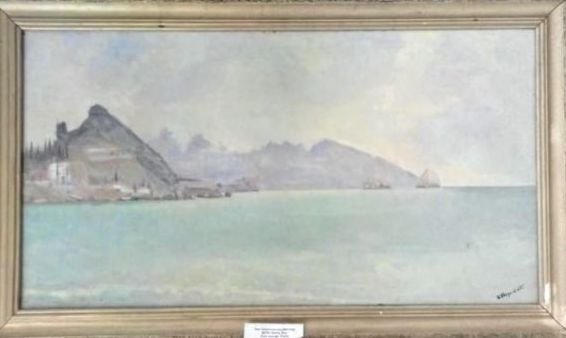
Ivan Khvorostetsky. "Seashore", 1954, oil on canvas
TOKM-52
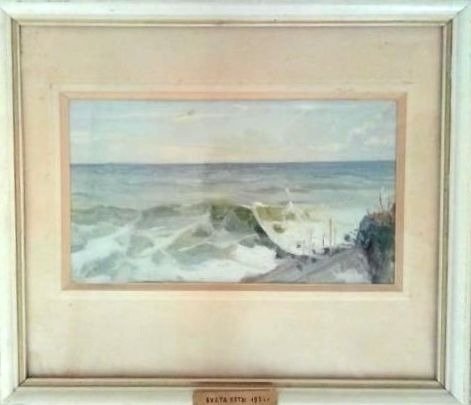
Ivan Khvorostetsky. "Yalta Bay", 1954, oil on cardboard
TOKM Zh-18
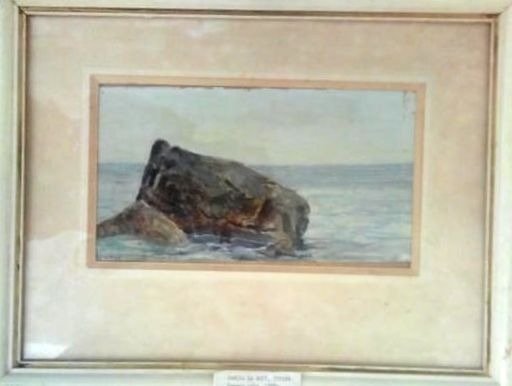
Ivan Khvorostetsky. "Stone on the Sea", 1955, oil on cardboard
TOKM Zh-20
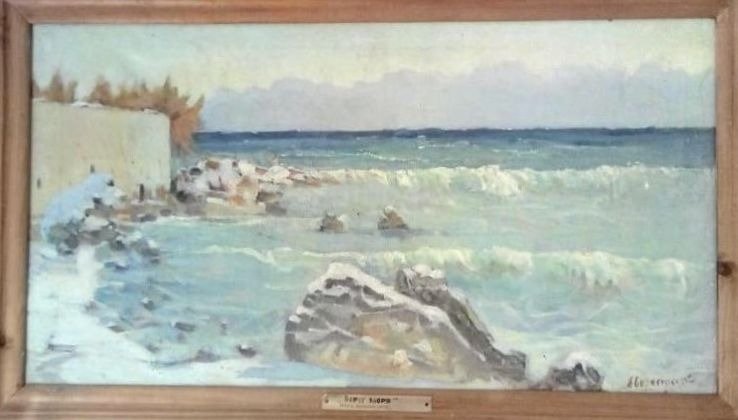
Ivan Khvorostetsky. "Seashore", 1957, oil on canvas
TOKM-139
In his memoirs, People's Artist of the USSR Mykola Hlushchenko recalled the artist's Crimean works: "Ivan Khvorostetsky's Gurzuf landscapes were exceptionally transparent, which corresponded to the very nature of Southern Crimea. This revealed a great culture of painting, a culture of color. His broad palette and receptivity to the diverse states of nature allowed him to avoid blackness and static immobility in his landscapes. His paintings create a sense of depth and the fleeting volatility of the states of nature. The marine landscape was the discovery of a new direction in his art."
Art historians called Ivan Khvorostetsky a "composer of the music of colors," as he very subtly conveyed the feeling of earth, sky, and air in his works...
The artist passed away on November 19, 1958, in Pochaiv.
Personal exhibitions: Lviv, Ternopil (repeatedly), Kremenets, Pochaiv, Kherson, Moscow, etc.
In 1968, a memorial plaque was unveiled on his native house, followed later by a museum in Pochaiv.
Material prepared by Halyna Zavisha, Head of the Storage Sector of the Collections Department of the Ternopil Regional Museum of Local Lore