The Southern Coast of Crimea at the Turn of the 19th–20th Centuries: A Popular Recreational Zone and the Development of Infrastructure
A popular recreational zone and the development of infrastructure.
For many, Crimea is primarily associated with its southern coast – a true oasis of the peninsula. Resort towns located in the subtropical zone of this region gained popularity thanks to the healing climate, unique landscapes, parks, and man-made landmarks.
From the mid-19th to the early 20th century, the southern coast of Crimea became a fashionable resort hub. It was during this period that summer palaces and villas were intensively constructed in Livadia, Massandra, Karasan, and Alupka. Unique climatic conditions, over a hundred mineral water springs, numerous mud lakes, and vineyards – all these advantages of the peninsula made it worth investing effort and resources into developing its infrastructure. In the 1870s, on the initiative of zemstvos, public organizations, and private individuals, and with almost no financial support from the government, sanatoriums began to open all along the coast.
Naturally, at that time, recreation and medical treatment in Crimea were affordable mainly to the wealthy gentry. However, there is documentary evidence of health improvement on the peninsula for other segments of the population as well. For instance, the State Archives of Ternopil Oblast preserve the correspondence of the former steward of the Pochaiv Lavra and minister of the Dubno Exaltation of the Cross Hermitage, Hieromonk Venedykt, with the Archbishop of Volhynia and Zhytomyr, Archimandrite of the Pochaiv Dormition Lavra Modest, regarding the extension of his leave for treatment in Crimea and the issuance of a ticket for the duration of his leave.
In his request, the hieromonk emphasizes: "Sea bathing and the air, with God's help, are gradually strengthening my health and, I think, when I start eating the therapeutic grapes, which will ripen no earlier than the 15th of this August, my health will undoubtedly be restored." As is known, until 1917, the Taurida Governorate encompassed not only the territory of Crimea but also three large districts of neighboring steppe Ukraine (Berdiansk, Dnipro, and Melitopol districts), which were populated almost exclusively by Ukrainians.
In turn, for the peninsula, which had been oriented toward close integration with mainland Ukraine since the liquidation of the Crimean Khanate, these districts played the role of a kind of resource buffer.
Thus, the Ukrainian factor significantly influenced the subsequent infrastructural development of the Crimean Peninsula. The establishment of transport links thanks to the construction of a mountain highway in 1824–1848 and, starting in 1861, the laying of a railway line, intensified the development of the peninsula's southern coast. In total, at the turn of the 19th and 20th centuries, 36 resorts and 60 sanatoriums with 3,000 beds functioned in Crimea. At the same time, each resort had its own characteristics of architecture, organization of recreation, and treatment.
The inconspicuous settlement of Yalta, which in 1802 consisted of just 13 fishermen's huts, gradually became the resort center of the southern coast of Crimea. On September 17, 1837, Yalta received city status. The town grew actively due to the construction of fashionable hotels, large shops, private villas, and hospitals. Several documents regarding the establishment of the infrastructure of the coastal cities in the south of the Crimean Peninsula, dated to the beginning of the 20th century, were found in the Central State Historical Archives of Ukraine in Kyiv.
From them, one can trace the prehistory of the development of utilities in Yalta, Sudak, and Gurzuf. In the pre-revolutionary period, all issues of infrastructural provision in the region were managed by the Board of the Kyiv District of Ways of Communication.
Thus, in the correspondence of the Kyiv District of Ways of Communication with the head of the Crimean Highways Section regarding the improvement of Yalta's sewage networks, it is asserted, in particular, that for the proper operation of utilities, it is necessary: "...to replace the existing drain pipe going from the gutter to the Derekoy River with a new one of one-foot diameter and to relay the gutters that have fallen into disrepair." According to the then-acting head of the section and the engineer: "The only measure that could prevent the flooding of Bulvarnaya Street should be recognized as blocking the access of atmospheric precipitation from part of the streets of the old town to Bulvarnaya Street and draining it directly into the sea; the works necessary for this can be charged to city funds."
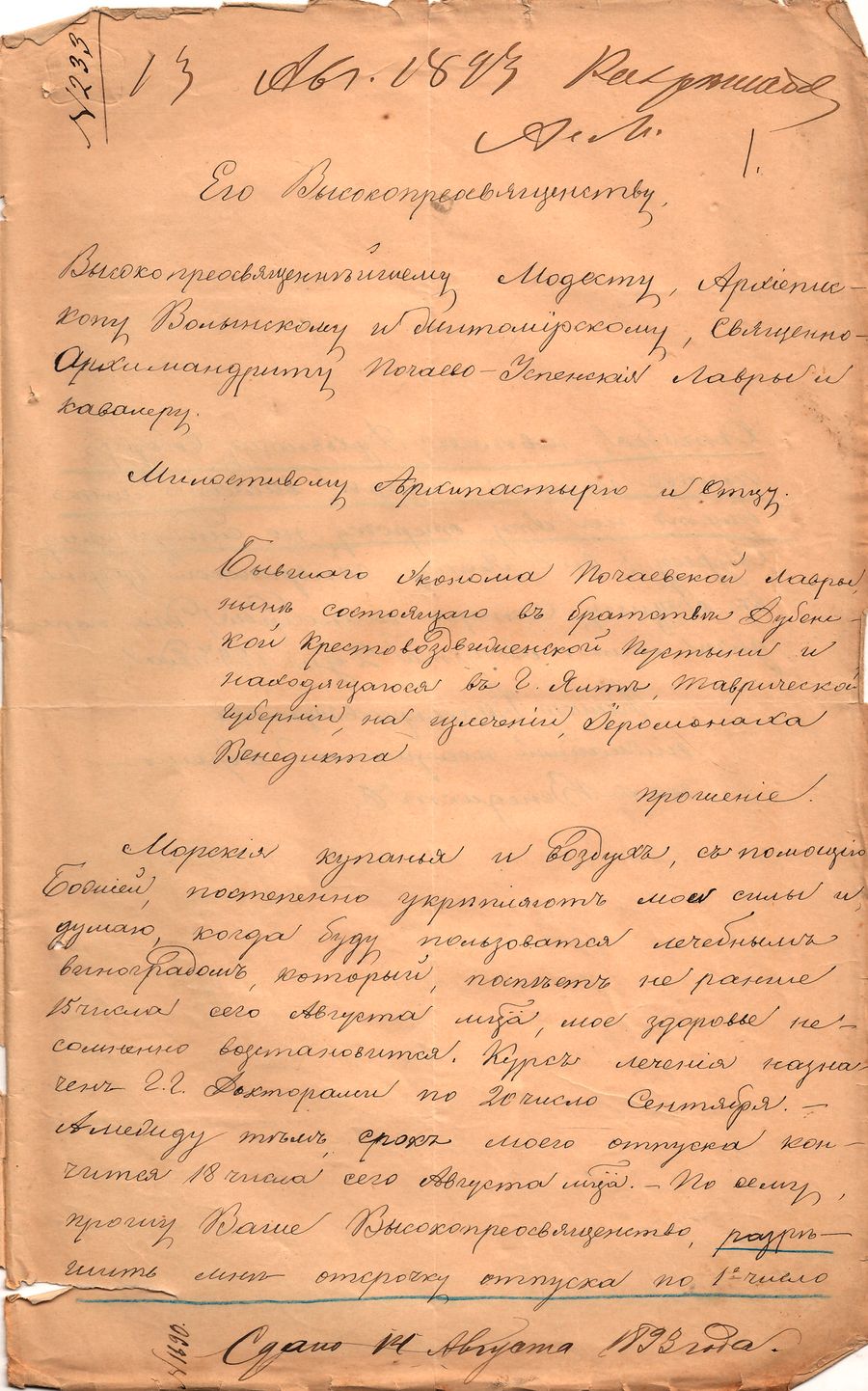
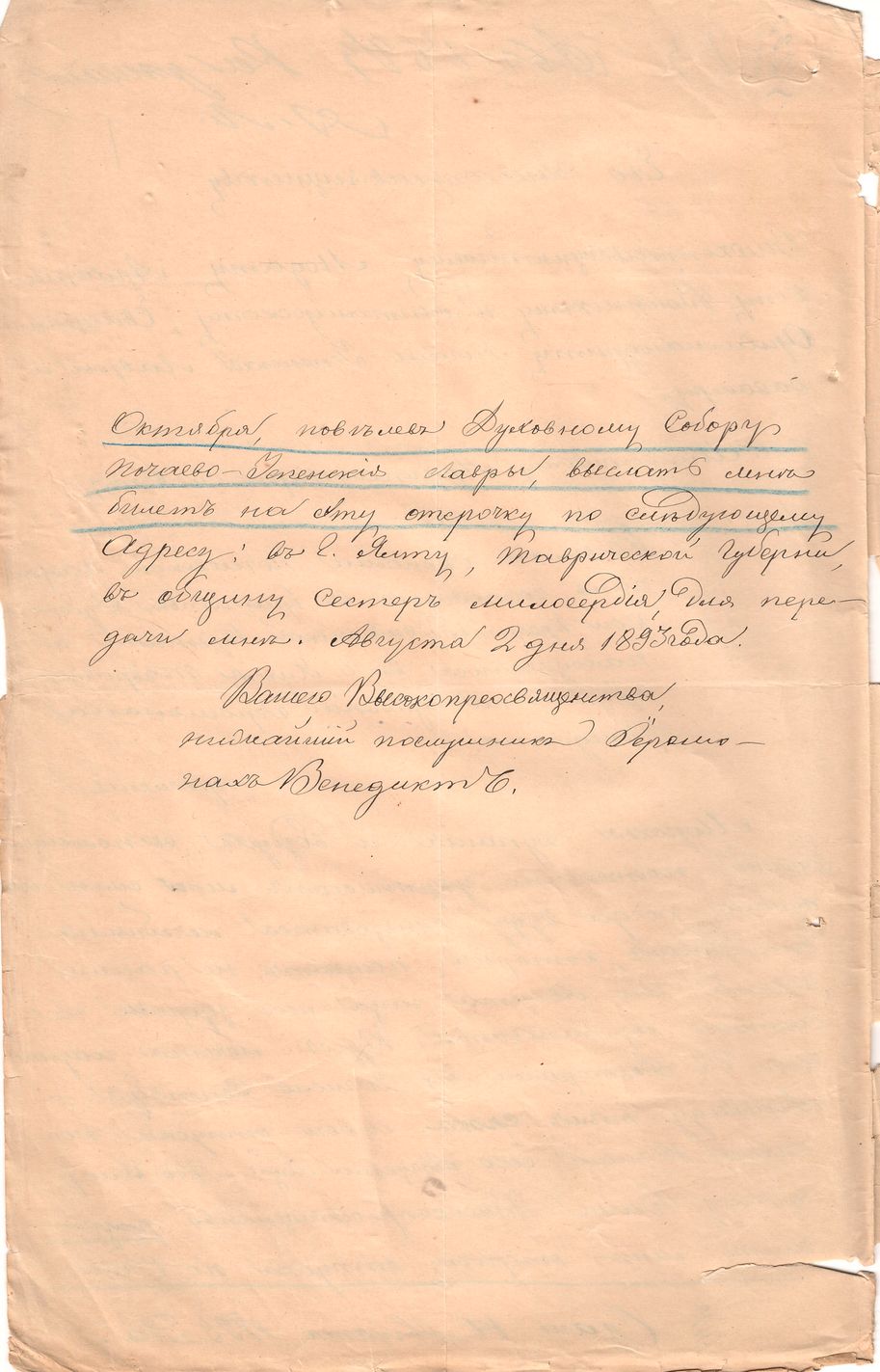
Request of the former steward of the Pochaiv Lavra, minister of the Dubno Exaltation of the Cross Hermitage, Hieromonk Venedykt, to the Archbishop of Volhynia and Zhytomyr, Archimandrite of the Pochaiv Dormition Lavra Modest, to extend his leave for treatment in Crimea and to issue a ticket for the duration of his leave. August 2, 1893.
State Archives of Ternopil Oblast, fund 258, inventory 1, file 3813, sheets 1, 1obv., 2**
In 1903, the issue of electrification of the streets and highways of Yalta was raised. No expense was spared for these needs. "In view of the fact that for the electric lighting of the Yalta port and embankment, which are under the jurisdiction of the Ministry of Ways of Communication, the sum of 67,000 rubles has already been allocated, with the greater part of it appropriated from funds for highway maintenance, and also from these same funds, resources have been allocated for widening this section, one should not hesitate to allocate an additional 12,000 rubles in order to complete the lighting of this section of the highway and make it completely safe for travel to the borders of Livadia...", - says a letter from the head of the Crimean Highways Section to the Kyiv District of Ways of Communication regarding the installation of lighting on the Yalta highway, port, embankment, and streets. Another important project implemented in Crimea was the construction of a bridge over the Guva River in Yalta. "The City Administration requests the Board, when designing the bridge, to adopt the plan it has worked out for regulating Naberezhnaya Street near the Guva River and the bridge location shown on it." Yalta was gradually faced with competition from the settlement of Sudak.
A two-kilometer sandy beach, lack of fog, uniform sea water temperature, and grape plantations (about 600 varieties) were the key components of its attractiveness for holidaymakers. At the end of 1912, a project for laying a water pipeline to Sudak was submitted for consideration.
In the corresponding request, the need to provide water supply to the settlement by branching from the main pipeline was noted: "...I have the honor to most humbly request the District Board for permission for all the individuals signed in the said petition to lay water pipes to their estates from the main pipeline running along the state highway, on the condition, however, that all excavated areas are restored to proper order and that these works are carried out under the supervision of the Chief of the 3rd Section of the Crimean District entrusted to me." In the same year, 1912, a similar project for laying a water pipeline to Gurzuf was developed. This once small village was developing rapidly at the beginning of the 20th century and soon turned into one of the most famous resorts on the southern coast of the Crimean Peninsula.
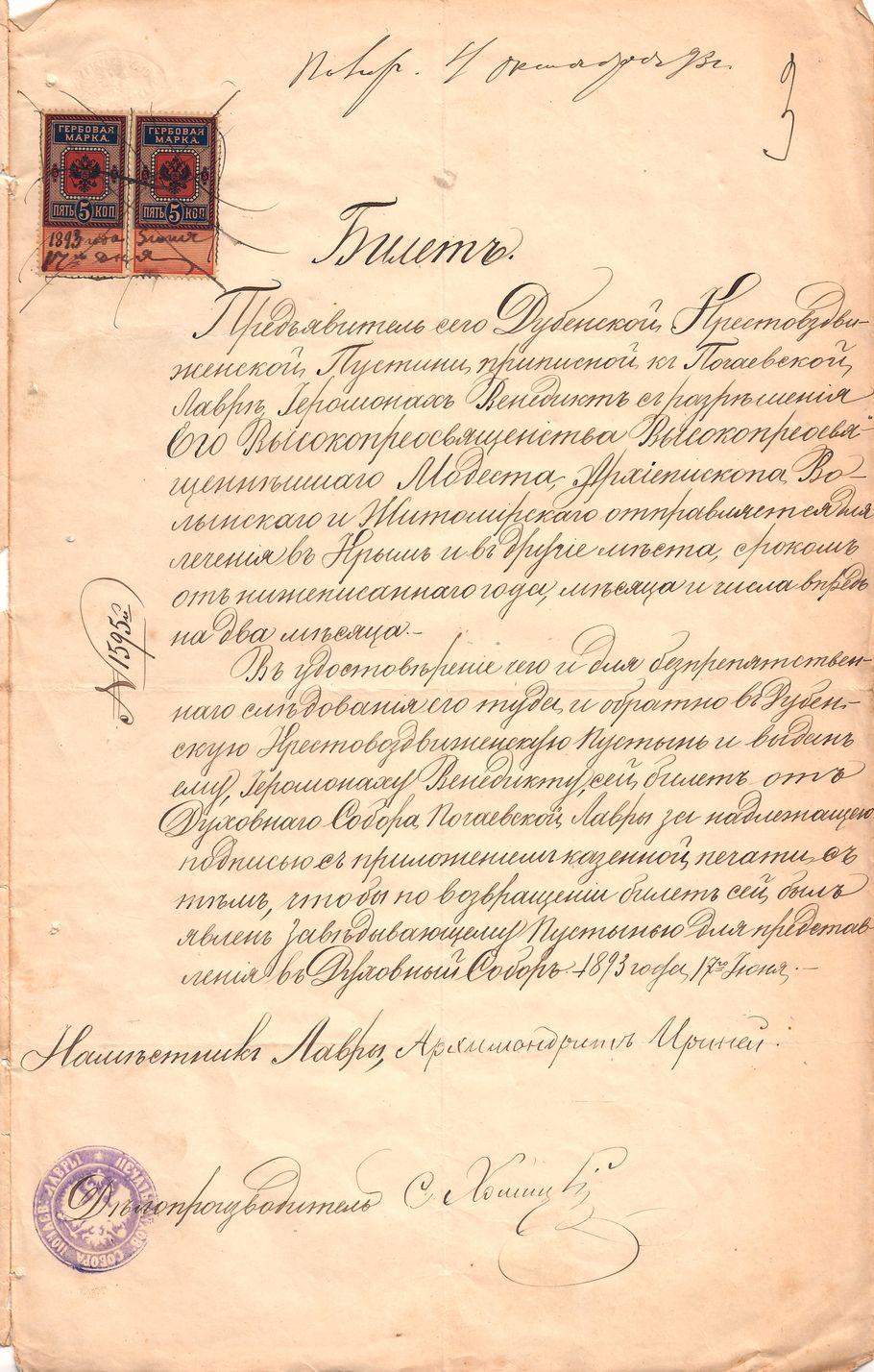
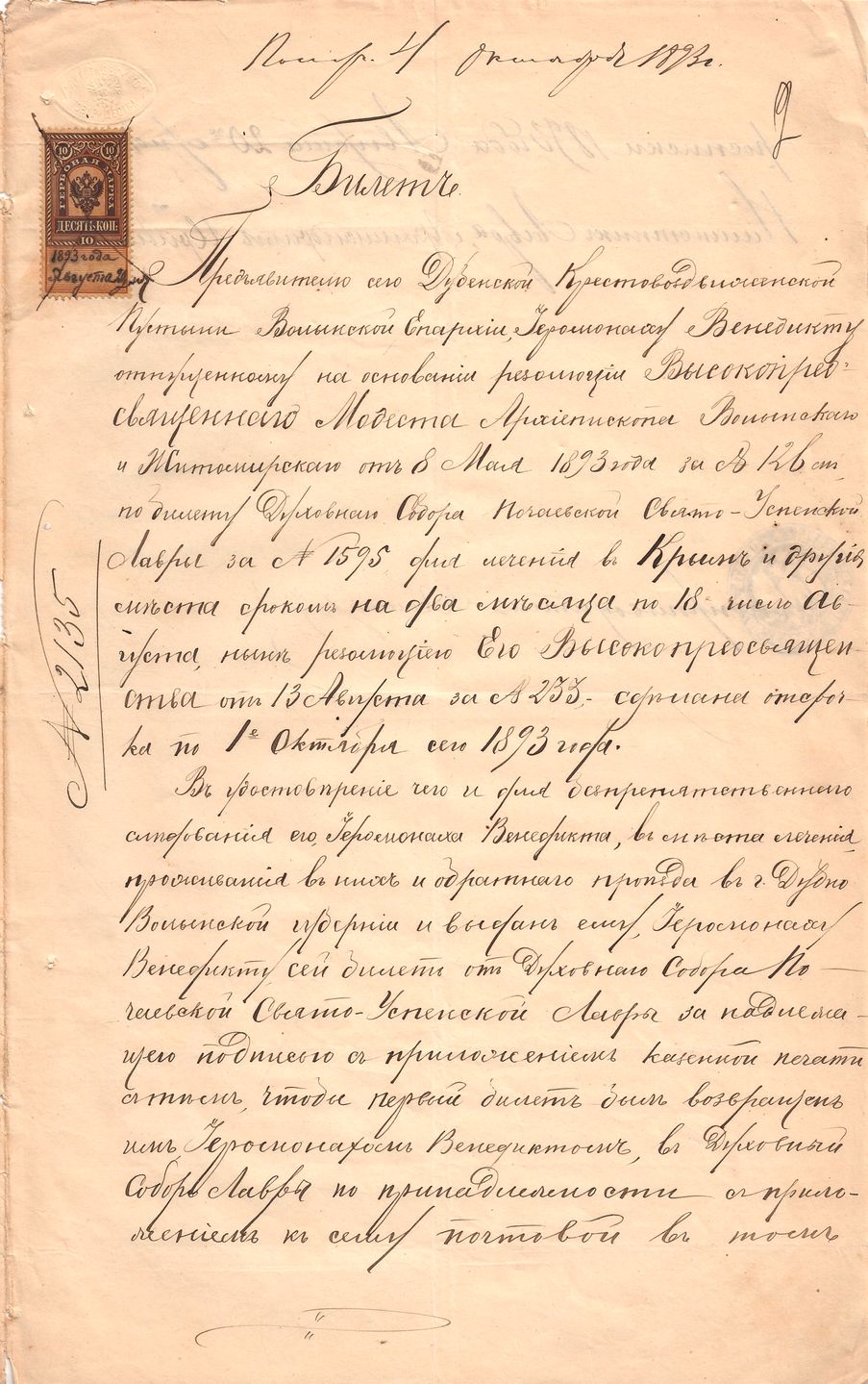
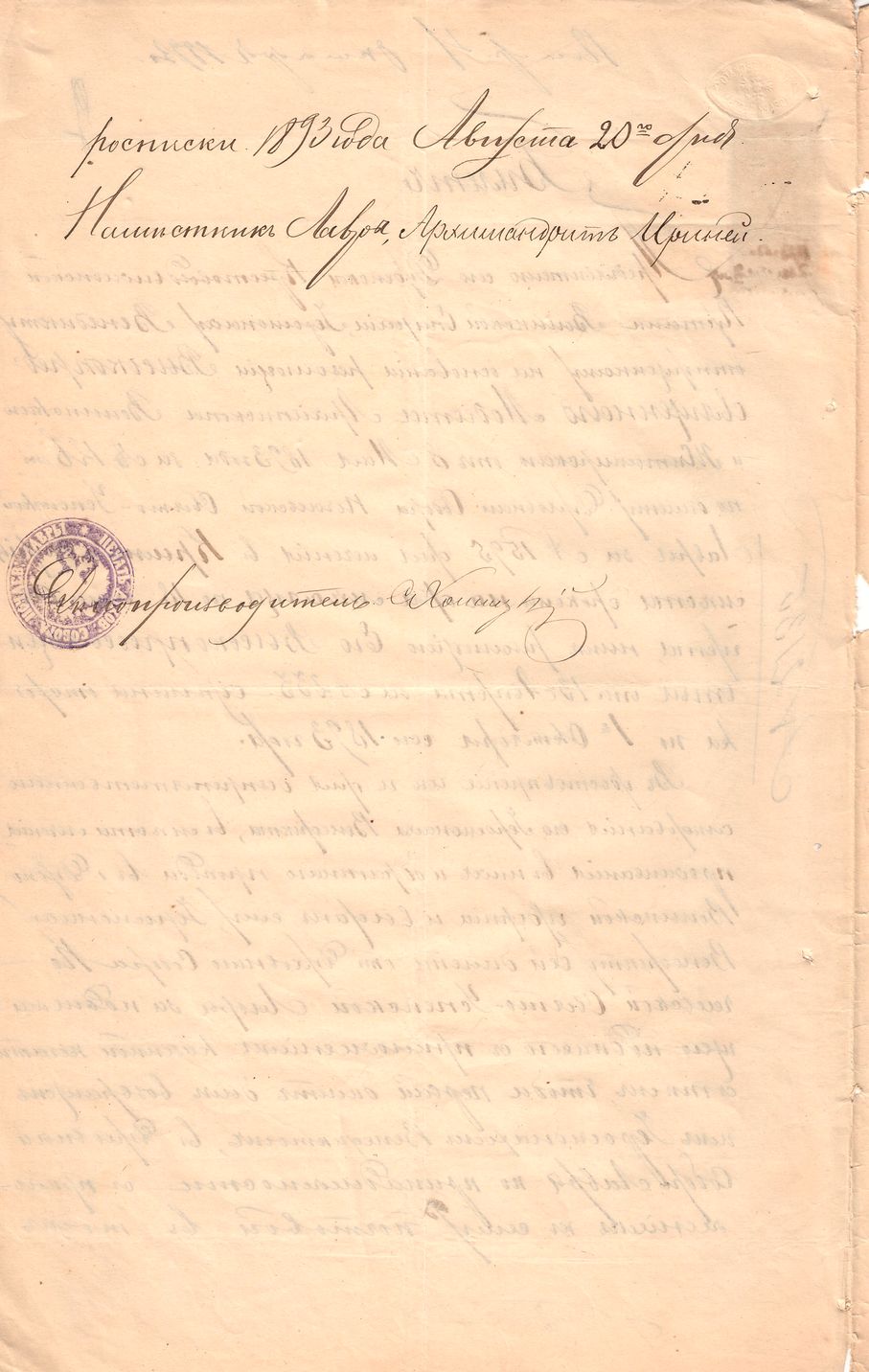
Ticket identifying Hieromonk Venedykt and granting him permission to travel from the Dubno Exaltation of the Cross Hermitage to Crimea and back. June 17, August 20, 1893.
State Archives of Ternopil Oblast, fund 258, inventory 1, file 3813, sheets 3, 2, 2obv.
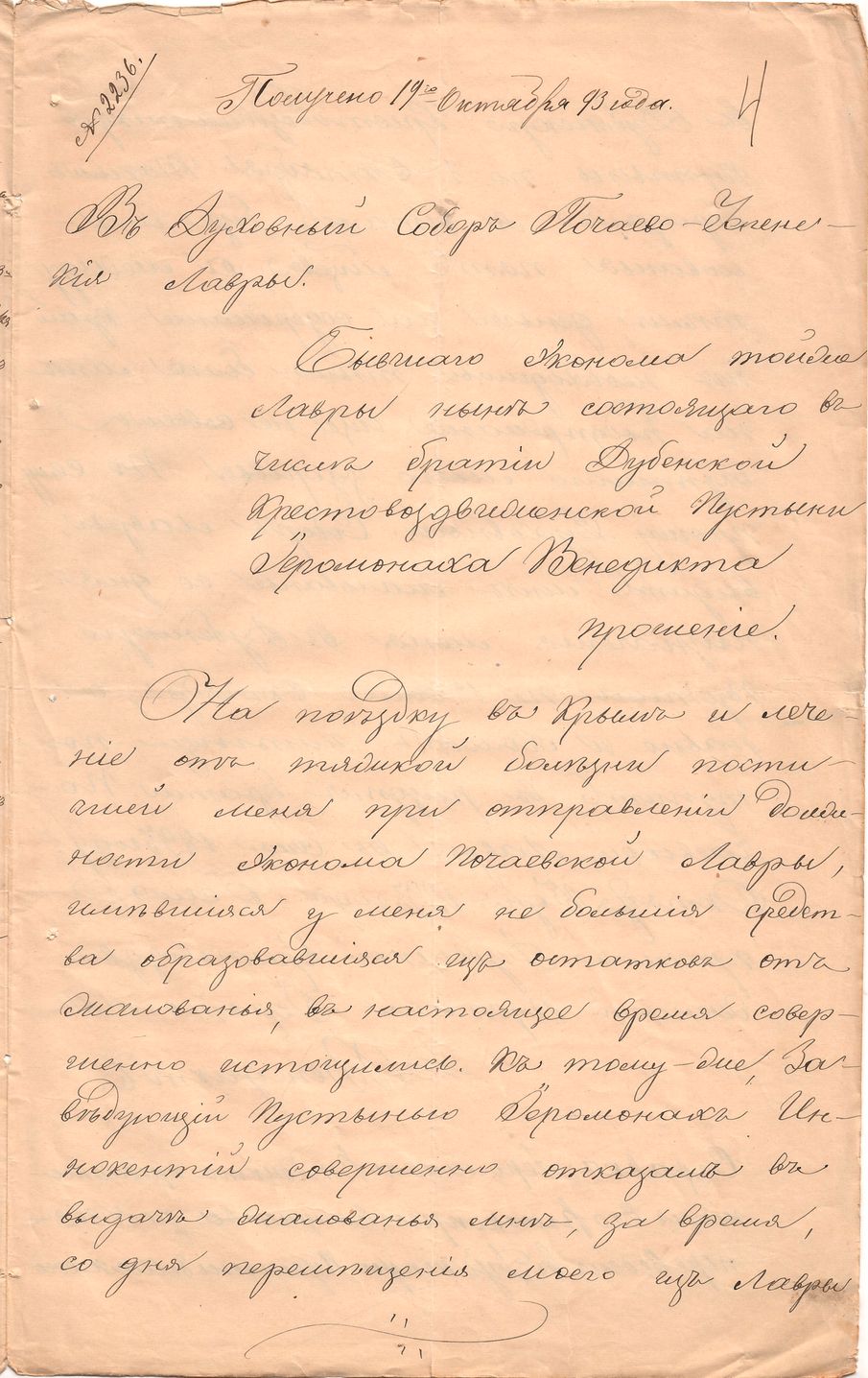
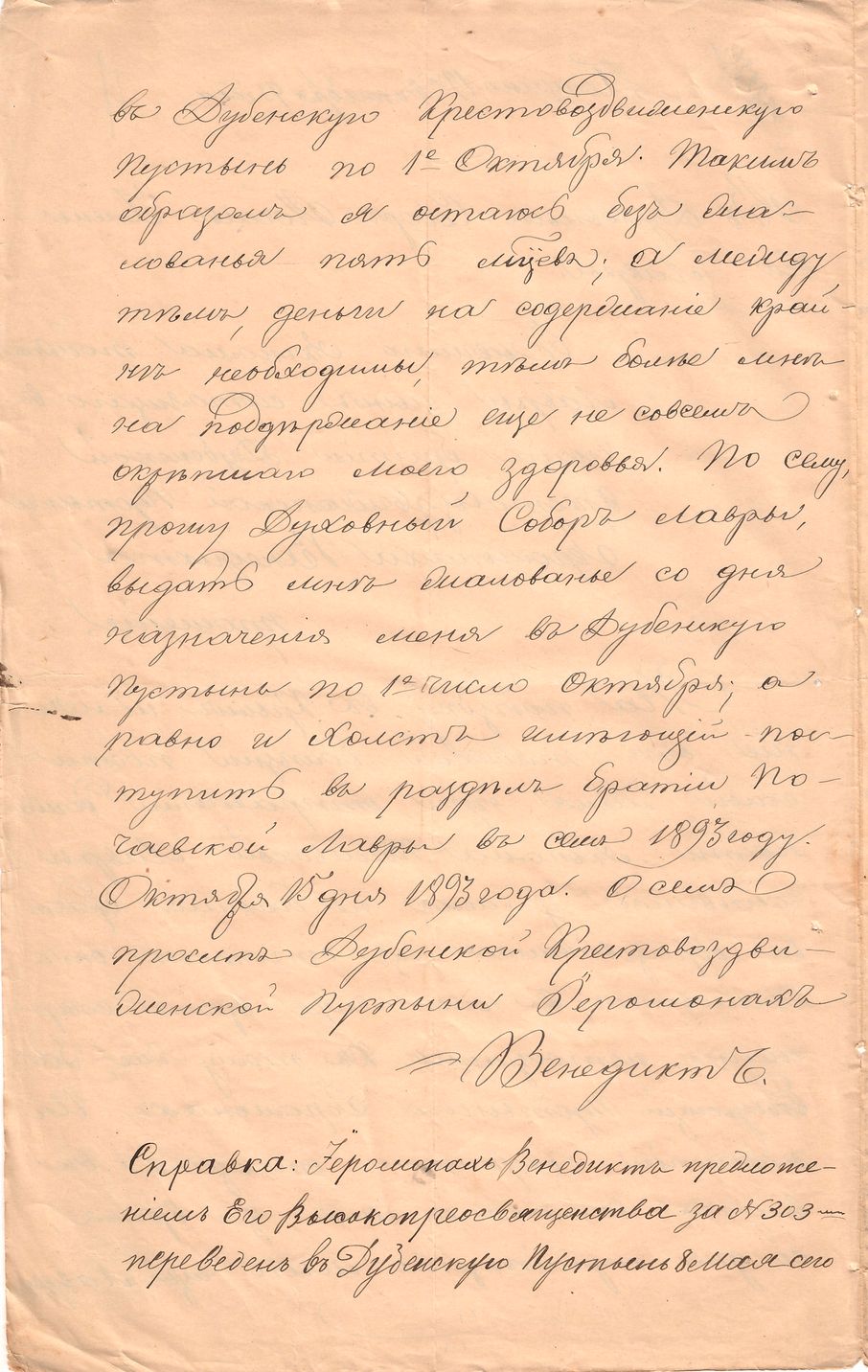
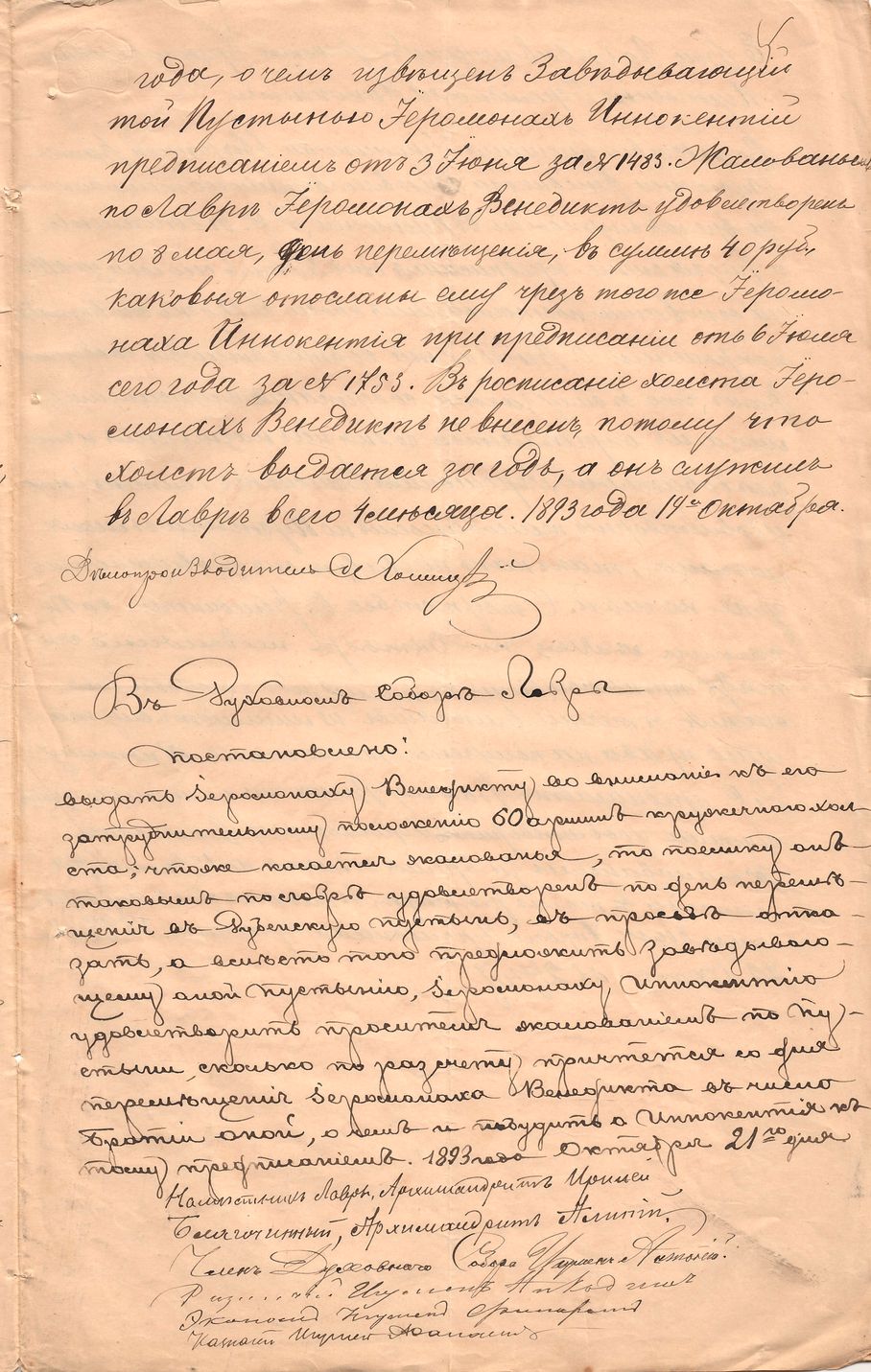
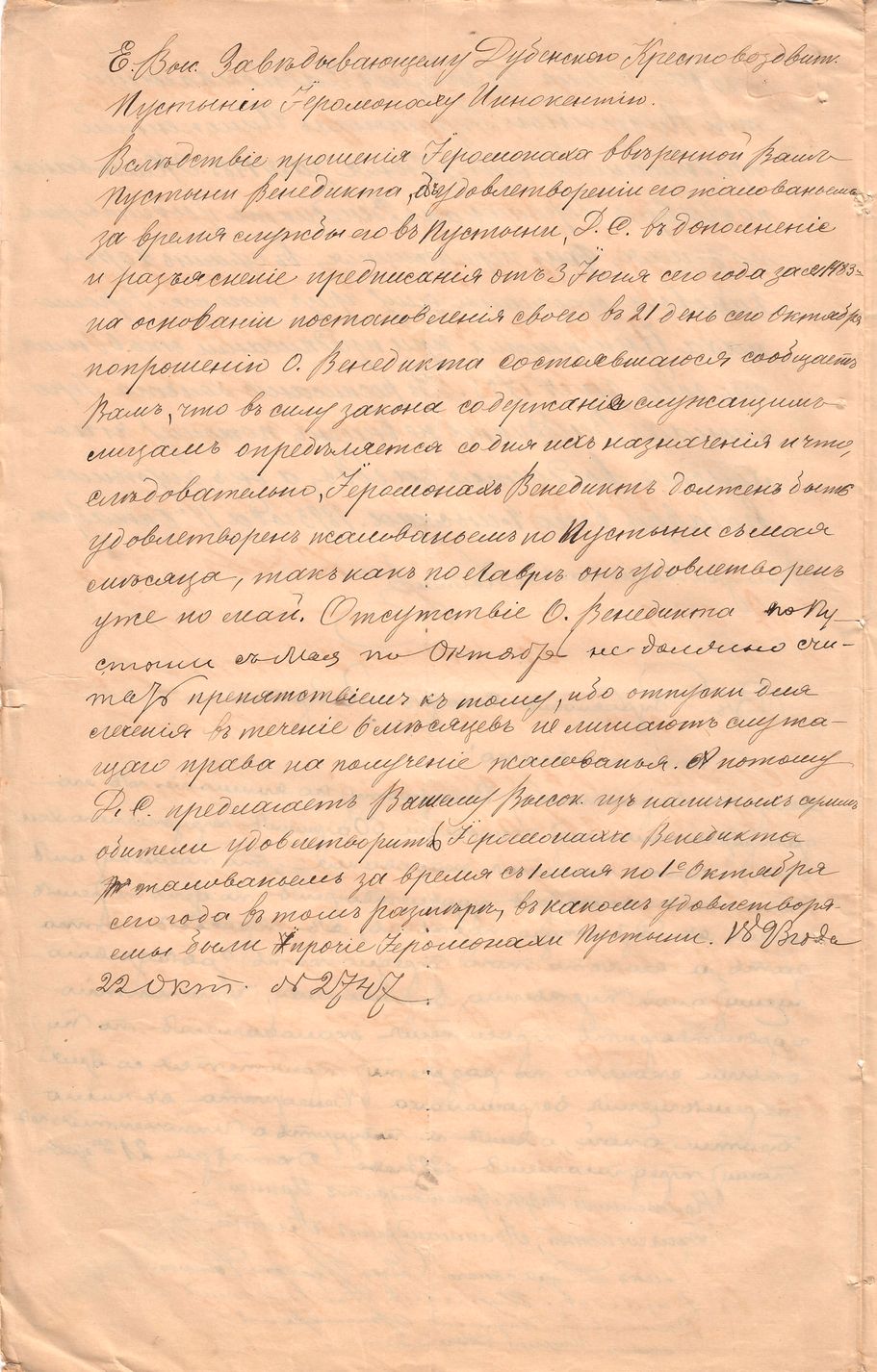
Request of the former steward of the Pochaiv Lavra, minister of the Dubno Exaltation of the Cross Hermitage, Hieromonk Venedykt, to the Spiritual Council of the Pochaiv Dormition Lavra for financial assistance. October 19, 1893.
State Archives of Ternopil Oblast, fund 258, inventory 1, file 3813, sheets 4-5obv.