Crossing the Syvash
About the battle for Syvash.
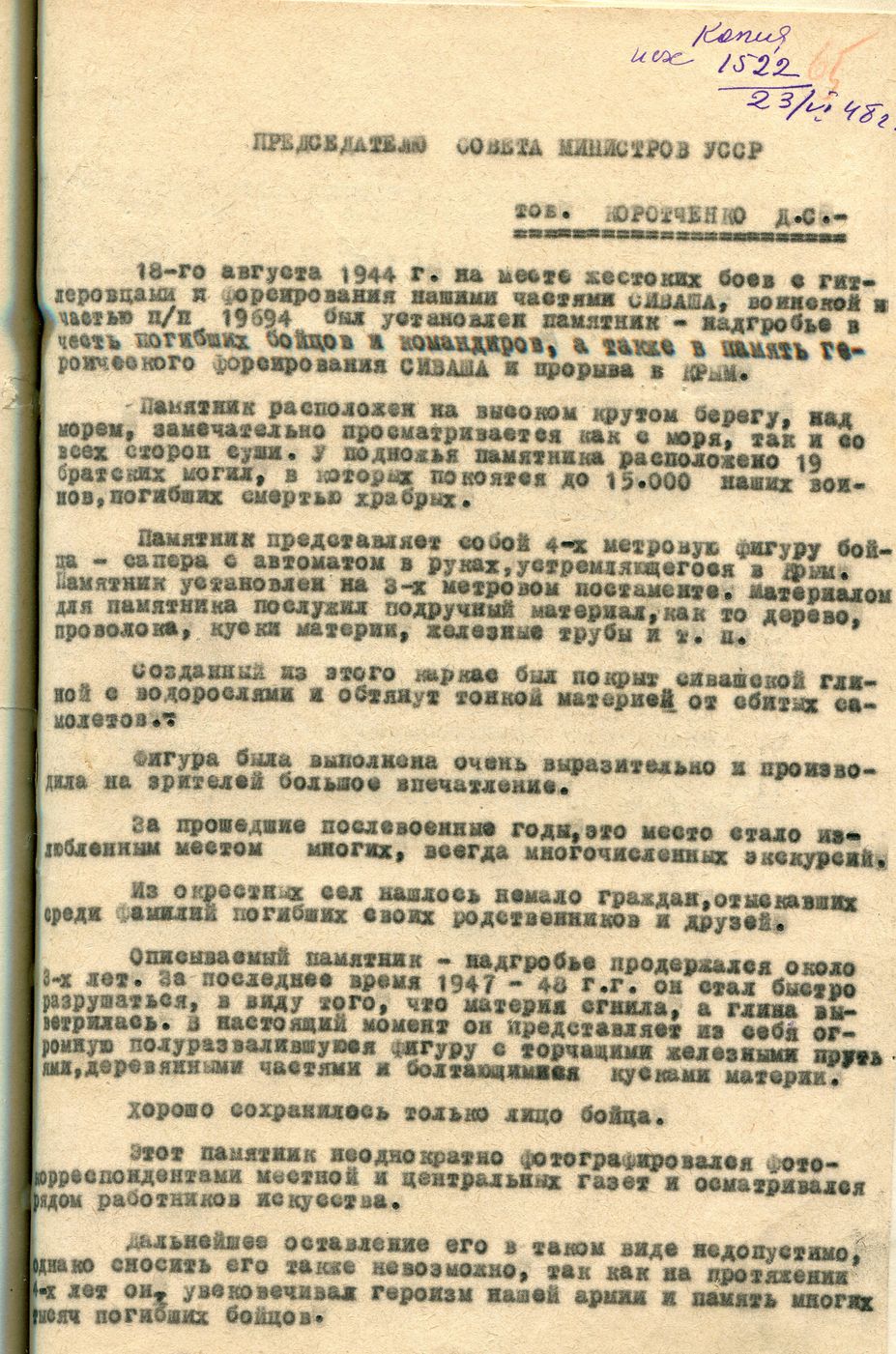
In the State Archive of Kherson Oblast, among the correspondence of the Oblast Executive Committee and the Council of Ministers of Ukraine, there is a petition regarding the perpetuation of the memory of the military personnel who died in 1943-1944 during the crossing of the Syvash.
These were the sappers of the 51st Army of the 4th Ukrainian Front who built the crossing. Fierce battles, cold water, muddy bottom, constant aerial bombardment – under such conditions the sappers had to build the crossing. After all, the main task was to enable the Soviet military to cross the Syvash, gain a foothold on the Crimean Peninsula, and create a bridgehead from which the Soviet troops would be able to conduct an offensive operation to liberate Crimea from the Nazis. It was thanks to the crossing that the liberation of the peninsula began in April 1944.
Essentially, a typical story for any military events: building a crossing, forcing a water barrier, creating a bridgehead, and advancing. The question is why this letter interested the archivists so much.
The fact is that this monument was built by the sappers themselves during the combat operations, that is, in 1944, in honor of their fallen brothers-in-arms, and actually became the first monument to soldiers who died on the territory of the Kherson region.
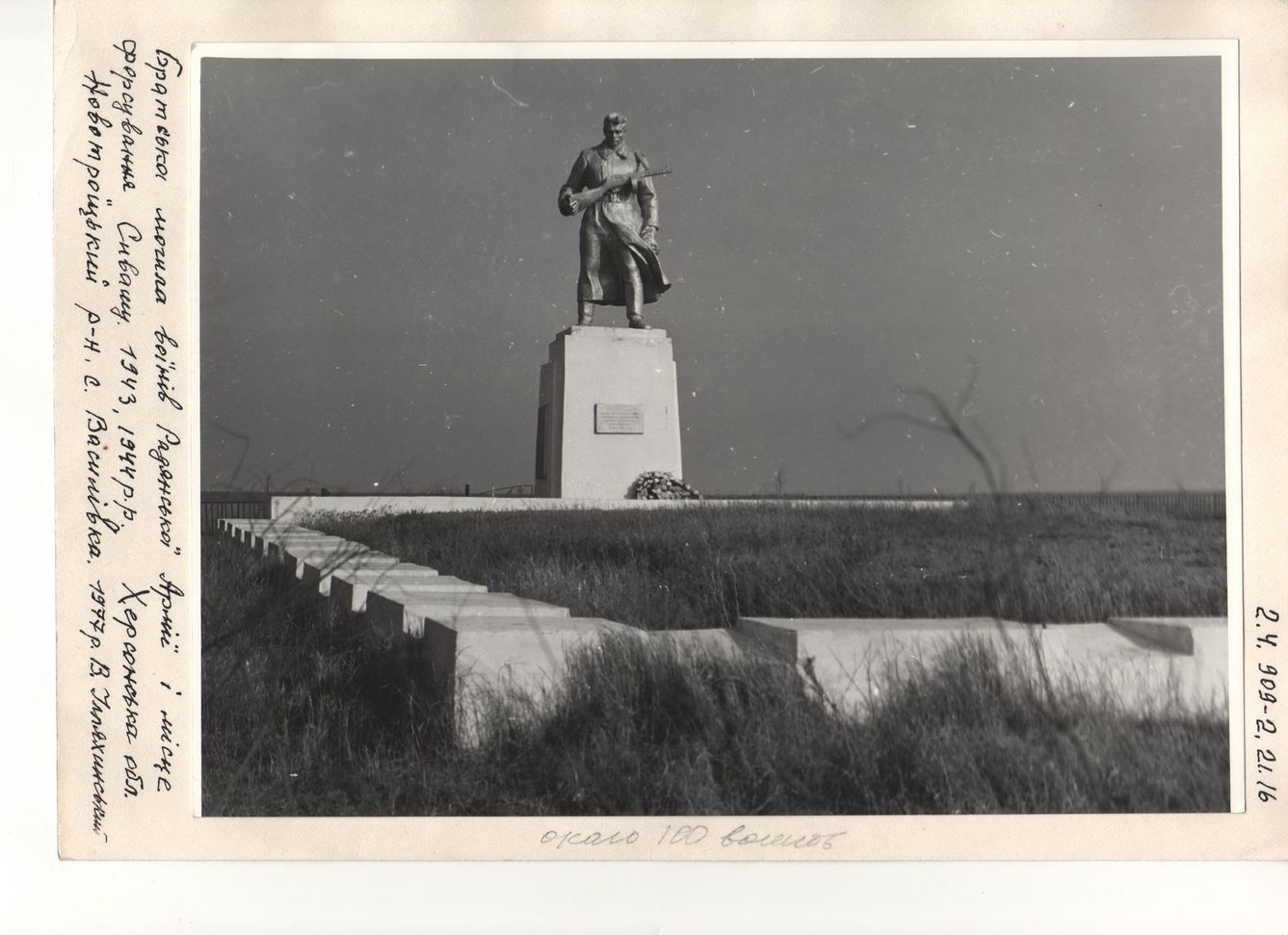
Sappers built a 7-meter monument on the shore of the Syvash out of improvised materials: boards, rebar, Syvash clay, seaweed, and remains of fabric from parachutes. It was the figure of a warrior with a machine gun, looking toward Crimea. Over time, the clay began to weather, the boards rotted, and the rebar began to stick out in different directions. The Oblast Executive Committee drew attention to the fact that immediately after the end of World War II, this object became a place of worship for local residents, as there were many locals among the dead.
The monument itself was erected over 19 mass graves where, as noted in the petition, about 15,000 soldiers were buried. A portion of the names was inscribed on the base of the pedestal. During 1947-1948, the local and republican press wrote about this monument, and it became a tourist site.
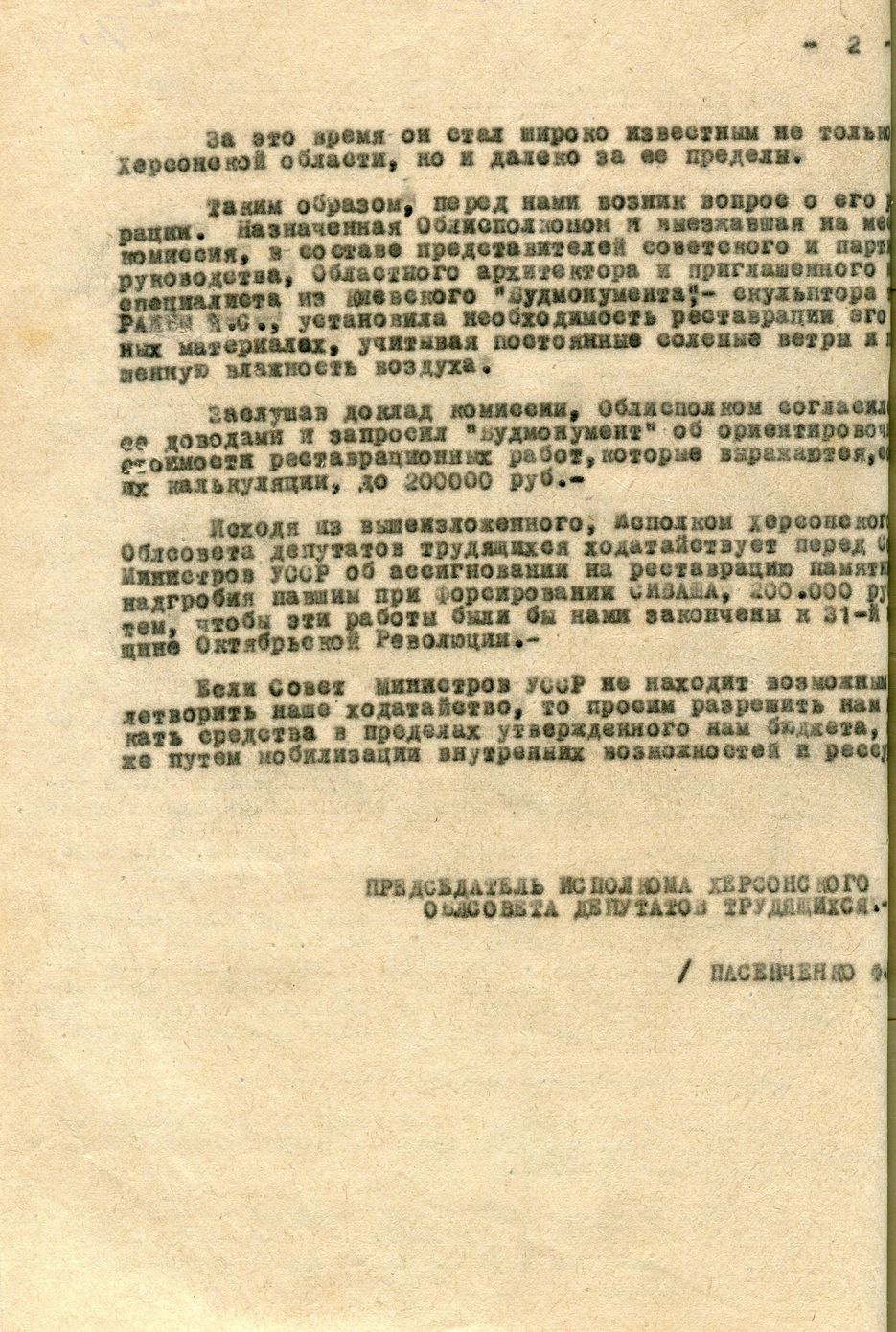
His technical condition was investigated by a special commission, including the sculptor Ya. S. Razhba, a representative of the Kyiv "Budmonument" company. The commission determined that 200,000 rubles were needed for restoration, which the regional authorities requested to be allocated. Studying later documents, the archivists found that the funds to restore the monument to its original form, but from durable materials, were never allocated. Today, a rather modest typical monument stands in this place, erected at the region's own expense.
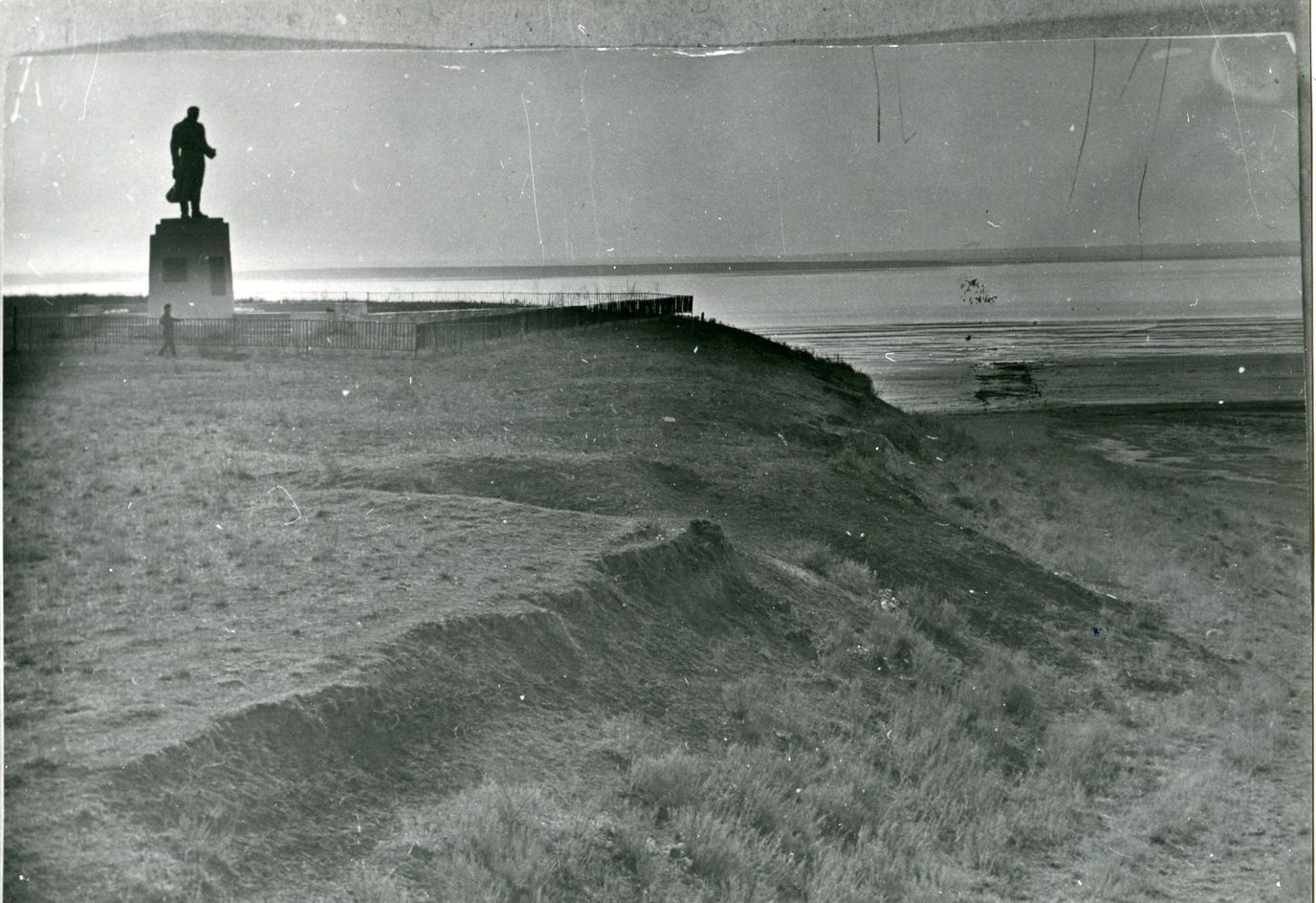
The Syvash is a place that for a long time was considered almost impassable for heavily armed infantry, artillery crossings, and tanks. But the military's engineering minds were able to build and maintain the functioning of a unique crossing under constant shelling.
It should be noted that history knows two other cases when the military crossed the Syvash. In 1737, during the Russo-Turkish War of 1735-1739, Russian troops under the command of Field Marshal P. Lacy bypassed the Perekop fortifications through the Syvash. In the autumn of 1920, during the destruction of Wrangel's troops in Crimea by the Red Army, the Soviet commander M. Frunze used this technique. And for the third time, this incredible maneuver was repeated in 1943-1944 by Soviet soldiers. The German command considered the crossing of the Syvash an unrealistic task, especially with the use of military equipment, which is why they did not build fortifications on the southern shore.
The actual crossing of the Syvash began on November 1, 1943, by infantrymen of the 10th Rifle Corps of the 51st Army of the 4th Ukrainian Front. The entire path consisted of almost three kilometers of a boat-and-pontoon crossing, which the soldiers covered in 4 hours. Over time, a second crossing was built in the area of Ruskyi Island, which began operating on December 09, 1943. In January 1944, they began to construct an earthen dam to transfer heavy artillery. All construction took place around the clock, in cold, salty water that corroded both metal and the human body, through storms, snow, rain, and under constant enemy air strikes.
State Archive of Kherson Oblast, F. R-1979, Op. 3, File 46, Sheet 65.
Invaluable assistance to the troops was provided by local residents. Kherson peasants gave scarce building materials by dismantling their yards. They provided shelter for the military, fed them, and treated the wounded. It was in honor of the fallen comrades, who were able to build and ensure the functioning of the crossing for 4 months, that the monument was built near the village of Vasylivka in the Novotroitske district.
State Archive of Kherson Oblast, F. R-1979, Op. 3, File 46, Sheet 65 rev.
An interesting point of this whole story is also that the guide of the troops in 1943 was a local peasant from the village of Strohanivka in the Chaplynka district, Ivan Ivanovych Olenchuk, who back in 1920 had pointed out this path through the Syvash to the troops of M. Frunze. The second ford was pointed out by a resident of the village of Vasylivka in the Novotroitske district, Vasyl Kindratovych Zaulochnyi.