The Great Resettlement of Ukrainians to Crimea
Crimea was on the verge of survival: devastated by war and without adequate labor and material resources.
While armed clashes were still ongoing on the fronts of the Second World War, Crimean Tatars, Greeks, Bulgarians, Armenians, and Germans were hastily deported from the Crimean Peninsula, which had been liberated from the Nazis. Crimea found itself on the verge of survival: devastated by war and without adequate labor and material resources.
The Soviet authorities saw the only way out of this difficult situation in establishing an effective migration mechanism for resettling thousands of Ukrainians to Crimea. This process was launched long before the official transfer of the peninsula to mainland Ukraine in 1954.
For example, the State Archives of Sumy Oblast contain documentary evidence of the resettlement of Sumy residents to the Crimean ASSR in 1944 and during 1952–1953.
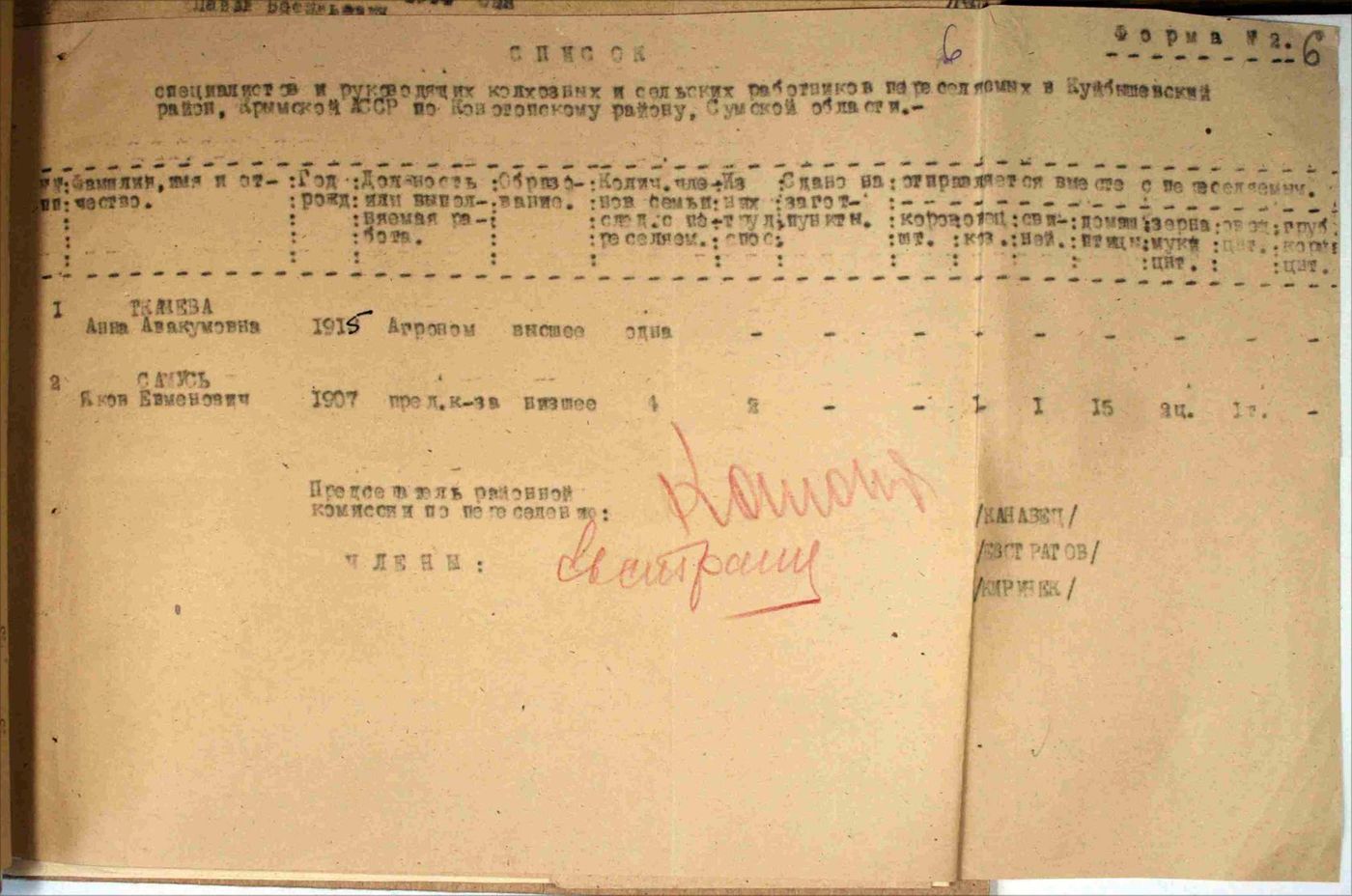
Collective farm families began to be actively urged to move to Crimea in late 1944. Everyone who wished to relocate was advised not to take their own livestock, which might not survive the long journey. As emphasized in a letter from the Secretary of the Sumy Oblast Committee of the CP(b)U, P.F. Kumanko, to the Chairman of the Myropillia District Commission on the Resettlement of Collective Farmers and Specialists to the Kuybyshev District of the Crimean ASSR:
"The People's Commissariat of Meat and Dairy Industry of the USSR is obliged, in exchange for the livestock surrendered locally, to issue the same amount of livestock in Crimea, and to those who do not have livestock in their use here, the People's Commissariat of Meat and Dairy Industry of the USSR will issue a cow... but at state purchase prices." In addition, the state provided for the allocation of 2,500 thousand rubles by the district land department to the head of each family moving to Crimea for permanent residence.
On September 13, 1944, "...collective farmers in the number of 8 families" were dispatched from the Myropillia district of the Sumy oblast.
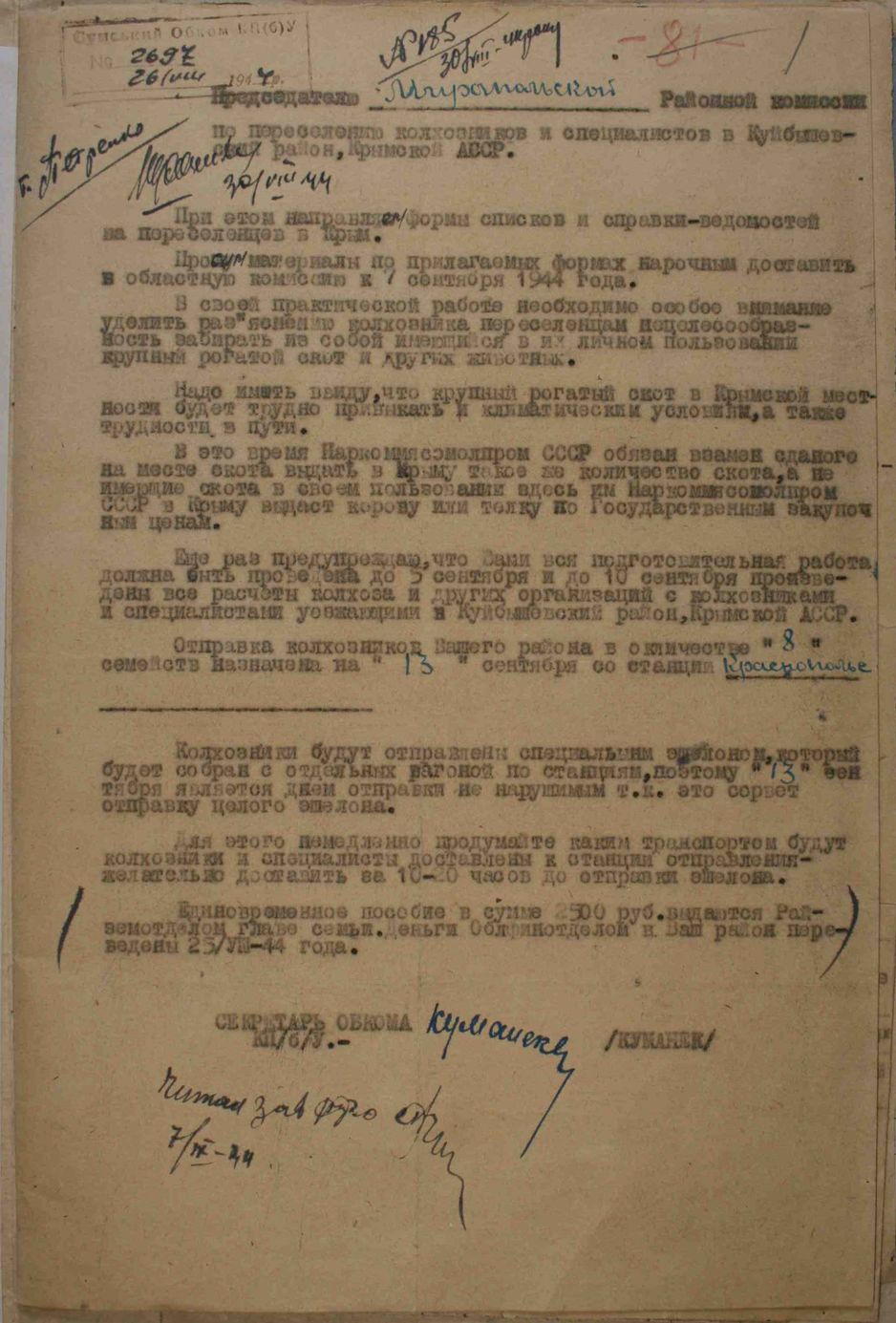
Letter from the Secretary of the Sumy Oblast Committee of the CP(b)U, P.F. Kumanko, to the Chairman of the Myropillia District Commission on the Resettlement of Collective Farmers and Specialists to the Kuybyshev District of the Crimean ASSR regarding the preparation and departure of settlers. September 7, 1944.
State Archives of Sumy Oblast, P-14, op. 1, file 41, sheet 1
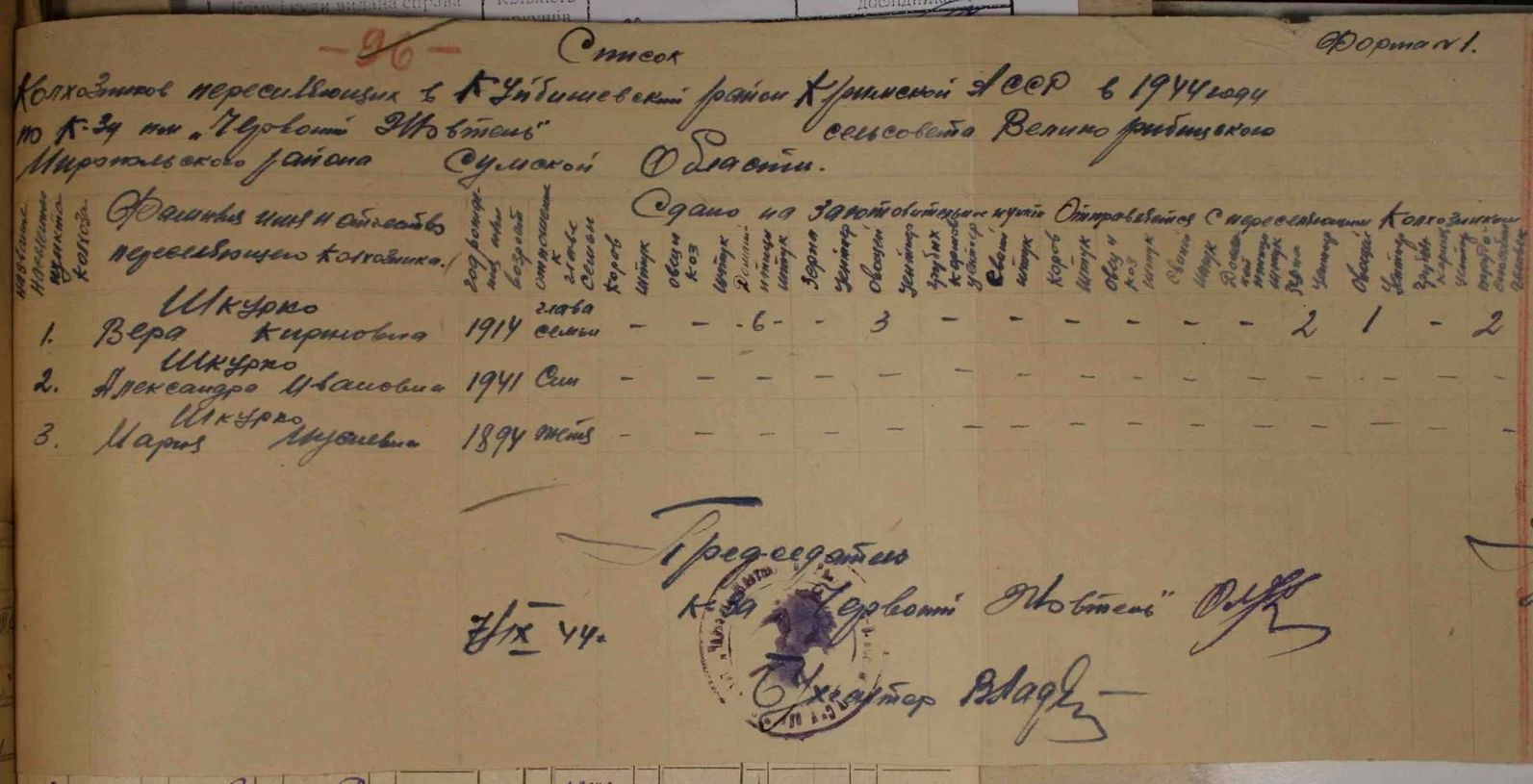
This is what the standard certificate for settlers and the lists of collective farm families wishing to relocate to the Crimean Peninsula looked like:
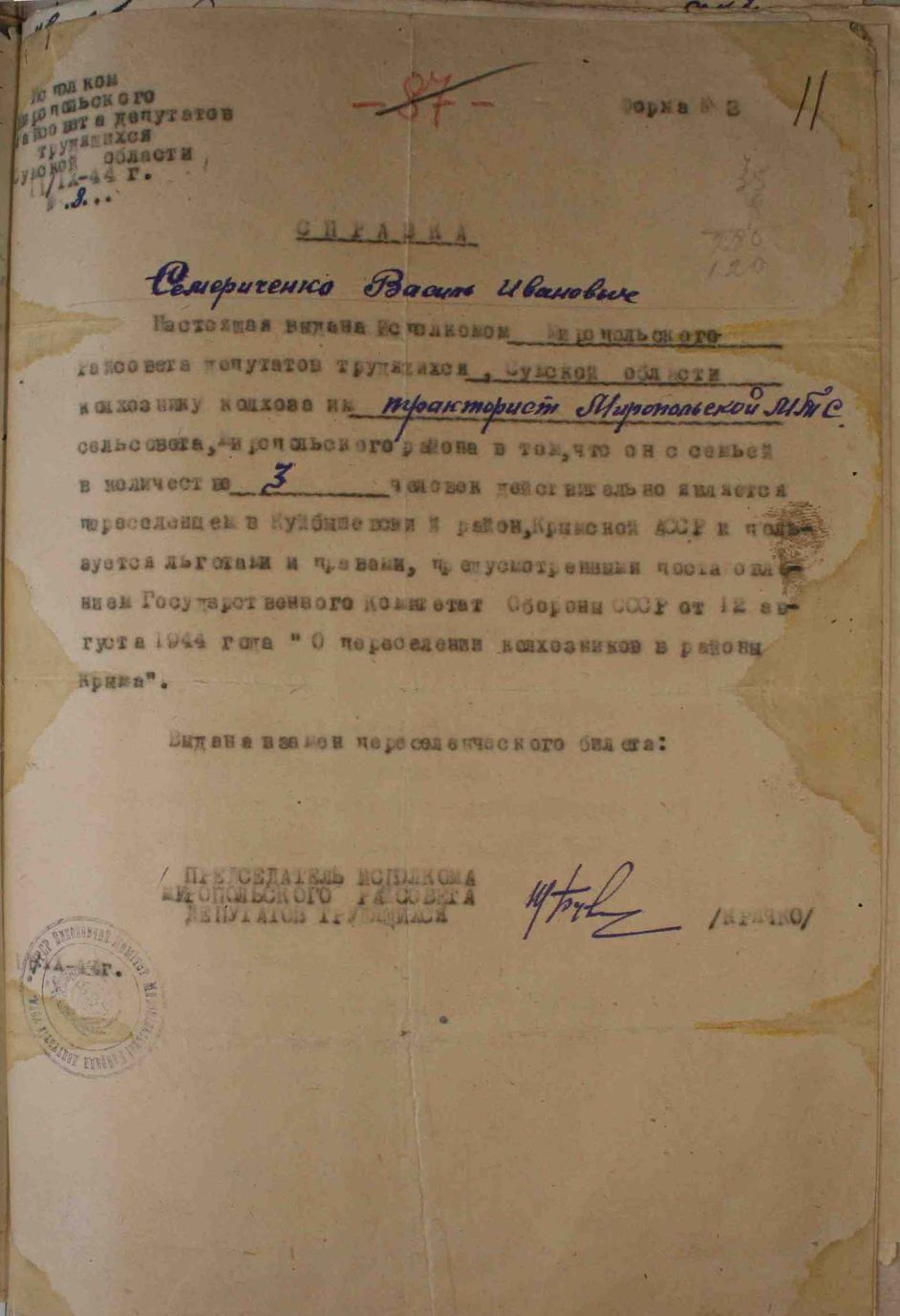
Settler's certificate to the Kuybyshev district of the Crimean ASSR, issued to Vasyl Ivanovych Semerychenko, a tractor driver of the Myropillia MTS. September 11, 1944.
State Archives of Sumy Oblast, P-14, op. 1, file 41, sheet 11
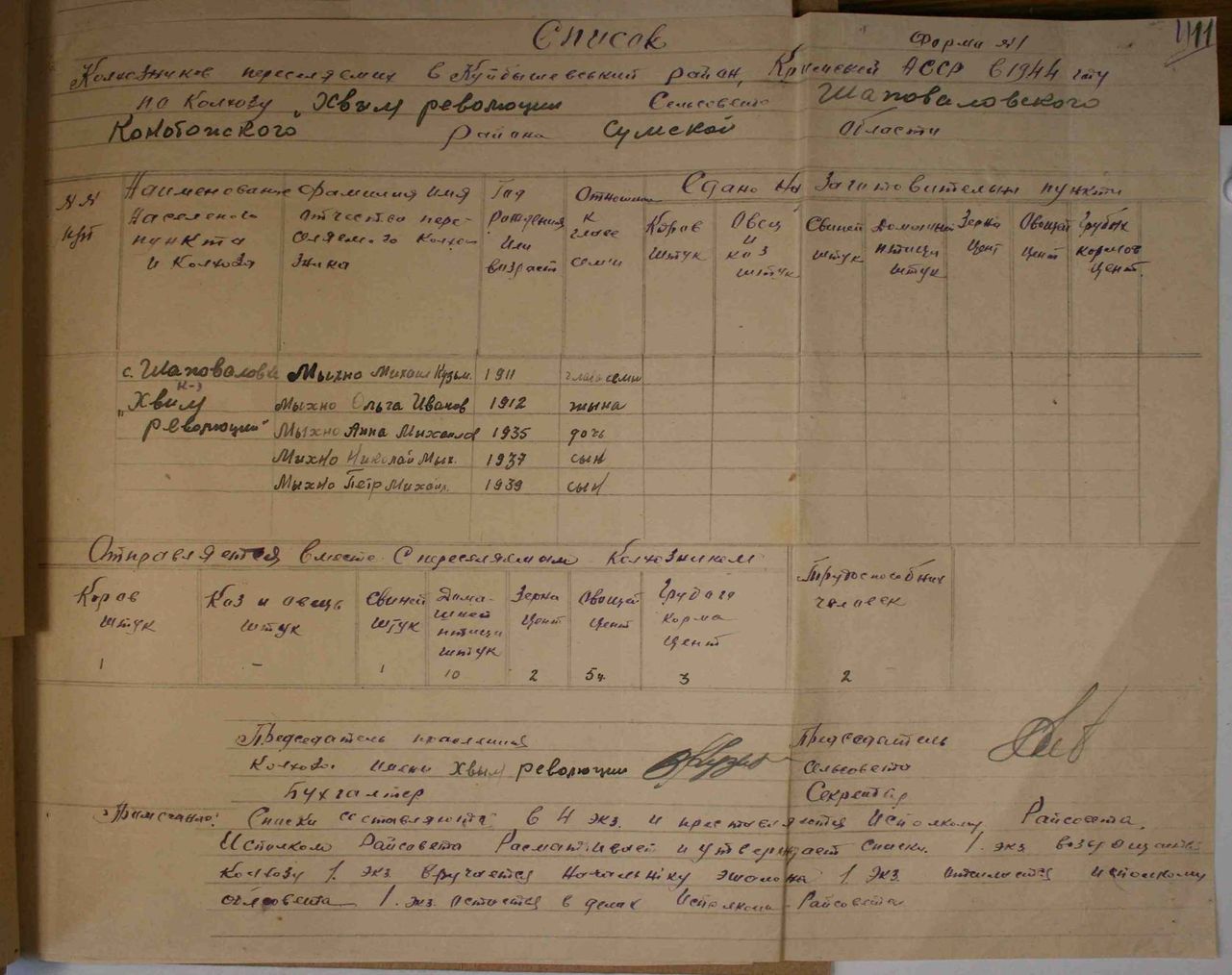
List of collective farmers of the "Khvylya Revolyutsiyi" (Wave of Revolution) collective farm of the Shapovalivka village council, Konotop district, Sumy oblast, who resettled to the Kuybyshev district of the Crimean ASSR in 1944. September 7, 1944.
State Archives of Sumy Oblast, P-42, op. 1, file 228, sheet 11
The second wave of resettlement to Crimea began in 1951. The decision of the Executive Committee of the Sumy Oblast Council of Workers' Deputies dated January 18, 1952, in particular, referred to the underfulfillment of the plan for 1951, which stood at 66.1 percent, meaning that only 650 families out of 950 moved.
The executive committees of the district councils were reproached: "...underestimated the state importance of the resettlement measures, failed to organize proper mass outreach and information activities among the population to explain the terms of resettlement and benefits for settlers, and failed to establish proper control..."
"In compliance with the resolution of the Council of Ministers of the Ukrainian SSR dated December 29, 1951, No. 3907," it was decided to resettle 400 collective farmer families from Sumy Oblast to Crimea in 1952.
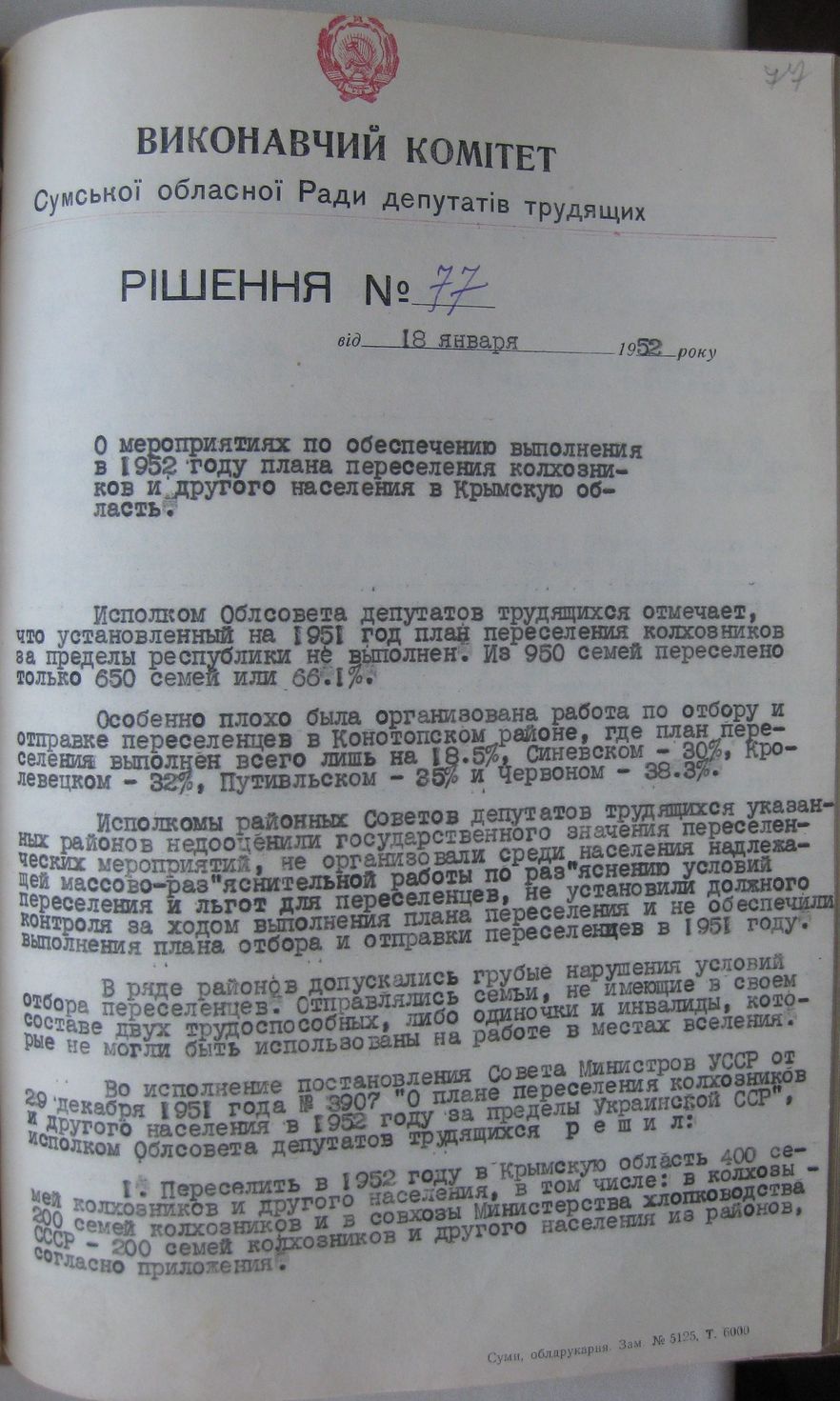
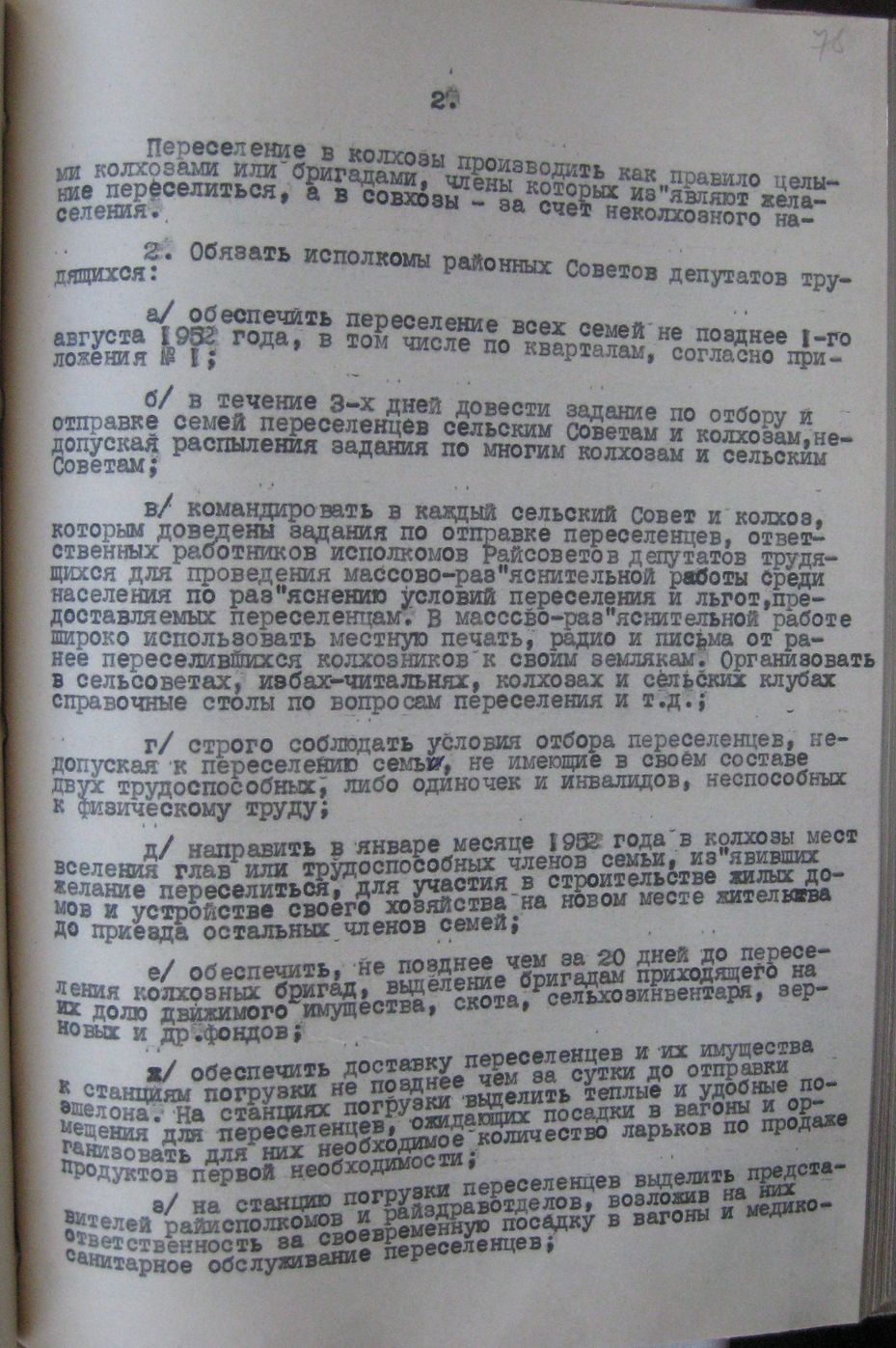
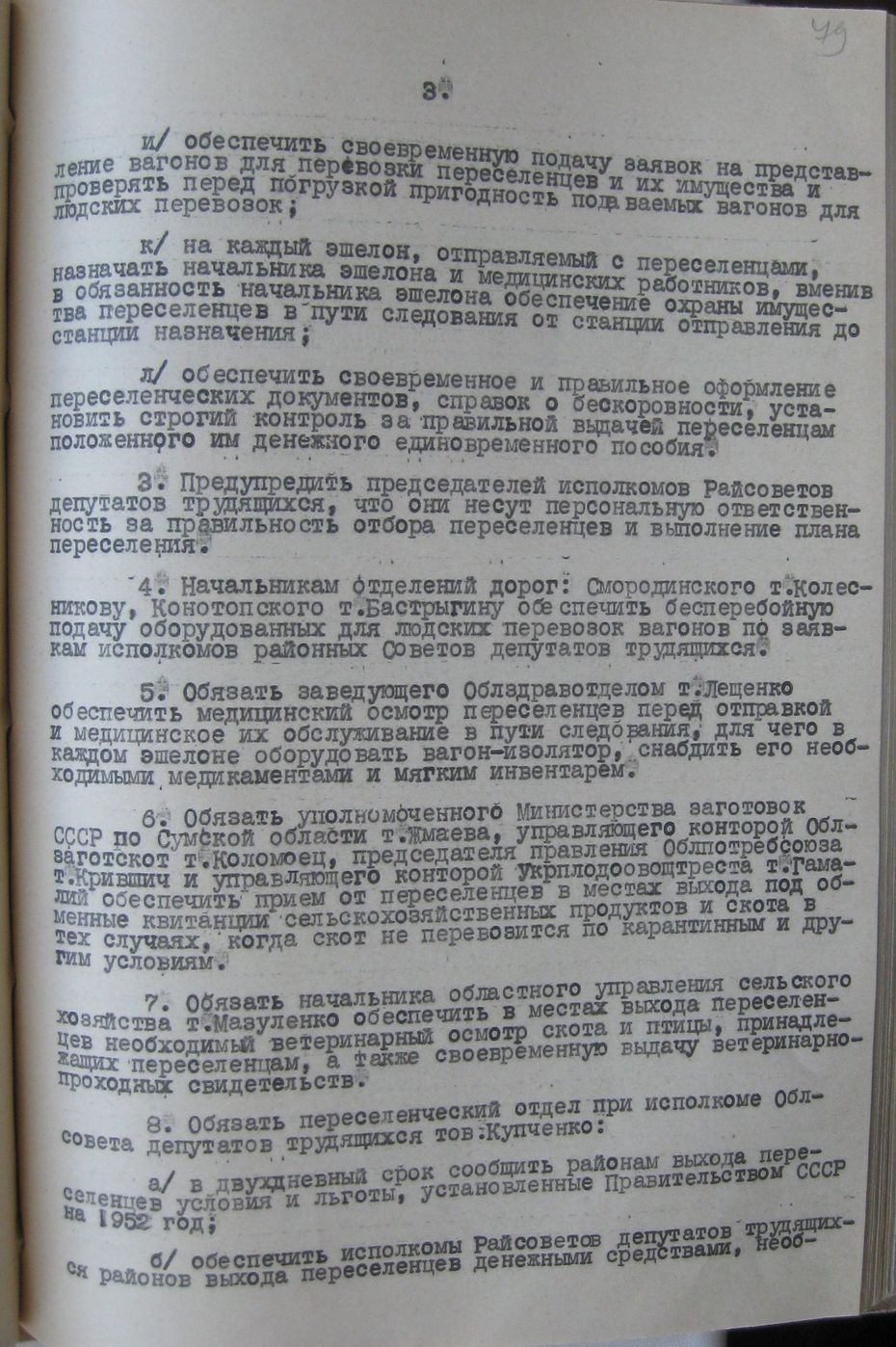
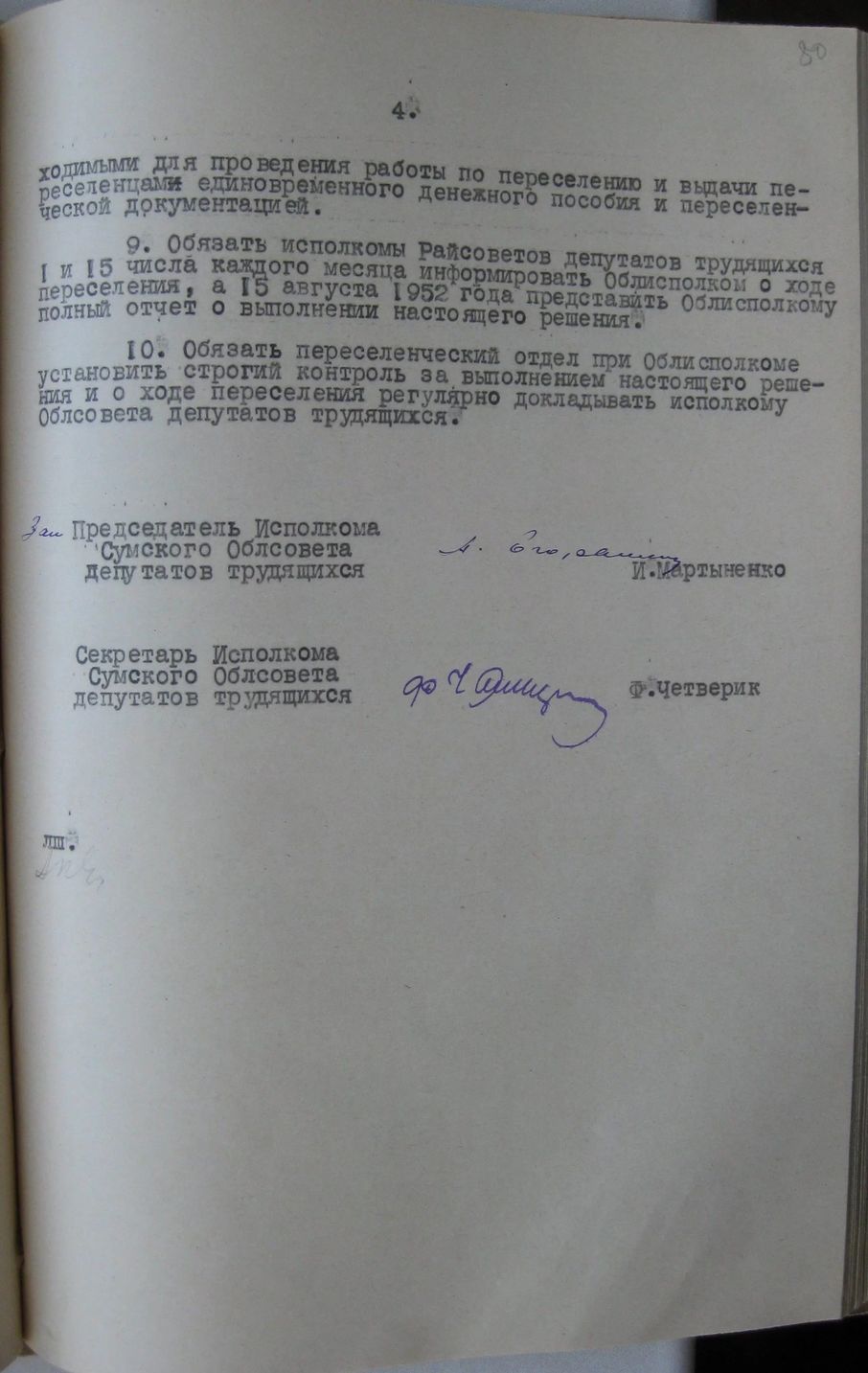
Decision of the Executive Committee of the Sumy Oblast Council of Workers' Deputies dated January 18, 1952, No. 77 "On measures to ensure the implementation of the 1952 plan for the resettlement of collective farmers and other population to the Crimean Oblast."
State Archives of Sumy Oblast, R-2196, op. 9, file 685, sheets 77-80
Applications expressing the desire to move to Crimea were written in a free format.
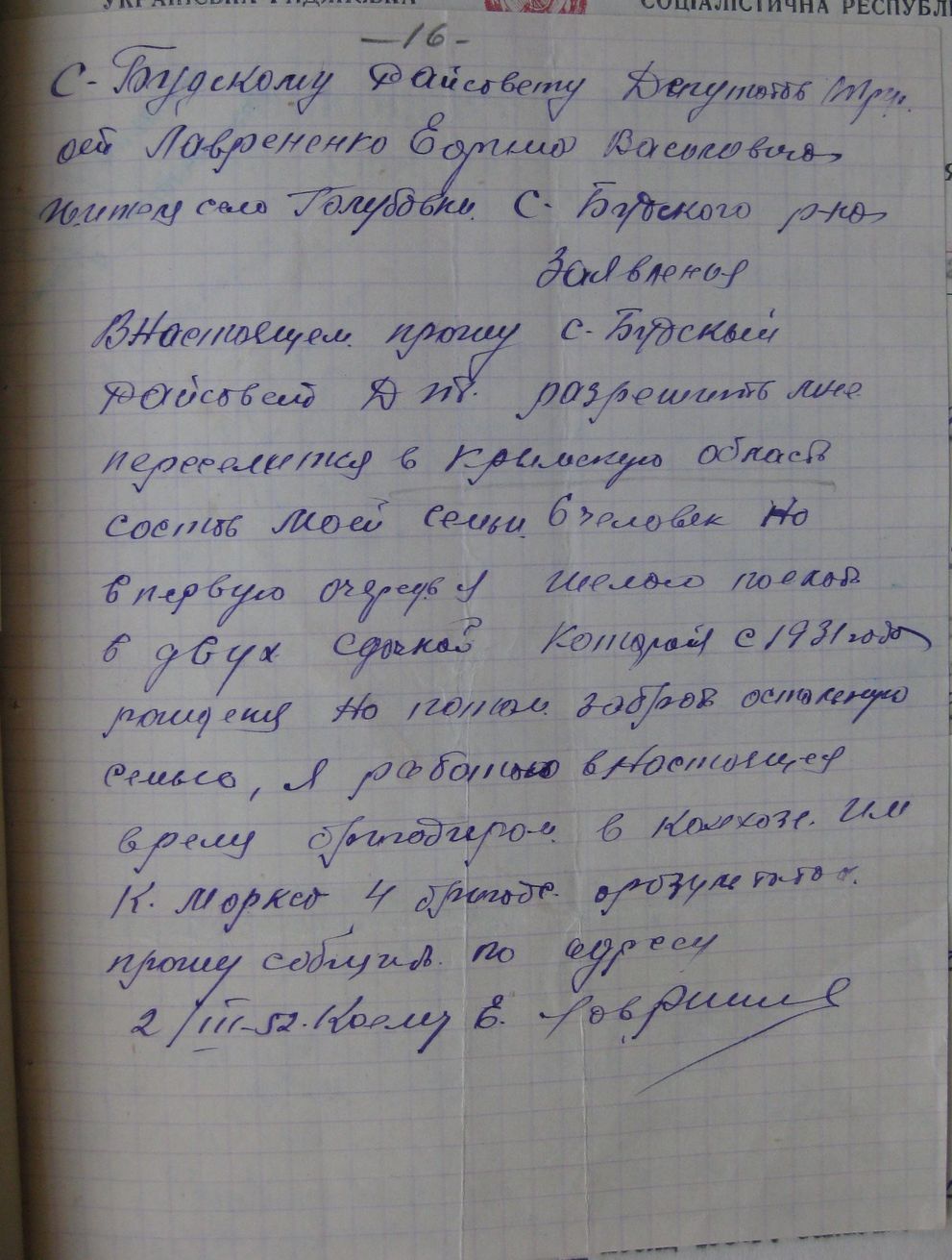
Application from Yukhym Vasyliovych Lavrenenko, a resident of the village of Holubivka, Seredyna-Buda district, requesting permission for him and his family to resettle to the Crimean Oblast. March 2, 1952.
State Archives of Sumy Oblast, R-2307, op. 2, file 50, sheet 16.
As of February 1952, the readiness of 60 collective farm families to move was reported.
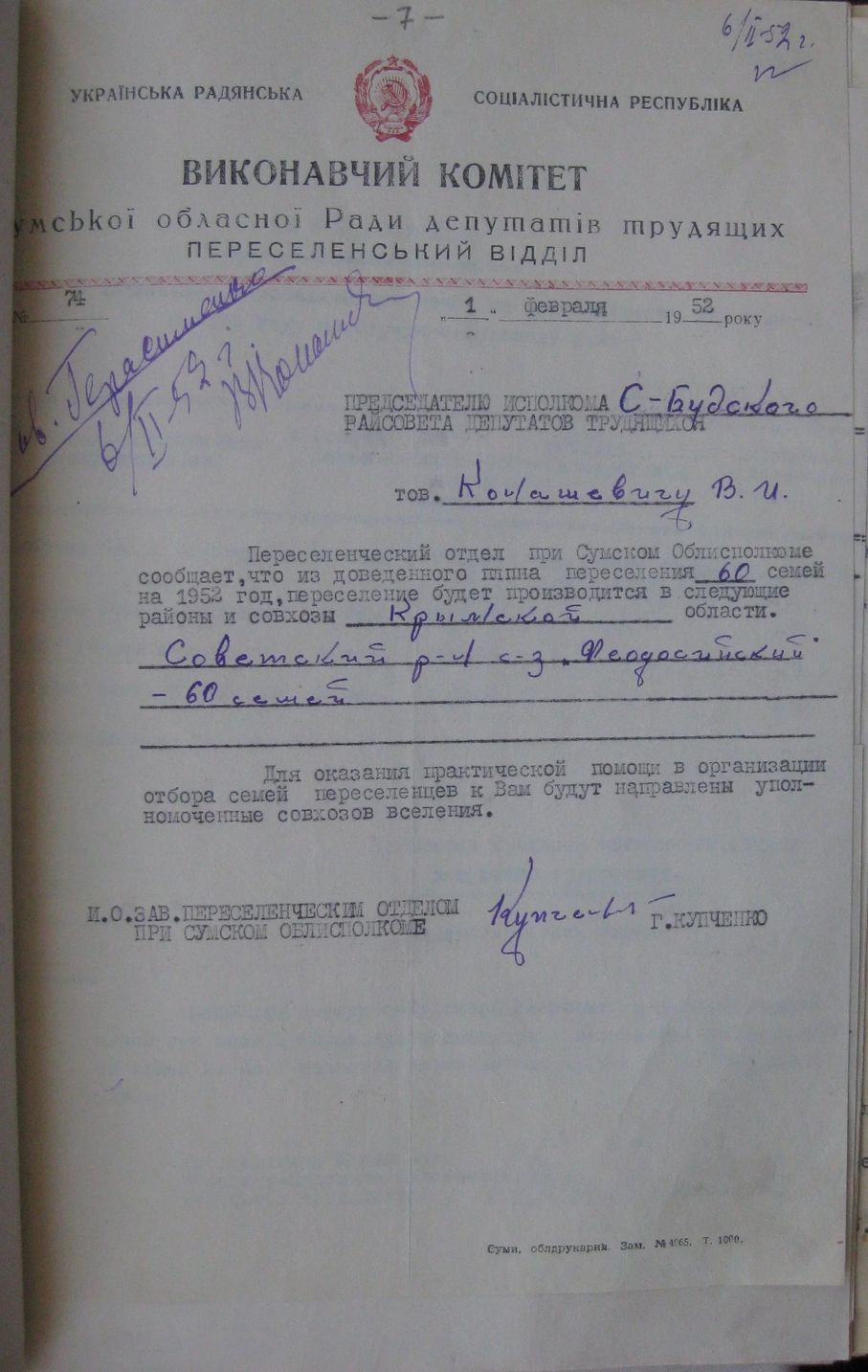
Letter from the Resettlement Department of the Executive Committee of the Sumy Oblast Council of Workers' Deputies to the Chairman of the Seredyna-Buda District Council of Workers' Deputies notifying of the resettlement of 60 families of the district to the "Feodosiysky" state farm in the Sovietsky district of the Crimean Oblast. February 1, 1952.
State Archives of Sumy Oblast, R-2307, op. 2, file 50, sheet 7.
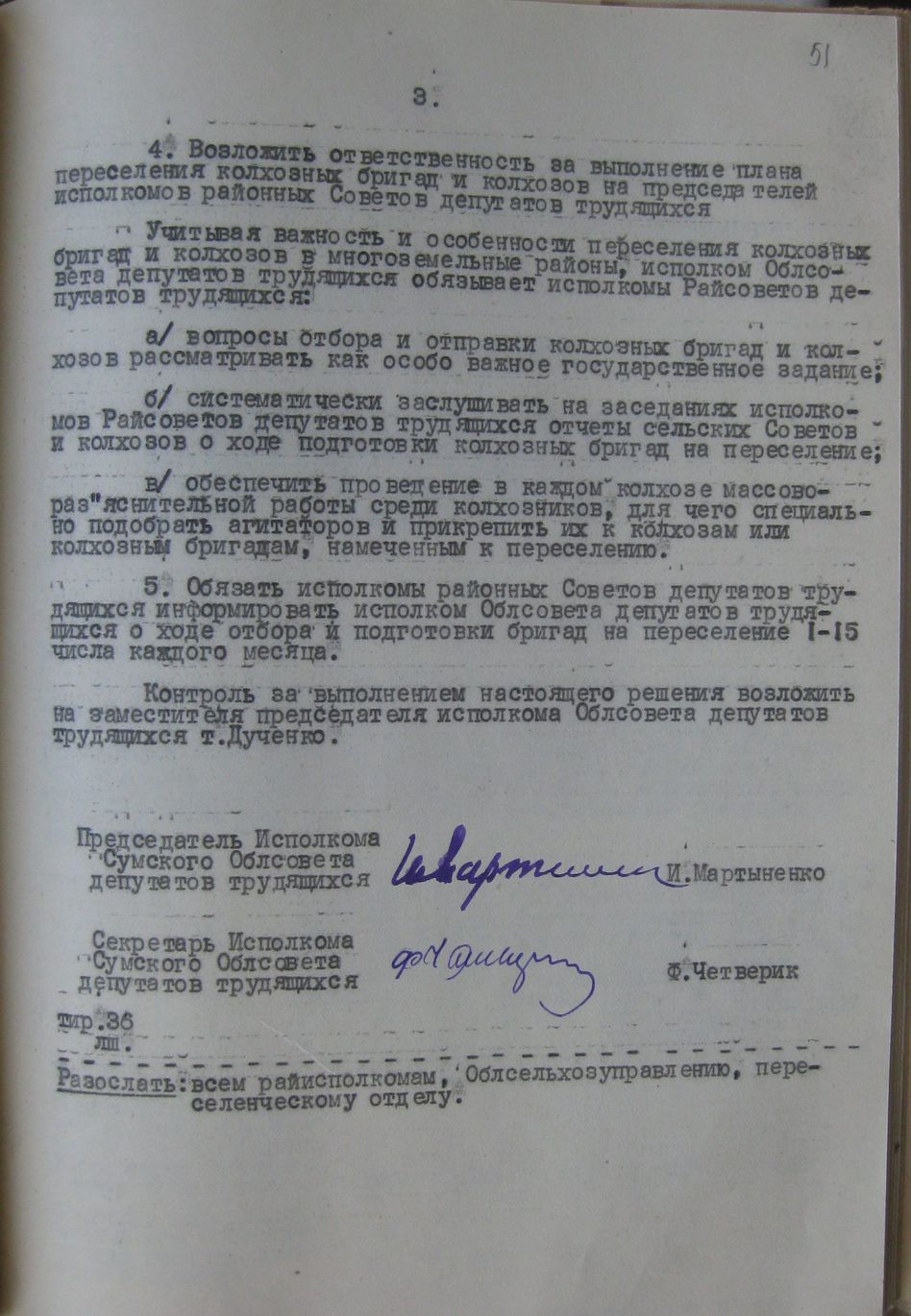
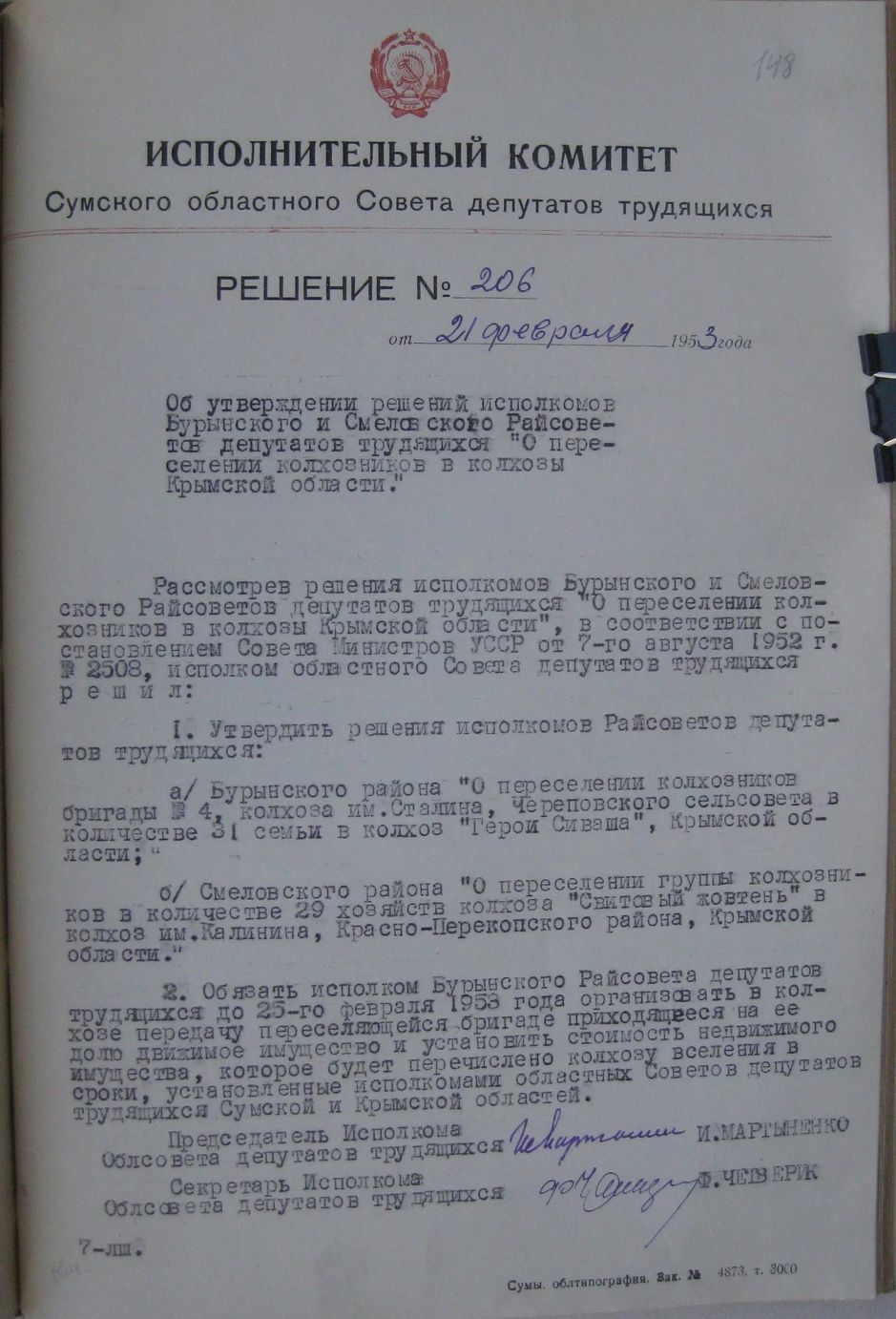
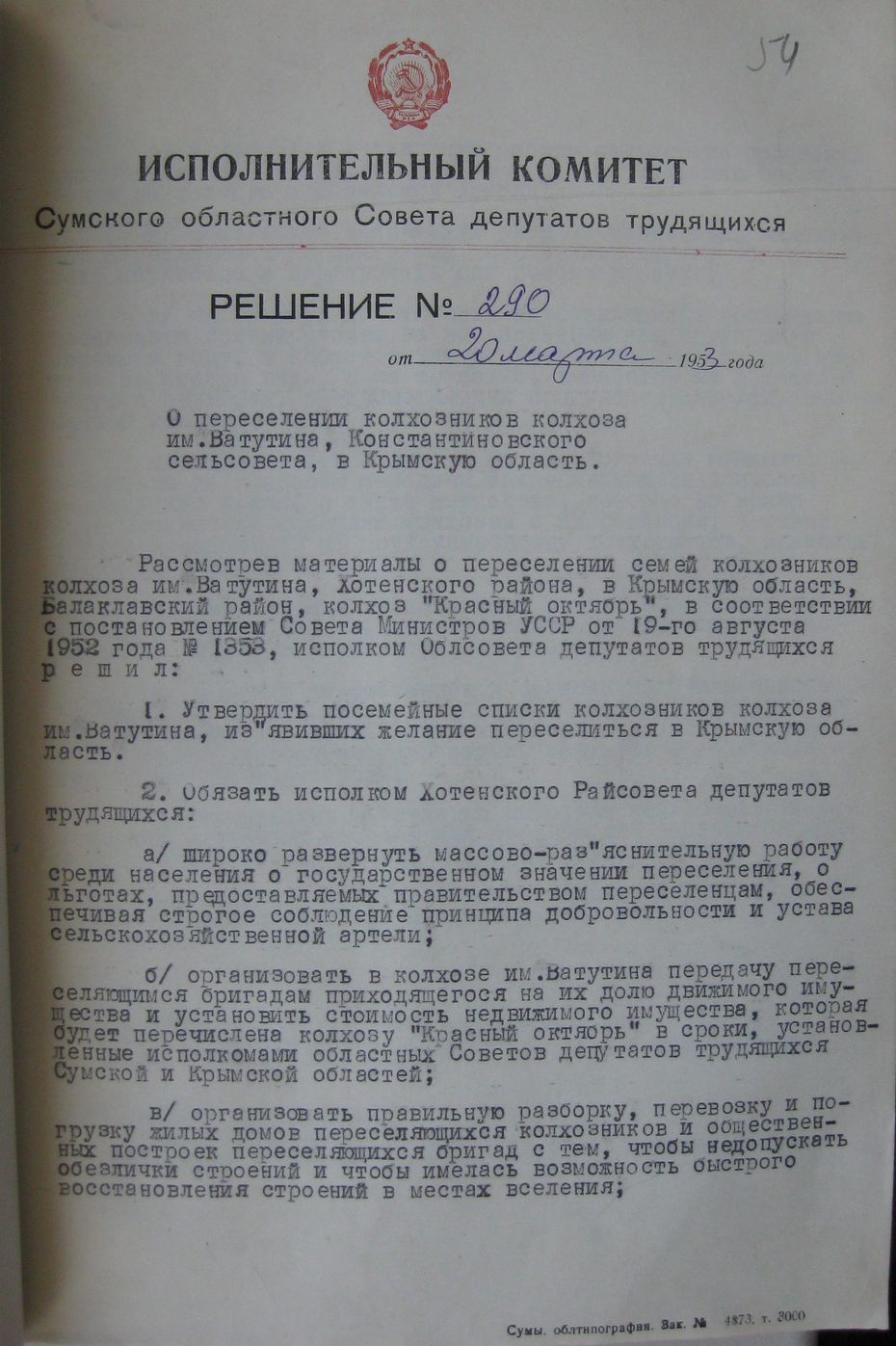
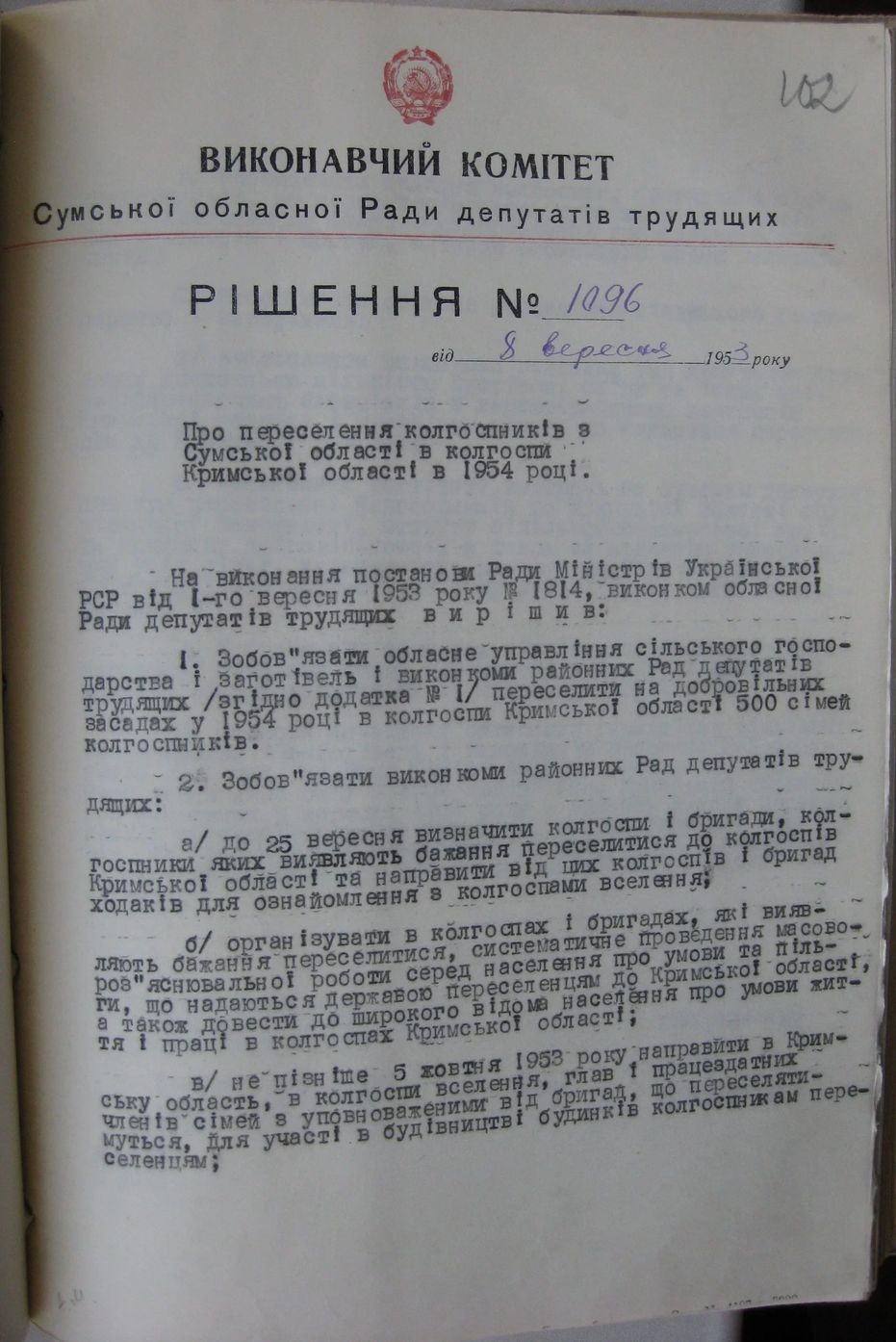
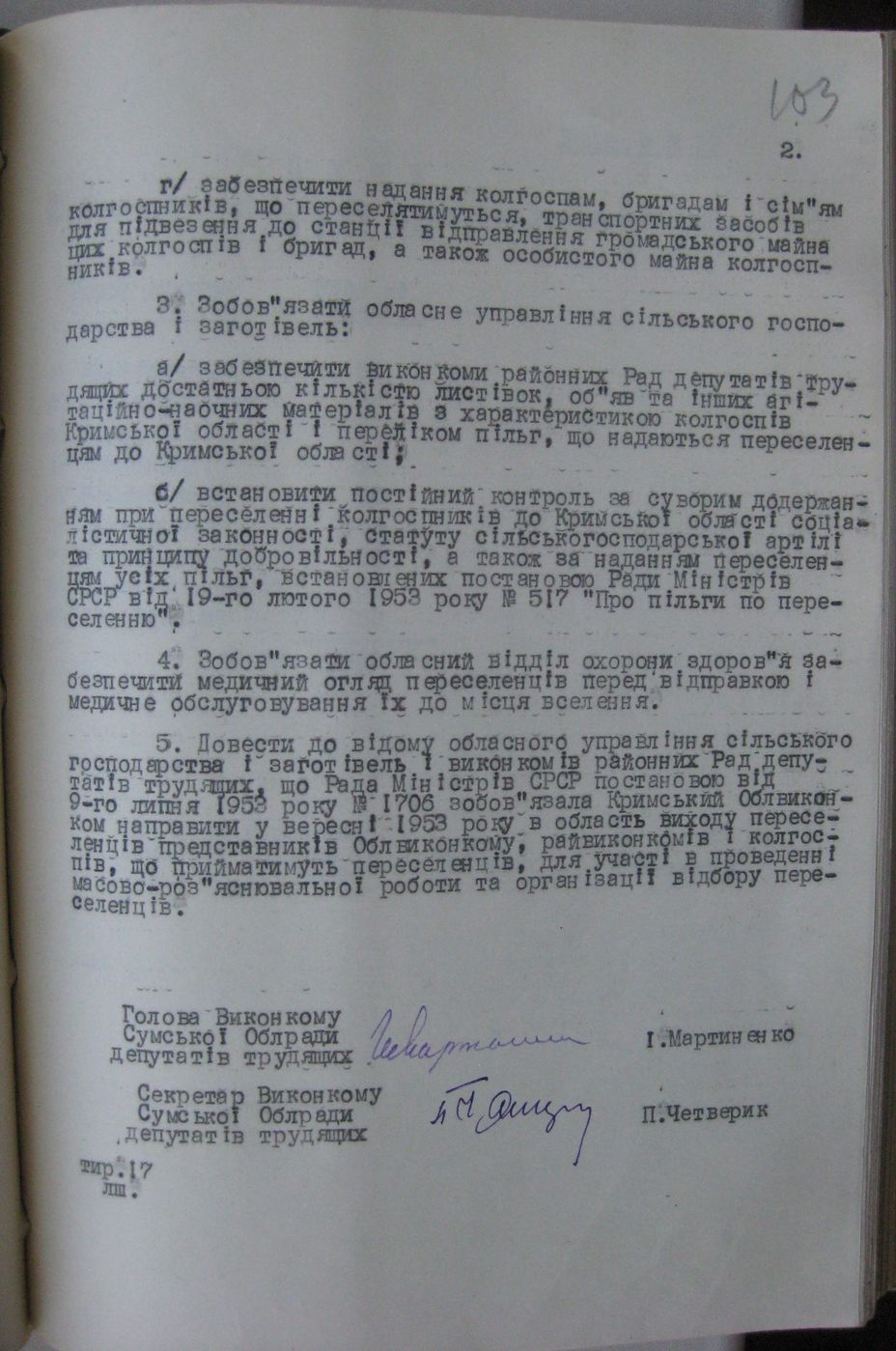
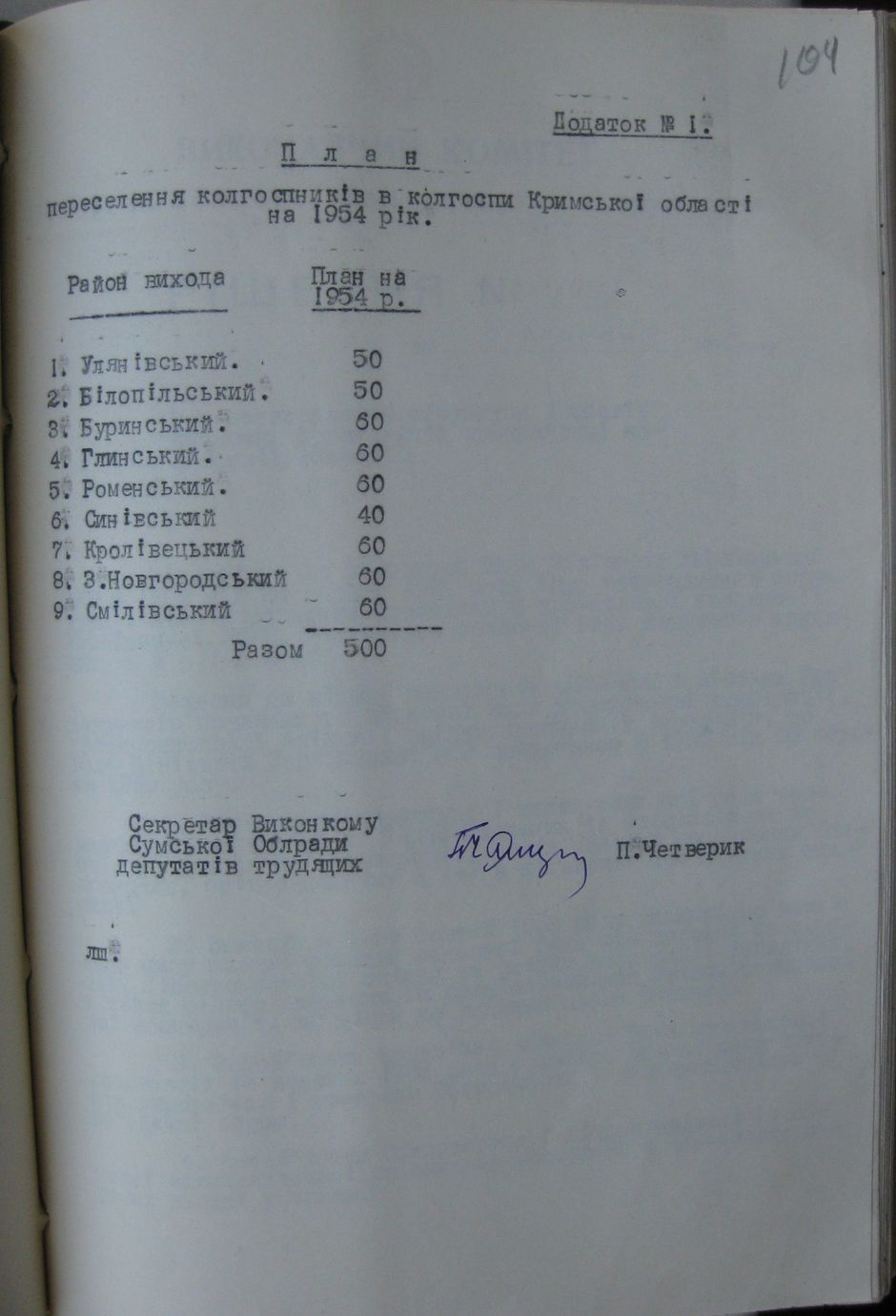
Pursuant to the decision of the Council of Ministers of the Ukrainian SSR of January 15, 1952, the Executive Committee of the Sumy Oblast Council of Workers' Deputies determined by Decision No. 1801 of November 13, 1952, to resettle not only individual families but to approach this issue comprehensively, relocating entire collective farms or brigades that had agreed to leave in their entirety.
Despite the fact that, based on the results of the first 9 months, the plan was successfully implemented by most district executive committees, some still treated the task negligently and even: "...showed a callous attitude toward transport of settlers to loading stations, allowed the dispatch of unequipped trains, as a result of which the resettlement plan established for 1952 was not fulfilled. The Executive Committee of the Ulianivka District Council of Workers' Deputies violated the established procedure for selecting brigades for resettlement, and, without obtaining the consent of the majority of members of brigade No. 3 of the Voroshilov collective farm, decided to resettle it to the Crimean Oblast, as a result of which only 20 out of 57 families moved."
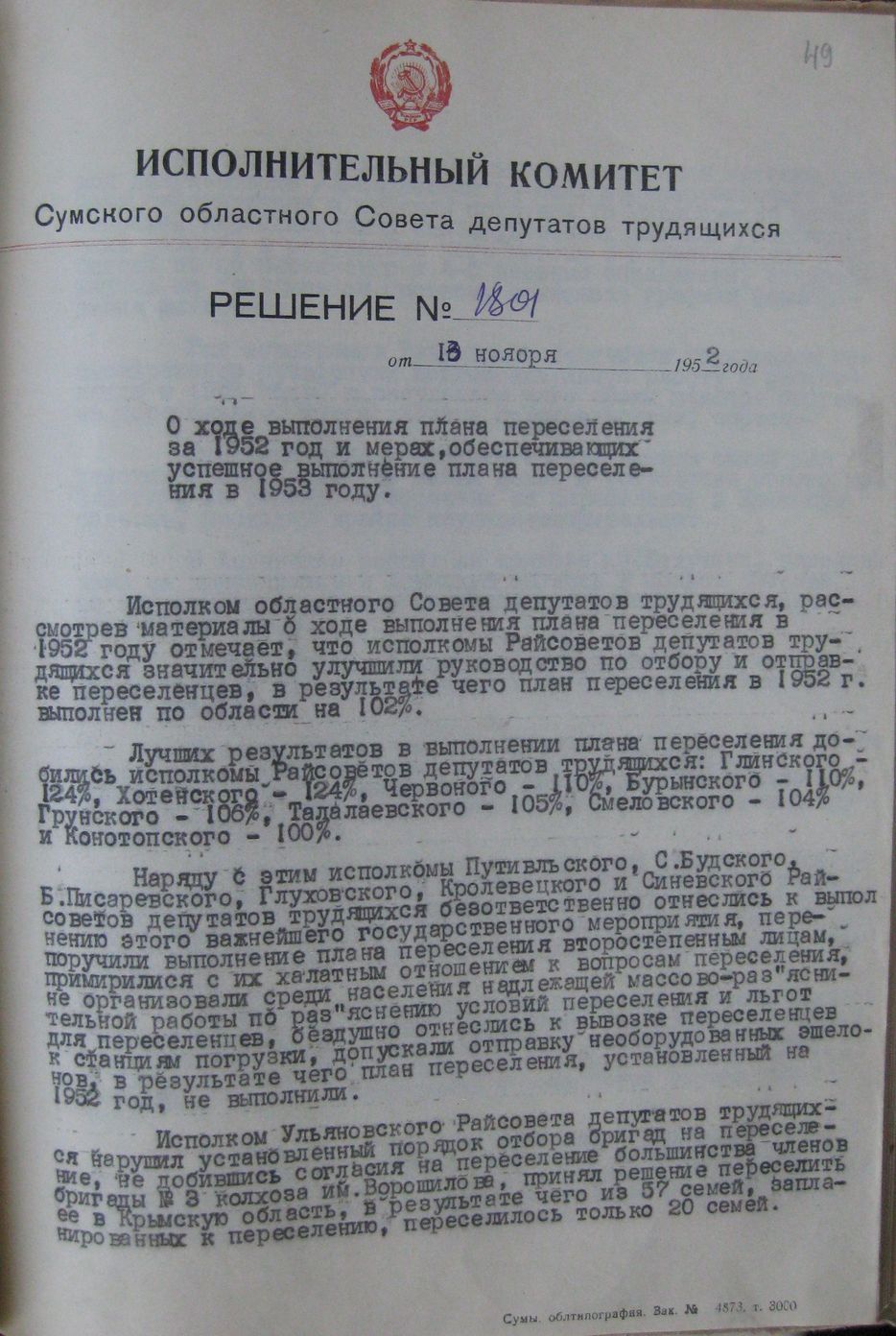
Decision of the Executive Committee of the Sumy Oblast Council of Workers' Deputies dated November 13, 1952, No. 1801 "On the progress of the implementation of the resettlement plan for 1952 and measures to ensure successful implementation of the resettlement plan in 1953."
State Archives of Sumy Oblast, R-2196, op. 9, file 719, sheets 49-51.
Before being sent to Crimea, settlers were often organized into construction brigades to build and equip housing for their own needs, which is why the decision noted: "...complete the dispatch to the Crimean Oblast of heads of families and able-bodied family members to participate in house building and establishing their households."
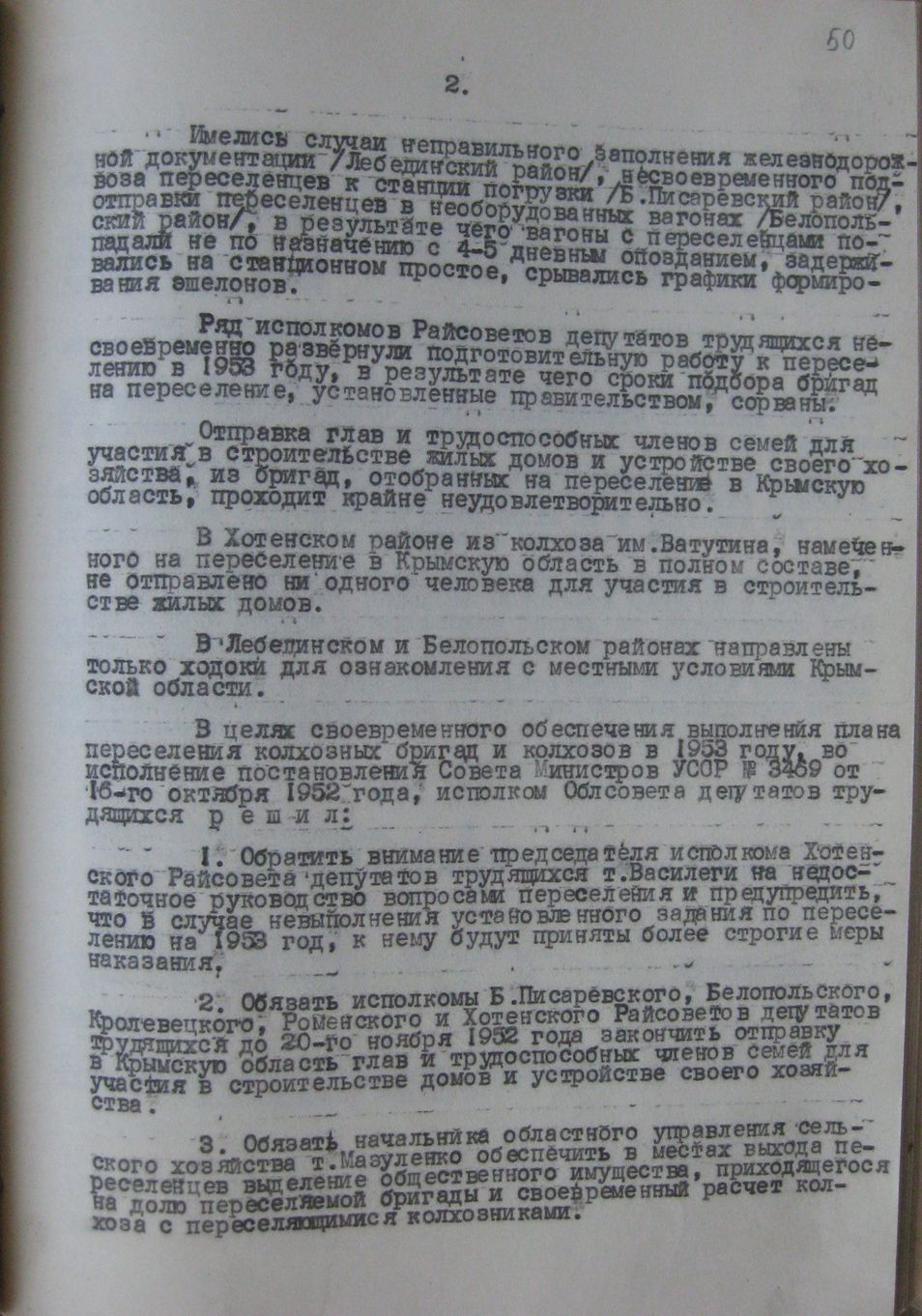
At the same time, the Executive Committee of the Sumy Oblast Council of Workers' Deputies informed the population about the benefits available to settlers in 1952, in particular for purchasing livestock, exemption from compulsory delivery to the state of leather raw materials, eggs, and sheep's milk cheese (brynza).
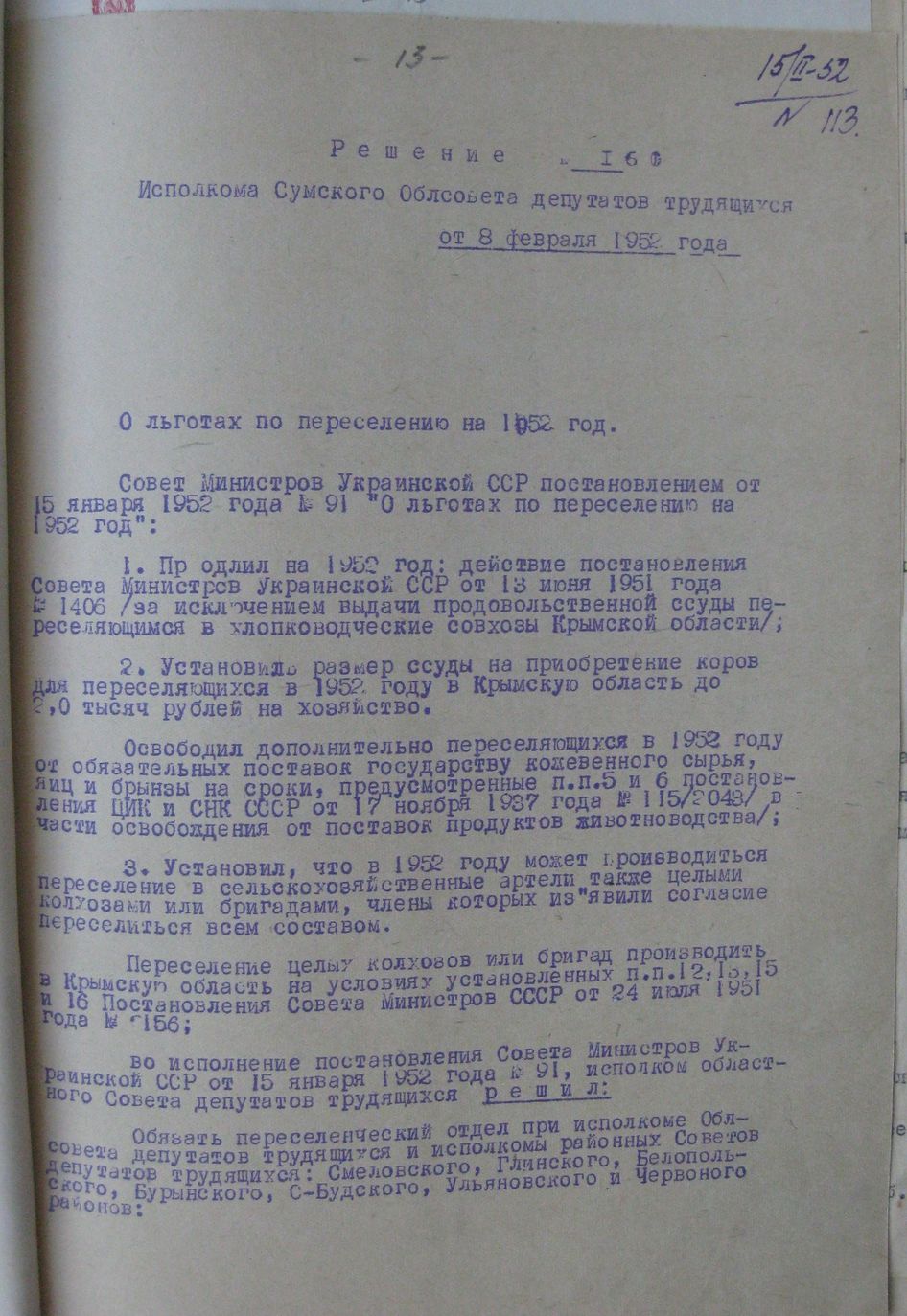
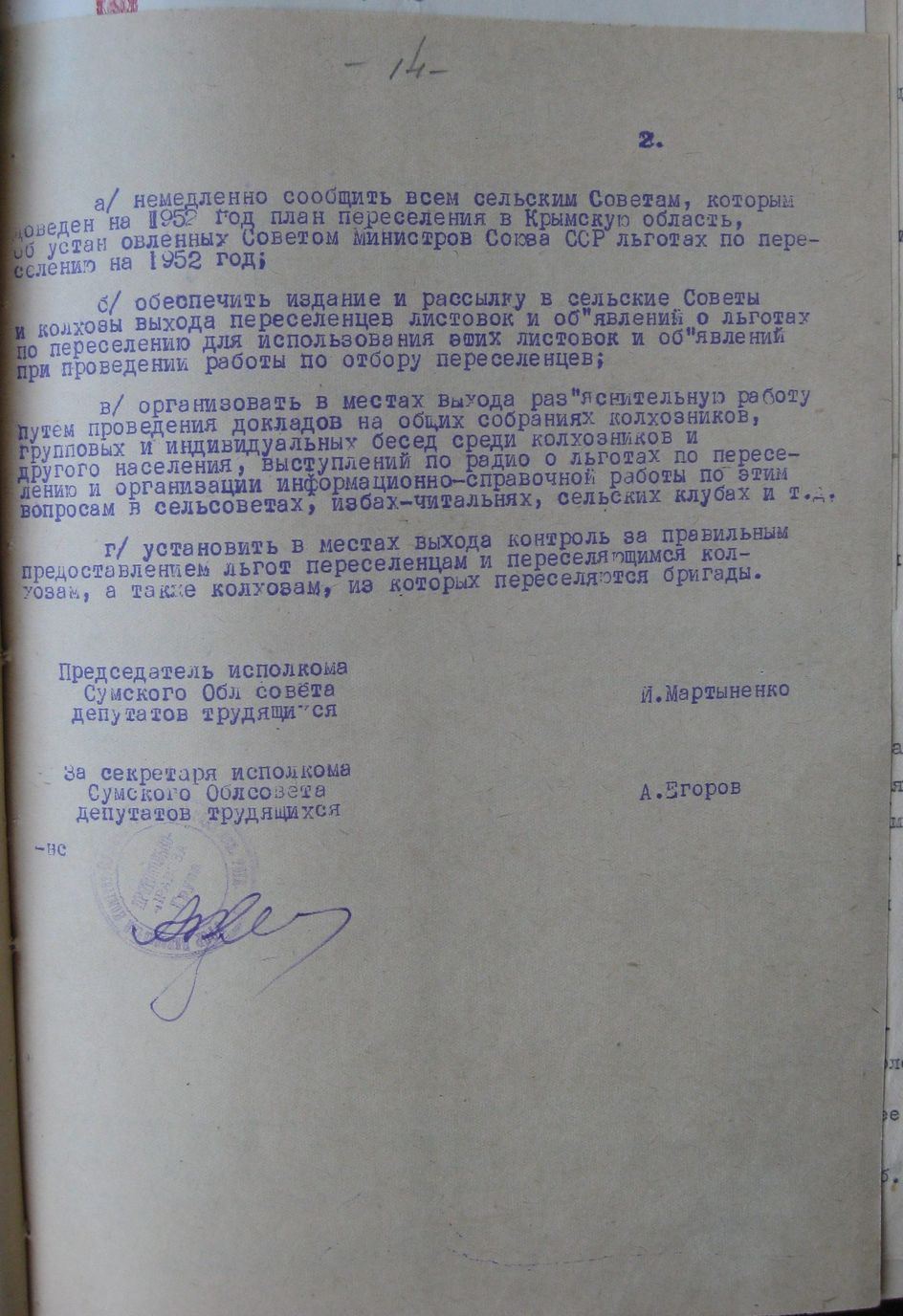
Decision of the Executive Committee of the Sumy Oblast Council of Workers' Deputies dated January 8, 1952, No. 160 "On benefits for resettlement for 1952."
State Archives of Sumy Oblast, R-2307, op. 2, file 50, sheets 13, 14.
Soviet officials realized very well that it would be difficult to quickly restore Crimea's potential without Ukraine. The authorities' migration, subsidy, and propaganda policies combined yielded the desired result.
Crimea, which was part of the RSFSR, was effectively resuscitated between 1944 and 1954 through the efforts of thousands of Ukrainians. It was they who had to accomplish the hardest part – laying the foundations for the further successful development of the Crimean region.
Therefore, the de jure formalization of the transfer of the Crimean Oblast to Ukraine in 1954 is now perceived rather as a formal step. Especially against the background of a decade of painstaking work by Ukrainians, reduced allocations for other regions, and fueling the peninsula's economy through significant financial injections from the budget of the Ukrainian SSR.
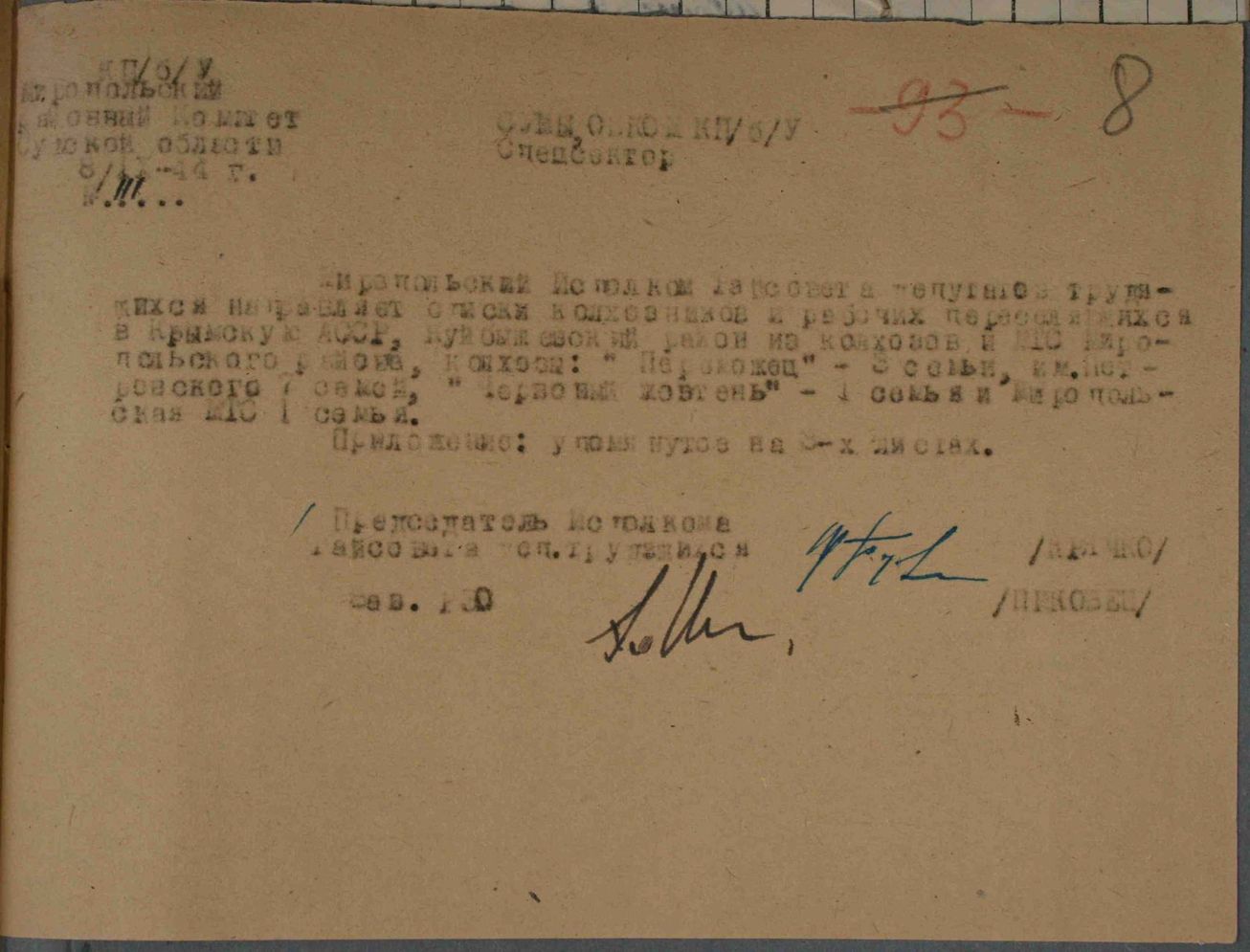
State Archives of Sumy Oblast