The Strength of Crimean Bulat
Mastering of tank production by Crimean Oleh Soich.
Valeriy Verkhovskyi. "Krymska Svitlytsia" Newspaper, 2017, Issue No. 51
Our acquaintance with the T-64 tank took place just before graduation from the military school, when the new machine, wrapped in tarpaulins, was brought at night and hidden in a closed hangar. The acquaintance was short, but we fell in love with the new machine at first sight. (Viktor Suvorov, "The Liberator")
Back in the early 1950s, the creators of the "T-34" from Kharkiv had the idea of creating a fundamentally new tank. The development of the T-34, T-44, T-54/55 line, which eventually led to the T-62, had no further prospects. And then, in the quiet of the secret design city of craftsmen, the outlines of a combat vehicle began to emerge, which for the next half-century defined the line of development of tank building in the Soviet Union. Thus was born the T-64. The mastering of production of the new "product" was managed by a Crimean — the director of the Kharkiv Malyshev Tank Factory, Oleh Vladyslavovych Soich.
Soichs from Crimea
The Soich family came to Crimea from the Balkans.
Mykola Karakozi in the book "A Man for All Times", published in Kharkiv in 2005, writes: "According to historical data, Oleg Vladyslavovych's ancestors were immigrants from Trieste (a city in Northern Italy on the shores of the Adriatic Sea). Serbs, and one of the grandmothers was Italian."
Trieste, a handsome city on the Adriatic, at that time in the 19th century belonged to Austria-Hungary, and after two world wars went to Italy. The Soich brothers, naval officers in the Russian service, after the Crimean War received here a "patch" of land of 600 desiatynas for two (approximately 650 hectares) in a village on the border of the Feodosia, Simferopol, and Perekop districts. Andriivka, now the village is called Zhelyabovka and belongs to the Nyzhniohirskyi district.
Oleh Soich was born on December 25, 1915, in the family of Vladyslav Henrikhovych Soich (born 1883), a native of Andriivka, and Taisiia Vasylivna (née Sheikina), born 1884, originally from Berdiansk. The mother was a teacher, highly valued education, which she also instilled in her children — in addition to Oleh, there were two other children in the family: son Borys and daughter Valeriia. Obviously, it was in the family that the "...character he carried through his whole life and never betrayed was laid: kindness and pride, the ability to defend himself and stand up for his point of view, intellect and intelligence" (M. Karakozi, "A Man for All Times").
Oleh Soich was only two years old when the Bolshevik coup took place and the Civil War began, which did not spare Crimea either. The family lost the father, Vladyslav Soich, in the maelstrom of these events. Taisiia Vasylivna moved to Berdiansk.
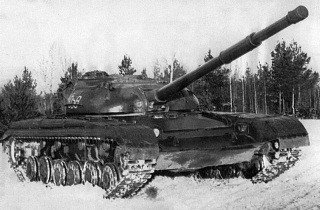
Object 432 — the future T-64 tank
Career
After graduating from the technical school in Berdiansk, Oleh Soich worked in Kremenchuk at the Kriukiv Railway Car Building Works, first as a foreman and then gradually rose to deputy shop superintendent. Later, his biography included Briansk, Saratov...
In the 1950s, Oleh Soich became first the chief engineer, and then the director of the Kharkiv Bearing Plant. From there, in 1960, he moved to a new position — he became the chairman of the Kharkiv Economic Council (Radnargosp). Khrushchev was then trying to reform the socialist economy without changing the foundations of the Soviet system. Councils of National Economy were created in the late 1950s and were designed to save the "national economy" from centralized mess and the impoverishment of the people. In economic regions formed from two or three oblasts, a new system of industrial production management was implemented. That is, Oleh Soich then became virtually the minister of industry and construction of a territory with a population of five million: Kharkiv, Poltava, and Sumy oblasts.
He remained in this post until 1965, when it became clear in the Kremlin that the socialist economy could not be saved this way, and the Economic Councils were liquidated. The Kosygin economic reform began.
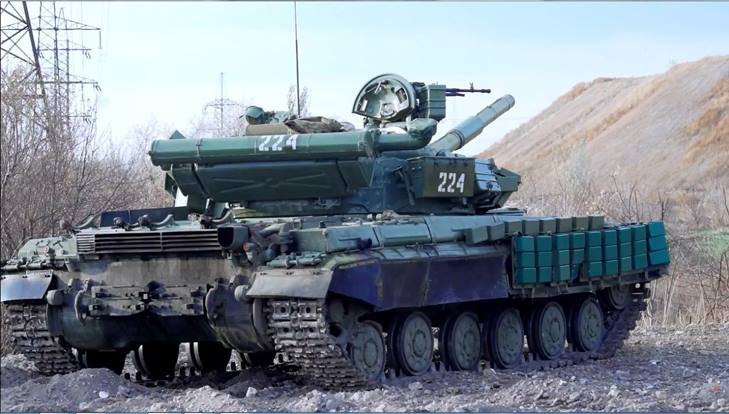
A modern T-64 tank in service with the Armed Forces of Ukraine
Director
In 1965, it was necessary not only to launch the production of the T-64, but also to turn a pioneering, yet rather raw machine, into a real main battle tank. It was then that Oleh Soich took charge of the Kharkiv Malyshev Plant, so all of this fell on his shoulders.
An autoloader replaced the loader, for the first time in the world tank crews were protected by composite armor with a layer of ceramics inside, the power of the smoothbore gun was fantastic... Viktor Suvorov, who had to participate in military trials of the new tank, recalled the first steps of the "sixty-four": "The 125-mm gun is the most powerful in the world. No tank in the world has ever had anything like it... Its shells tore turrets off target tanks and threw them dozens of meters away. And tank turrets weigh 8 or even 12 tons...
The super-powerful gun was inaccurate. In pursuit of the muzzle velocity of the shells, the designers made it smoothbore, not rifled, like in the T-62. Power was bought at the expense of accuracy... The tracks on the tanks were fundamentally new. On all previous tanks, they were replaced every two thousand kilometers. Now they could withstand 10,000 kilometers. The trouble was that these tracks kept slipping off. Imagine a boxer whose shorts keep falling down during a decisive match. And the engine was completely bad."
They had to overcome "teething troubles" without delay. The army needed a tank capable of reaching the English Channel through the reinforced concrete resistance of "Leopards" and "Pattons". And this was under conditions of competition in the field: according to eyewitnesses, Ustinov, the Minister of the Defense Industry, and later the Minister of Defense, showed greater favor to the Nizhny Tagil design bureau.
Eventually, the modernized T-64A with a new engine was accepted into service in 1967. Meanwhile, in the Kharkiv design bureau, work began on an even newer machine: an automated turret, a gas turbine engine, a 130-mm main gun, and a 30-mm auxiliary gun... Object "450", or (unofficial name) T-74 — this machine, although not accepted into service, killed at least two people: chief designer Morozov and factory director Soich. Oleh Soich died in 1975, just short of his sixtieth birthday...
A street in Kharkiv is named after Oleh Soich. For the 90th anniversary of his birth, a book about him was published in Kharkiv. The T-64 became the main battle tank of the Ukrainian Armed Forces: T-64BM, "Bulat"... Thus, the man did not live his life in vain. The author wishes to express gratitude for assistance in preparing this material to Yuliia Bakilina and Ihor Rassokha.