Mamai — a Veteran of the Battle of Kulikovo
The Battle of Kulikovo and the 'Tale of Mamai'
Valeriy Verkhovskyi. Newspaper "Krymska Svitlytsia", 2018, Issue No. 13
Much has been written about the Battle of Kulikovo... and clumsily. What actually happened, where, and when? And in general, if history textbooks are written with references to legends and myths, is historiography a science?
There is a myth of imperial Russian historiography that in 1380, this battle of the Rus' people against the Tatars not only put an end to the enslavement of Rus', but also contributed to the unifying process that led to the merging of autonomous principalities into a single state and the creation of a single (or triune) Russian nation. They say that Muscovites, Serpukhovians, Rostovians, Belozers, Smolyans, Muromians, etc., came to the Kulikovo field, and left it as Russians.
Until recently, researchers could obtain information about this battle only from sources whose originals have long been lost: "The Tale of the Massacre of Mamai," the highly questionable "Zadonshchina," and the "Chronicle Tales of the Battle of Kulikovo"—known as the "Extended" and the "Short" versions.
In many ways, they contradict each other and provide unbelievable data on the size of the armies and the duration of the battle. The story of the duel between Peresvet and Chelubey, which preceded the battle itself and is beautiful from an artistic point of view, is just a legend, a figment of the author's imagination. The place where the obelisk is erected was chosen arbitrarily, and archaeological excavations on it yielded no weightier arguments for this.
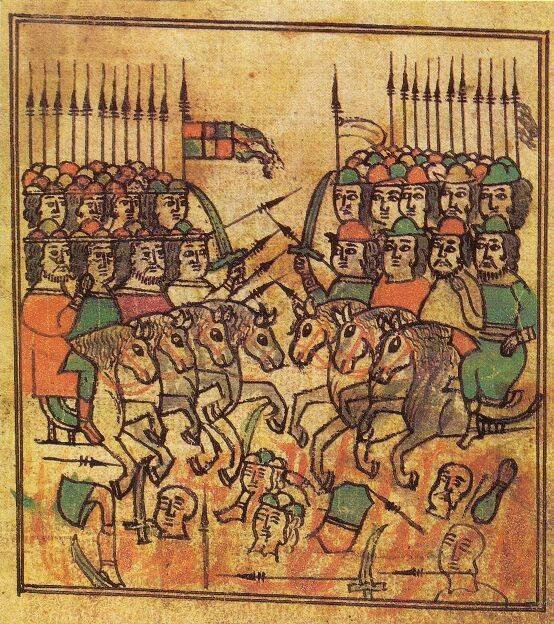
European chronicle sources ("Chronica Novella" and "Wandalia") of that time give sketchy information about a battle that occurred in 1380 or not in 1380 somewhere in the locality of Blauwasser (translated as Blue Water) between the Rus' and the Tatars, the victors of which turned out to be... the Lithuanians.
And this is closer to the truth, because both victories of Dmitry Donskoy over Mamai (the Battle of the Vozha River in 1378 and the Battle of Kulikovo in 1380) occurred in a historically short period when Muscovy was part of the Grand Duchy of Lithuania (1373–1382).
Indeed, the Lithuanians would have emerged victorious in any case, because they were present on both sides of the confrontation: two sons of Algirdas, Andrei and Dmitry, fought alongside Dmitry Donskoy, while their brother was rushing to help the "Mamai side," but not energetically enough—he was late; the name of the one who was late was Jogaila. The favorite son of Algirdas, it was he who inherited the throne of the Grand Duchy of Lithuania under the will of his father who died in 1377, and not Andrei, the eldest of Algirdas's sons.
And from this historical fact, known to the point of banality, the "Massacre of Mamai" looks like a banal squabble of ambitious heirs over power, a kind of East European game of thrones. And in just five years, Jogaila, having concluded the Union of Krewo with Poland, would confirm his "European choice," which would determine the path of development for Lithuania, Belarus, and Ukraine for centuries. Besides Jogaila, other "Tatars" fought on Mamai's side: Prince Oleg of Ryazan with his host, the Genoese... After all, Mamai was born in Kaffa, a Genoese colony.
According to unconfirmed, but at the same time unrefuted data, the beglerbeg of the Horde Mamai was baptized in the Catholic faith in Kaffa. One way or another, Mamai's relations with Europeans developed much better than with his compatriots from Kipchak; he was born in Crimea, lived in Crimea, and died in Crimea.
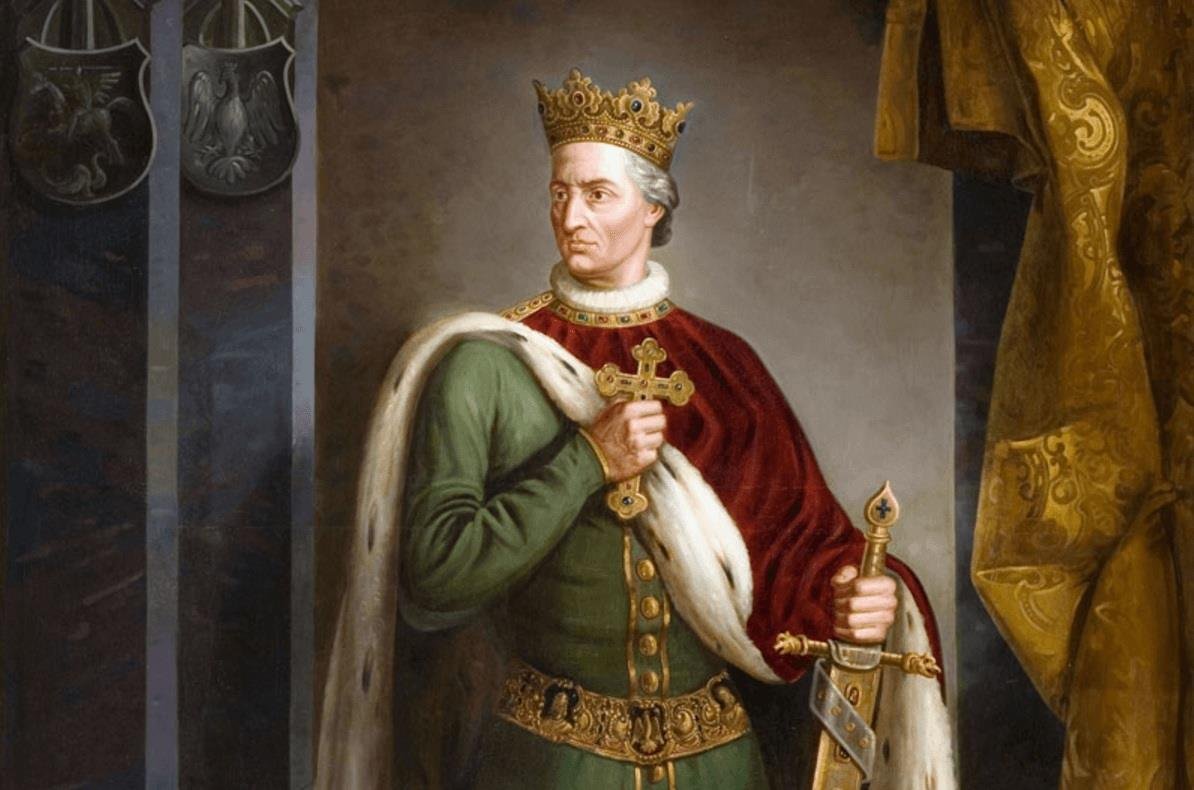
Jogaila, Grand Duke of Lithuania
Although it sounds extremely cynical to us, one of the significant sources of income for the Italian colonies in Crimea in the 14th–15th centuries was the slave trade. Since the Italians were good at bookkeeping, contract records of even "live cargo" have been preserved in their archives... A few years ago, Russian historians, studying the financial reports of slave traders from Kaffa, discovered that the documents refute the myth of the victory in 1380.
"After the Battle of Kulikovo, raids on Rus' became more frequent, which were regarded by the Horde as compensation for the damage caused. The documents of Venetian notaries testify that during that period, as a result of the increased Mongol raids, the number of Rus' slaves in the markets of the Black Sea region increased significantly. While before 1380 slaves from the Caucasus were more common in bills of sale, and Slavs were a rare commodity, after the Battle of Kulikovo a surge in the trade of Slavic slaves is recorded for 60 years. So how could this happen after the victory on the Kulikovo field?
And can a situation in which the defeated make regular raids on the victors and take them into slavery be considered a victory?" — writes Candidate of Historical Sciences Olga Brylyova in the article "Italian Notarial Acts Called into Question the Outcome of the Battle of Kulikovo" (journal "Nauka i Zhizn" No. 6 for 2013).
So, Muscovites, Serpukhovians, Rostovians, Belozers, Smolyans, Muromians, etc. came to the Kulikovo field, and left it—Russians. Only where did they go? To the Feodosian slave market?
That is, the battle took place either in 1380 or in some other year; perhaps in it the Tatars, Lithuanians, and Rus' defeated the Rus', Tatars, and Lithuanians, or maybe the other way around; maybe they fought in the Blauwasser locality, or maybe on the Kulikovo field; maybe this battle happened somewhere at some time, or maybe it was invented altogether...
And new discoveries allow a different look at the figure of Mamai, who was depicted as "accursed" and "godless." After all, there is a fact confirmed by Italian archive sources: the largest flow of "Serpukhovians and Muromians" in the slave markets falls on the period between 1380 (Mamai's death) and 1440.
What happened in Crimea in 1441? That year, Hacı Giray, the first of the most powerful Crimean dynasty of khans, came to power in the Crimean Khanate. In the history of our country, his reign was marked by the struggle for Crimea's independence from the Horde and an alliance with the Grand Duchy of Lithuania. 15th-century chroniclers called Hacı Giray the "shield of Ukraine" without exaggeration. Perhaps Mamai could have become such a "shield." At least his descendants did—creating the Ukrainian Cossack host just 110 years later.