A Product of Variety and Locality
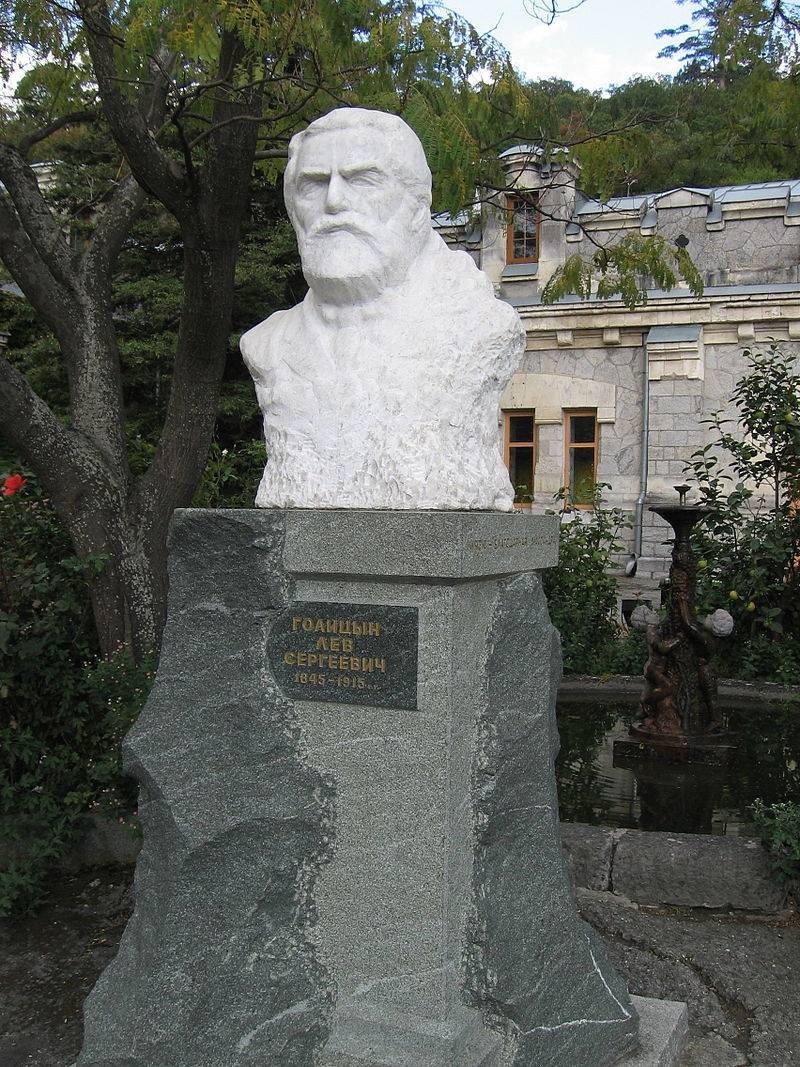
Pages from the life of the great winemaker Lev Golitsyn.
Oleksandr Yaroshevsky. Newspaper "Krymska Svitlytsa", 2016, Issue No. 39
Humanity is a strange community in whose life – and an unbiased researcher would probably note this with interest – securing the joys of life is no less important than the very process of life itself. Even when the meaning of those joys is later disputed by those concerned with the second, that is, the life of a human as a biological and social being. And despite the warnings of doctors and lawyers, humanity continues to cherish both sources, equally glorifying both bread and wine.
A descendant of an ancient lineage of warriors and administrators who, in the second half of the 19th century, studied law "in Europe" and was among the best lawyers of his time, later went down in history as the "great Russian winemaker Prince Lev Sergeyevich Golitsyn." In this field, the prince worked extensively across the entire south of the empire, but the brightest line in the spectrum of the winemaker-prince's achievements was the line of Crimea.
Life
A little about our hero and his origin. For the son of a Polish princess from one of the branches of the famous Radziwiłł family and a man known in the imperial capital's society as a reveller nicknamed "Dlinny Firs" (Long Firs), who traced his lineage back to Gediminas, Lev's native language was Polish. The grandson of the prototype of the "Queen of Spades" used French as his working language. His chosen profession and career prospects also required a domestic diploma, so he graduated from Moscow University. Thus, he learned Russian, but all his life he was distinguished by a characteristic strong accent. And the prince knew not three, but more languages, including Crimean Tatar – which later, for some reason, greatly annoyed the most famous of the prince's friends, Fyodor Chaliapin. But that would come later: both Crimea and world fame. The prince began his career officially in the imperial Ministry of Internal Affairs.
He was also invited to a semi-legal group of lawyers where, under the secret mandate of Alexander II, a constitution was being prepared for the empire... But things did not turn out as desired – either for the emperor or for the prince. In addition to a remarkable intellect, the prince had a wild character and an irrepressible temperament, though he somehow managed to organically combine European love of freedom with the maxim of devoted service to the empire... And when he made such a mess in his personal life that he had to abandon his career, the prince moved to Crimea and embarked on his path to glory via completely different steps. The prince became passionate about winemaking. This half of Lev Golitsyn's life and activity is so widely known that there is no point in retelling it, even briefly. But there are aspects that are currently relevant, and we will focus our attention on them.
The Field
The prince held law degrees and was interested in winemaking seemingly privately. He did not have a degree in it, but his self-education was so thorough and broad that he later received the unofficial title of "king of experts" in this field. He established proper winemaking in Moldova. In that same Moldova, whose wines even in Pushkin's time were considered drinks unworthy of refined taste, drunk by peasants like water, and their strength was of a corresponding level. Golitsyn pointed out the appropriateness of using them as raw material for obtaining wine spirit...
Perhaps Moldovan researchers will tell more about Golitsyn's contribution to the modern fame of Moldova's Cahors and brandies, but we return to our Crimea. In every complex business, there are its own internal secrets, seemingly minor details unseen by outsiders, on which both success and fundamental differences depend. When Prince Golitsyn began studying and developing winemaking in Taurida, the bestsellers of the wine market were Rhine wines. Thin, delicate, exquisite dry, or more correctly, table wines.
Crimean landowners purchased Rhine vines, acclimatized them one way or another in their "grape gardens" and... obtained something completely different from Rhine wine. Of course, it is a difficult task, winemakers themselves say: "He is not a winemaker who prepares a barrel of strong wine, but he who produces a bucket of dry wine!". Dry wine did not work. And, by the way, the public did not like it, preferring "sweetish" wine. Or else – vodka. And the prince did not like vodka. No, not the exquisite grappa – he made grape grappa himself – but that mass swill without which the simple Orthodox folks supposedly could not live.
This is on one hand. On the other hand, as the prince's own research showed, the cultivation of Rhine vines in the coastal strip of mountainous Crimea yielded very good Lafites. And this type of wine was liked by both ordinary people and the wealthy did not shun it. These are the very wines that we now classify as dessert wines. And this was the chance that became historic, and the prince did not miss it!
The name Golitsyn is associated, first of all, with the sparkling wine of Novyi Svit (New World). This is true, this is world fame, this is a triumph at the World Exhibition in Paris in 1899, this is an inseparable brand of the tiny village of Novyi Svit near Crimean Sudak, this is a quality preserved even after a century. This is, they say, until quite recently, the drink enjoyed on New Year's Eve in Windsor Castle, et caetera, et caetera... But the aristocrat Golitsyn was, first and foremost, a statesman, a guardian of the public health, and his goal was to make the delicious drinks of Taurida democratic. And so the work began.
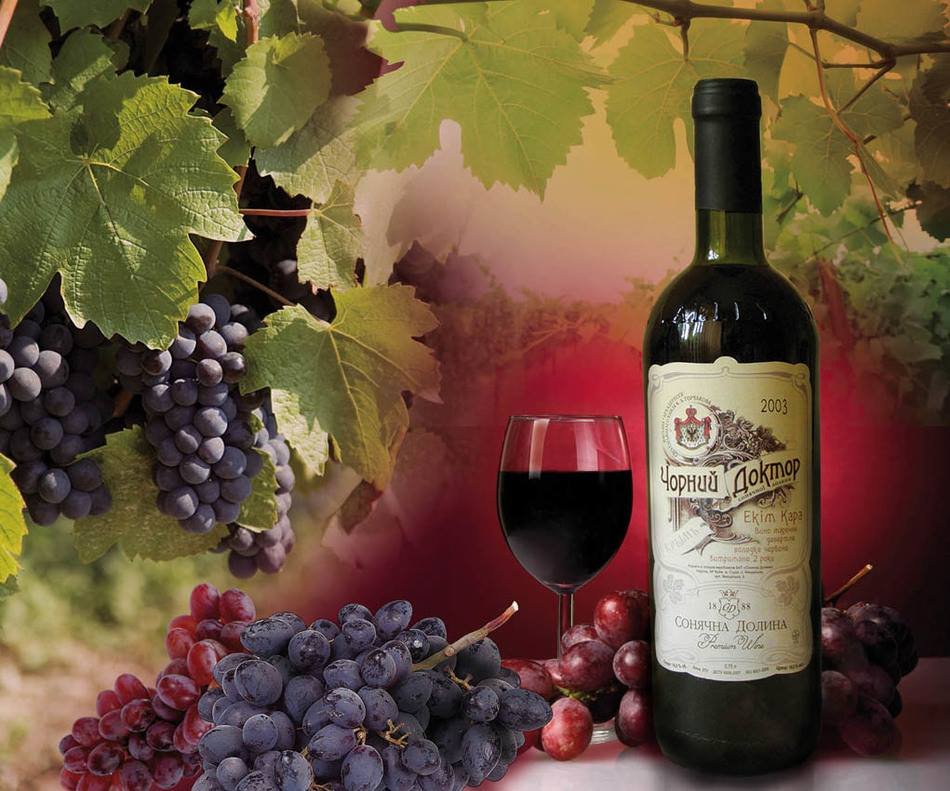
A collection vineyard in Novyi Svit – 600 or 800 varieties from all over the world. The best cellars in the world for aging vintage wines in Massandra were built by him for the Tsar's winemaking. Later, in the Qoʻz (Qoz) valley, now called Solnechnaya Dolina (Sunny Valley), the unique local production was developed on the basis of carefully researched local grape varieties, introduced as far back as the ancient Ellines and medieval Armenians. The nominal owner of this semi-desert was Prince Gorchakov, not Golitsyn. No, Golitsyn did not produce the famous "Black Doctor" ("Chorny Doktor"), this was done by his disciples as late as the 1930s, but in the unique cellars of Arkhaderesse that he built.
Among the wines that have come down to our times with Golitsyn's authorship is the best of the domestic red ports, the favorite wine of the last Russian tsars – "Livadia." About 20 years ago, the winemakers of Kapsikhor – disciples of Golitsyn's disciples – restored the noble-in-its-simplicity "Seventh Heaven" ("Sióme Nebo") – a 50/50 blend of white muscat with the native Sudak kokur. And another special wine: "Alushta." When the winemakers of Alushta presented an exquisite local red table wine for the prince's judgment, the "king of experts" rated it very highly.
But, they say, he spoke thus: "Grapes and wine are a product of variety and locality! Do not name this masterpiece after variety and quality – 'Bordeaux.' Neither 'Taurida Bordeaux' nor 'Crimean Bordeaux,' but name it after the locality." Thus, the best of Massandra's table wines received its real name – the vintage red table wine "Alushta." This is a legend, because this unique Crimean wine was established in this form only before the Second World War, but the foundations, like everything in Massandra and Qoz (as well as, for example, in Abrau-Durso), were laid during Golitsyn's time.
By the way, it is inappropriate to produce table wines in the mountainous part of Crimea. There is the steppe for that – and, characteristically, for the production of the best sparkling wines in the world (at least for their time), the prince imported raw materials from the vineyards of the "lower reaches of the Dnieper" – where they were cultivated by Golitsyn's son-in-law, Prince Trubetskoy.
Legacy
The prince dreamed of passing on his rich experience and the fruits of his intense work as a winemaker to the State. He nurtured a whole generation of domestic winemakers of the 20th century from the students of the Nikita School, and dreamed of an Academy of Wine. For this, he also gifted his beloved Novyi Svit to the Tsar, but... the war, the First World War, the end of which the prince did not live to see, and the turbulent winds of the 1920s blew the remains of the Golitsyn couple out of the modest crypt in the middle of the Paradise Valley, and they did not even have time to bring the sculpture for it from Italy: a sad angel quietly leaning its hand on the mane of a powerful lion...
From the mid-1930s, a new development of winemaking began in Crimea, Lev Golitsyn's disciples were again given tasks of national importance, and they managed to accomplish a lot... Until the Second World War caused another unnatural tragedy: the subsequent deportation of the Crimean Tatars, followed by the Armenians, Bulgarians, and Greeks. Crimea's viticulture was left without the majority of the working peasantry. Attempts to replace their working hands with those of peasants from the Russian Non-Black Earth Region, even with all the exertion of the few local viticulture specialists, were inadequate, because grapes are not rye, nor potatoes, nor flax and hemp, and therefore require completely different approaches... In 1954, Ukraine took over the business.
The importance of this industry for the state is eloquently evidenced by the orders and gold stars awarded to the achievements of Crimean viticulturists. And the numerous gold and silver medals of the wines of Massandra, Zolote Pole, and Novyi Svit. The table wines of Inkerman achieved appropriate quality. The somewhat heavy port wines of Koktebel found their connoisseur, and Koktebel's brandies reached a level worthy of the name "cognac." Interesting wines appeared from the winemakers of Bakhchysarai. Already in the 1990s, Solnechnaya Dolina restored its classic developments and became the monopolist of the unique brand "Black Doctor". Even Feodosia produced wines, and Yevpatoriya tried to release some dry wine... However, they did not acquire the fame of the "old" brands...
Times change, tastes and fashions change, and Rhine wines are in fashion again. The "Iron Curtain" fell, the consumer tasted the fashionable wines of Chile and South Africa, figured out what real Portuguese port is, access to the "old" wines of Spain, Italy, and France opened up... Crimean wines under the brands "Massandra", "Inkerman", "Novyi Svit" continued to delight lovers of classic Crimean wines. And the level of their quality was such that even the ordinary Massandra and Solnechnaya Dolina products by no means caused any desire to qualify them with any of the derogatory terms that witty consumers invented in abundance for certain analogs.
Present Day
Prince Golitsyn was a lawyer and a winemaker, and with his participation, the Law of the Russian Empire "On Wine" was developed more than a hundred years ago, which is still recognized by experts as one of the most perfect in the world. But the legal collision that arose in Crimea in the cold spring of 2014 poses a question to the industry that leads almost to a dead end. On one hand, the state of Ukraine owns the brands "Massandra", "Novyi Svit", "Solnechnaya Dolina", the trademarks "Inkerman", "Koktebel", etc. On the other hand, the state of Ukraine currently has no physical capacity to control the technology, quality, compliance with standards, etc., of the products of the production facilities located in Crimea. The golden rule of winemaking – "...a product of variety and locality" – excludes any possibility of relocating the production of, say, "Massandra" wines to some other place.
Or even the less specific "Inkerman". Perhaps "Koktebel" is not yet a brand, but it has become a trademark of a very recognizable character of products that require the sun and "gravelly" soils of the "Land of Blue Hills". One could argue only about "Novyi Svit", because in certain years even tasters could barely guess where the successful "Novyi Svit" was and where the successful "Artemivske" was... but that is for the experts. The brand "Black Doctor" is indicative here: wines with the same name from Moldova and "Massandra" in the tasting room of "Solnechnaya Dolina" were openly exhibited as... fakes!, although the winemakers of Kapsikhor insisted that their "Black Doctor" was no worse... However, no one even whispered about relocating the brand from Crimea.
So for now, we will be saddened. Let's say frankly: there is no "Massandra". Except, perhaps, in the collections of wines produced before 2014. There is no "Inkerman". There is no "Koktebel". There is the cold spring of 2014, the consequences of which we, Ukraine, will again have to clean up in a businesslike manner. We are used to it. We will manage. Everything returns to its own circles.